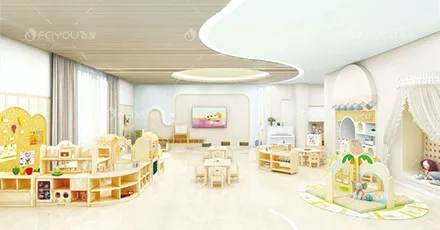
A new wooden table arrives for the toddler classroom. It looks beautiful—smooth, polished, and sturdy. But when you walk into the room the next morning, there is a faint chemical smell lingering in the air. The children will spend hours touching this surface, mouthing the edges, breathing the air around it. What exactly is in that finish—and does it matter?
The short answer is yes, it matters enormously. Wood finishes protect furniture from moisture, stains, and wear, but they can also introduce chemicals that affect indoor air quality and children‘s health. Unlike adults, young children have developing organs, breathe more air per pound of body weight, and frequently put their hands—and furniture—in their mouths.
This guide examines the science behind non-toxic wood finishes: what chemicals to watch for, what safety standards exist, which finish types are safest, and how to evaluate products before purchasing. The goal is not to recommend specific brands but to equip you with the knowledge to ask the right questions.
What‘s Actually in a Wood Finish? Understanding the Chemical Landscape
Most wood finishes contain three basic components: a resin or binder that forms the protective film, a solvent that keeps the resin liquid during application, and additives that provide specific properties like UV resistance or faster drying. The health concerns arise primarily from solvents and certain additives.
Volatile Organic Compounds (VOCs)
VOCs are chemicals that evaporate at room temperature, releasing gases into the indoor air. A 2019 study published in the Journal of Cleaner Production found that the highest concentration of VOCs in furniture manufacturing occurs during the topcoating process. In total, 17 VOCs were identified across seven emission processes, including aromatic hydrocarbons, alkanes, halogenated alkanes, and ketones. The study also found that workers in topcoating, undercoating, and veneering positions face the greatest carcinogenic risks from compounds like ethylbenzene, dichloromethane, and benzene.
Common VOCs in furniture finishes include:
| VOC |
Common Source in Finishes |
Health Concerns |
| Formaldehyde |
Some varnishes, lacquers, composite wood binders |
Respiratory irritation; classified as carcinogenic |
| Benzene |
Solvent-based finishes |
Carcinogenic; linked to leukemia |
| Toluene |
Paint thinners, some lacquers |
Neurological effects, developmental concerns |
| Xylene |
Solvent-based coatings |
Respiratory and neurological issues |
A systematic literature review published in the WoodEMA 2025 proceedings compared VOC emissions from chemical wood treatments with sustainable alternatives. The review found that conventional chemical coatings emit higher levels of VOCs, particularly formaldehyde and benzene, which are linked to respiratory and neurological issues.
Heavy Metals
Lead in paint has been banned in children‘s products for decades, but enforcement remains critical. Under 16 C.F.R. part 1303, paints or similar surface-coating materials containing 0.009% or more lead by weight are banned hazardous products. This applies to children‘s products and furniture articles using such coatings.
The Consumer Product Safety Improvement Act (CPSIA) further requires that paint or other surface coatings on children‘s products and furniture may not contain lead in concentrations greater than 90 parts per million (ppm). Accessible parts of children‘s products cannot contain more than 100 ppm total lead content.
Phthalates
Phthalates are plasticizers sometimes used in coatings, adhesives, and finishes. The CPSIA permanently prohibits the manufacture, sale, or distribution of children‘s toys or child care articles containing more than 0.1 percent of DEHP, DBP, or BBP. Research has identified phthalates as endocrine-disrupting chemicals (EDCs). A 2022 study published in PMC found that phthalates are typical chemical pollutants in kindergarten classrooms, widely distributed in artificial products like PVC floorings and soft polymers.
Formaldehyde
Formaldehyde is a VOC commonly found in indoor air, with off-gassing highest from furniture and flooring for the first five years after products are made. The European Regulation (EU) 2023/1464 will impose formaldehyde emission limits of 0.062 mg/m³ for furniture and wooden articles by August 2026. Products with finishes that claim to be formaldehyde-free or have undetectable formaldehyde levels represent safer choices.
What this means for your program: The chemicals in wood finishes can affect indoor air quality and children‘s health. VOCs contribute to indoor air pollution, heavy metals like lead pose developmental risks, and phthalates can disrupt hormone function. Understanding these risks is the first step toward making safer choices.
For programs evaluating furniture for early learning environments, exploring furniture collections designed with safety as a priority can help identify manufacturers who prioritize non-toxic finishes.
The Regulatory Framework — What Safety Standards Actually Require
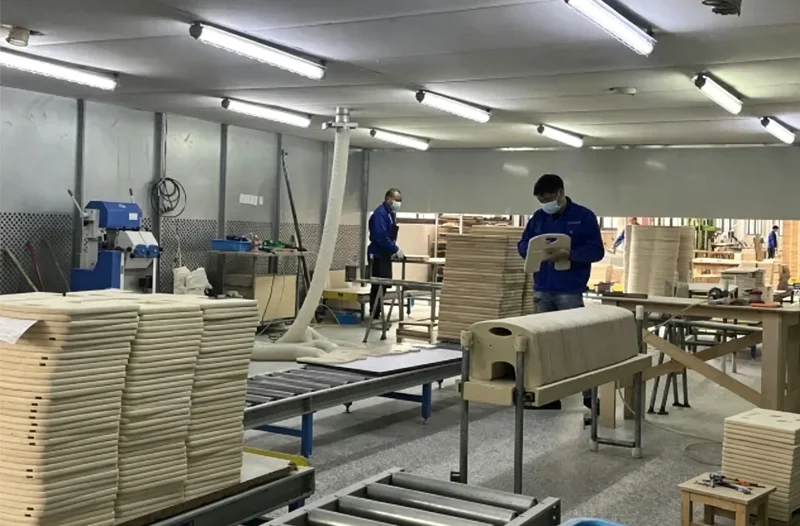
Several safety standards and regulations govern wood finishes for children‘s furniture. Understanding these frameworks helps you evaluate products and ask manufacturers the right questions.
CPSIA (Consumer Product Safety Improvement Act)
The CPSIA is the primary U.S. law governing children‘s product safety. Key provisions for finishes include:
| Requirement |
Limit |
Applicability |
| Lead in surface coatings |
≤ 90 ppm |
All children‘s products and furniture |
| Total lead in accessible parts |
≤ 100 ppm |
All children‘s products |
| Phthalates (DEHP, DBP, BBP) |
≤ 0.1% |
Children‘s toys and child care articles |
ASTM F963
ASTM F963 is the Consumer Safety Specification for Toy Safety, made mandatory by the CPSIA. Section 4.3.5 requires that surface coating materials and accessible substrates of children‘s toys that can be sucked, mouthed, or ingested must comply with solubility limits for eight heavy metals: antimony, arsenic, barium, cadmium, chromium, lead, mercury, and selenium.
EN 71-3 (European Standard)
EN 71-3 is the European standard for toy safety, specifically addressing the migration of certain elements. It sets limits on heavy metals that can migrate from toy materials, including coatings. Products complying with EN 71-3 are considered safe even if children mouth or chew on them.
16 CFR Part 1303
This regulation bans paints and surface coatings containing 0.009% or more lead by weight. It applies to furniture articles including beds, bookcases, chairs, chests, tables, dressers, and desks.
Third-Party Testing Requirements
For children‘s products, certification must be based on testing conducted by a CPSC-accepted third-party laboratory. Some materials—including untreated wood, paper, textiles, and certain metals—are exempt from lead testing based on CPSC determinations. However, finishes and coatings are not exempt and require testing.
What this means for your program: When evaluating furniture, request documentation showing compliance with CPSIA lead limits, ASTM F963 heavy metal solubility limits, and—for products sold in Europe—EN 71-3 certification. These standards provide objective, third-party verification of finish safety.
For programs seeking professional guidance on safety audits and compliance verification, detailed planning resources are available to support your facility decisions, including checklists for evaluating furniture safety documentation.
Comparing Finish Types — Which Options Are Safest?
Not all wood finishes are created equal. Understanding the differences helps you make informed choices for children‘s environments.
Water-Based Finishes:
Water-based finishes use water as the primary solvent instead of petroleum-based chemicals. They typically contain fewer VOCs and have lower odor. Many water-based finishes are described as having “zero added VOCs” and are free from toxins and solvents that may harm health or the environment.
| Characteristic |
Water-Based |
Oil-Based |
| VOC content |
Lower (approximately 200g per can) |
Higher |
| Odor |
Low |
Strong |
| Drying time |
Faster (2–4 hours) |
Slower |
| Cleanup |
Soap and water |
Solvents required |
| Durability |
Good |
Excellent |
Natural Oil and Wax Finishes:
Natural oil and wax finishes are derived from plant-based sources such as tung oil, linseed oil, beeswax, and carnauba wax. These finishes penetrate the wood rather than forming a surface film, and they are generally free of VOCs, heavy metals, and other toxic compounds.
A 2025 study from the Korea Citation Index examined eco-friendly wooden furniture for children, analyzing formaldehyde and total VOC emissions according to various finishing methods. The findings support that natural finishes produce lower emissions than conventional chemical coatings.
However, natural finishes may require more frequent reapplication and may not provide the same level of water and stain resistance as synthetic options.
UV-Cured Finishes:
UV-cured finishes use ultraviolet light to cure the coating instantly. These finishes can be formulated with zero VOCs and produce a durable, hard surface. Because they cure immediately, there is minimal off-gassing after application.
Shellac:
Shellac is a natural resin secreted by the lac beetle, dissolved in alcohol. It is food-safe once cured and has been used for centuries. However, it is less durable than polyurethane and can be damaged by water and alcohol.
What this means for your program: For children‘s furniture, prioritize water-based finishes with low or zero VOCs, natural oil-wax finishes, or UV-cured finishes. Avoid solvent-based finishes with high VOC content and strong odors.
What to Look For — A Practical Evaluation Checklist
When evaluating furniture for early childhood environments, use this checklist to assess finish safety.
Request safety documentation:
-
CPSIA compliance certificate (lead ≤ 90 ppm in coatings)
-
ASTM F963 compliance (heavy metal solubility limits)
-
EN 71-3 certification (if applicable)
-
Third-party lab test results
Ask about VOC content:
-
What is the VOC content in grams per liter?
-
Is the finish water-based or solvent-based?
-
Does the manufacturer provide VOC test data?
Check for formaldehyde:
-
Does the finish contain formaldehyde?
-
Are formaldehyde emissions tested and reported?
-
Does the product use formaldehyde-free finishes?
Verify phthalate safety:
-
Are phthalates (DEHP, DBP, BBP) below 0.1%?
-
Has the product been tested for phthalate content?
Smell test:
Ask about the finishing process:
-
Is the finish applied in a controlled environment?
-
Is the furniture fully cured before shipping?
-
What quality control measures are in place?
What this means for your program: Documentation matters. Any manufacturer selling children‘s furniture should be able to provide third-party test results showing compliance with CPSIA, ASTM F963, and relevant European standards. If they cannot or will not, consider that a red flag.
For programs planning significant furniture investments, understanding how classroom layout and age mix influence furniture decisions provides additional context for evaluating overall furniture quality.
Two Common Scenarios — Applying the Principles
Scenario A: A new preschool purchasing furniture from an overseas manufacturer
This program is buying 20 tables and 60 chairs from a supplier they found online. The price is attractive, but they have no information about finishes.
Recommended approach: Before placing the order, request:
-
Third-party test reports showing CPSIA compliance
-
ASTM F963 heavy metal solubility test results
-
VOC emission data
-
A signed statement confirming the finish contains no lead (over 90 ppm) or phthalates (over 0.1%)
If the supplier cannot provide these documents, consider it a significant risk.
Scenario B: A home daycare with wooden furniture purchased second-hand
This provider has acquired used wooden tables and chairs from various sources. The finishes are worn in some places.
Recommended approach: For furniture with peeling, chipping, or worn finishes, consider refinishing with a child-safe product. Use water-based polyurethane or natural oil-wax finishes. Sand the old finish completely before applying new coating. Allow adequate curing time (7–14 days) before children use the furniture.
From Science to Selection
By now, you have a comprehensive understanding of non-toxic wood finishes for children‘s furniture. You understand the chemicals of concern—VOCs, heavy metals, phthalates, formaldehyde—and their health implications. You know the regulatory framework, including CPSIA lead limits, ASTM F963 heavy metal solubility requirements, and EN 71-3 toy safety standards. You can compare finish types, from water-based and natural oil-wax to UV-cured and shellac. And you have a practical checklist for evaluating products before purchase.
Your next steps:
-
Request safety documentation from every furniture supplier you consider
-
Verify CPSIA compliance (lead ≤ 90 ppm in coatings, ≤ 100 ppm total lead)
-
Ask for ASTM F963 or EN 71-3 test results
-
Choose water-based, natural oil-wax, or UV-cured finishes over solvent-based alternatives
-
Allow new furniture to off-gas in a well-ventilated area before placing it in the classroom
-
For used furniture with worn finishes, consider refinishing with child-safe products
With these decision factors clarified, evaluating furniture options from any manufacturer becomes straightforward. You can now assess products based on how well their finish chemistry, safety certifications, and durability align with the principles outlined in this guide—whether you are purchasing new furniture or maintaining existing pieces in your early childhood environment.
Related Reading






 English
 Español