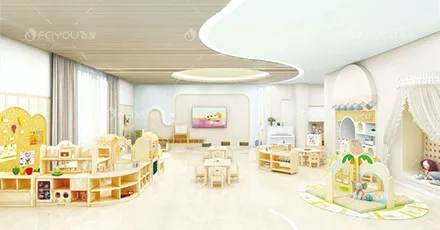
A child trips while carrying a toy to a table. Another loses balance climbing off a chair. In both cases, what happens next depends largely on one design feature they never considered: the edges of the furniture around them. A rounded corner might mean a harmless bump. A sharp, 90-degree edge at forehead height could mean a visible bruise, a crying child, and an incident report that requires parent notification.
For early childhood program directors, this is not a theoretical concern. According to the U.S. Consumer Product Safety Commission (CPSC), thousands of preventable injuries in childcare settings each year involve impact with furniture edges and corners. The good news is that identifying and addressing these hazards follows a clear, actionable process — one that this guide will walk you through step by step.
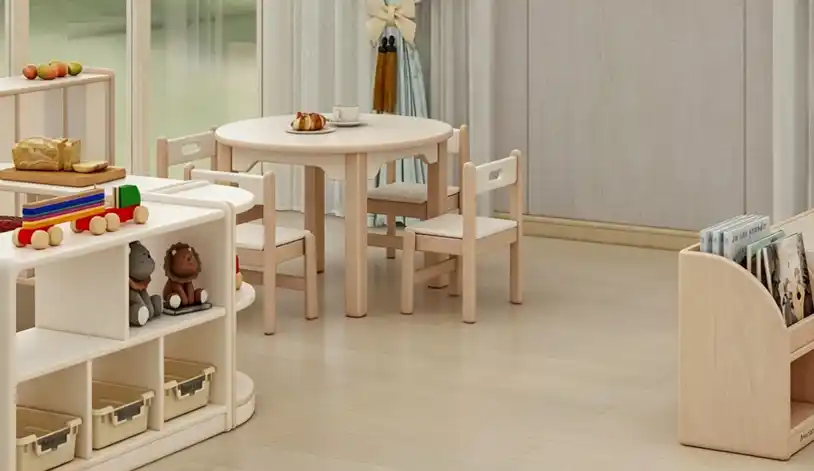
Understanding the Real Risk — Why Sharp Edges Are Dangerous in Kindergarten Classrooms
Children move differently from adults. Their center of gravity is higher relative to their height. Their depth perception is still developing. And they fall forward — directly toward table edges, shelf corners, and cabinet fronts — dozens of times each day.
Injury mechanisms specific to early childhood settings:
| Hazard Type |
Typical Location |
Typical Injury |
Age Most at Risk |
| 90-degree table corner at forehead height |
Activity tables |
Scalp lacerations, forehead contusions |
18–36 months |
| Protruding shelf edge at eye level |
Open shelving units |
Orbital bruising, corneal abrasion |
2–4 years |
| Unfinished wood splinter edge |
Older or damaged furniture |
Palmar puncture wounds, finger splinters |
All ages |
| Sharp plastic seam or flashing |
Molded plastic chairs/toys |
Finger lacerations, arm abrasions |
2–5 years |
| Metal bracket or exposed fastener |
Underside of tables |
Head impact during crawling/crouching |
12–24 months |
A 2022 analysis of childcare injury data published in Injury Prevention journal found that approximately 34% of reportable classroom injuries involved impact with fixed furniture — with table corners accounting for nearly half of those incidents.
What this means for your program: Sharp edges are not just an aesthetic concern or a minor liability issue. They represent one of the most frequent mechanisms of preventable injury in early childhood settings. Addressing them systematically reduces real, documented risks to children in your care.
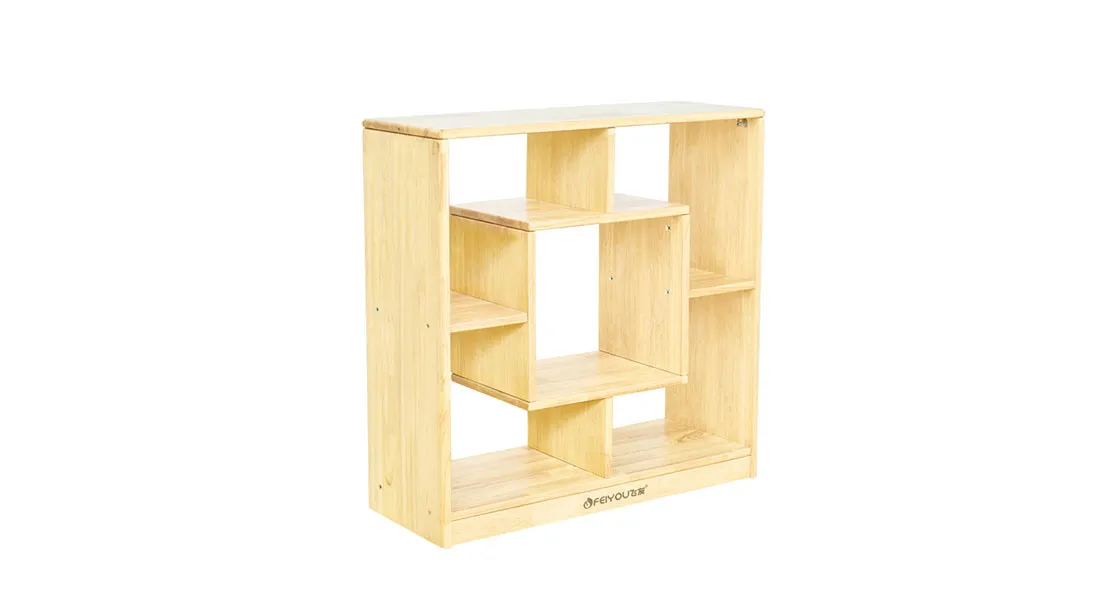
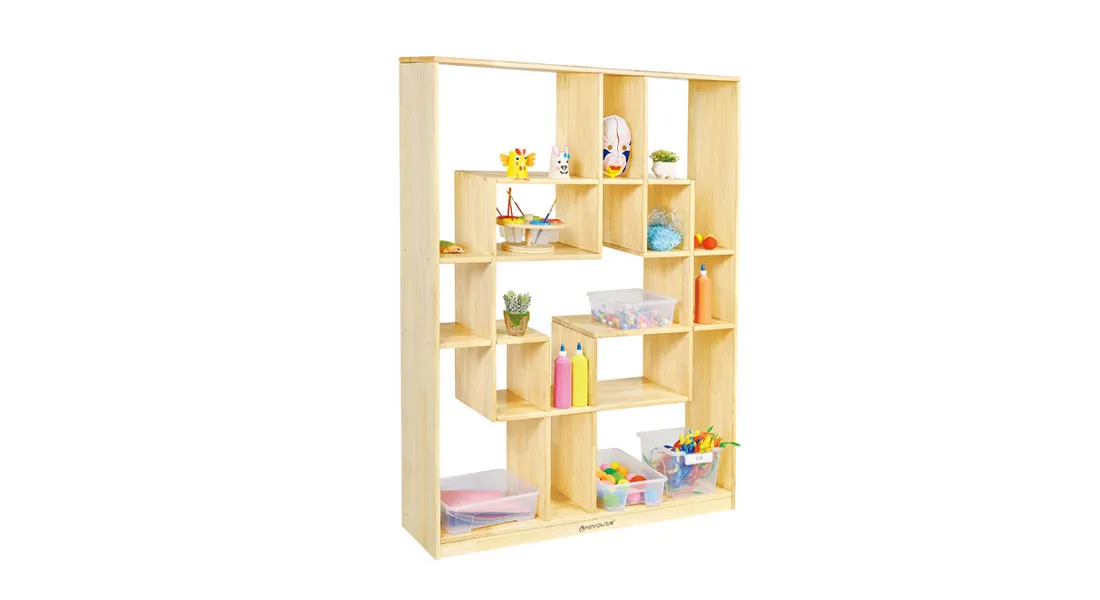
For programs evaluating new furniture specifically designed with child safety as the primary consideration, understanding how rounded-edge wooden furniture is constructed for active toddler environments provides detailed information on manufacturing standards that prevent these hazards from the start.
Regulatory and Industry Standards — What Safety Requirements Actually Exist?
Several organizations have established specific requirements for furniture edges and corners in early childhood environments. Understanding these standards helps you evaluate both existing furniture and new purchases.
Key safety standards addressing sharp edges:
| Standard |
Issuing Body |
Edge/Corner Requirement |
Applicability |
| 16 CFR Part 1500 |
U.S. CPSC |
No sharp points or edges as defined by specific test method |
All children’s products |
| ASTM F963 |
ASTM International |
Edges must be rounded with radius of 1/16 inch minimum |
Toys and children’s furniture |
| EN 1729 |
CEN (European Committee) |
Tables/chairs must have rounded corners (radius minimum 10mm for ages 3-7) |
Educational furniture |
| NAEYC Early Childhood Program Standards |
NAEYC |
“Furniture and equipment are sturdy, stable, and free of sharp edges.” |
Program accreditation |
The CPSC defines a “sharp edge” as any edge that can cut skin under reasonable use — specifically, any edge that is less than 1/32 inch thick at its contact point. Most standard 90-degree table corners meet this definition.
What the EN 1729 standard specifically requires:
-
For children under 7 years: table corners must have a minimum radius of 10mm (approximately 3/8 inch)
-
For children 3-7 years: chair corners must also meet the 10mm radius minimum
-
Edges accessible to children must be rounded or chamfered — not sharp
What this means for your program: If your furniture meets EN 1729, ASTM F963, or CPSC sharp-edge testing, it has been objectively verified as safe for children’s typical use. If your furniture has no certification markings, you cannot assume it meets any standard — regardless of how “safe” it appears.
A 5-Step Process to Identify Every Sharp Edge in Your Classroom
Conducting a thorough hazard inventory requires systematic inspection — not just a quick walkthrough. Use this five-step process to document every potential sharp edge risk in your facility.
Step 1: Map the classroom at child height
Get down on your hands and knees. Crawl through every area of the classroom. At child eye level (approximately 24–36 inches from floor) and child head level (approximately 30–42 inches from floor), mark every furniture edge or corner on a paper floor plan. What looks safe from standing height often looks very different from 36 inches lower.
Step 2: Test every edge with the “fingertip drag” method
Run your fingertip along every edge at a 45-degree angle. If you feel any drag, catching, or resistance beyond smooth gliding, document that edge for further evaluation. A fingernail can detect edge imperfections as small as 0.5mm.
Step 3: Measure hazard height zones
Different edge heights produce different injury risks:
| Height from Floor |
Primary Risk |
Furniture Examples |
| 12–24 inches |
Facial impact during crawling |
Low shelves, block carts, storage bins |
| 24–36 inches |
Forehead and eye impact |
Table corners, chair backs, cabinet fronts |
| 36–48 inches |
Eyebrow and scalp impact |
Tall shelves, wardrobe tops, window ledges |
| 48+ inches |
Adult-level only |
Top of high cabinets, wall-mounted storage |
Step 4: Check for protrusion hazards
Beyond edge sharpness, measure how far corners protrude into traffic paths. A rounded corner that extends 6 inches into a 30-inch-wide aisle still creates impact risk — the roundness reduces laceration risk but does not eliminate collision risk.
Step 5: Document and prioritize by risk level
Create a simple A-B-C priority system:
-
A (Address within 1 week): Any edge at 24–42 inch height with sharpness meeting CPSC definition, located in high-traffic area
-
B (Address within 1 month): Any edge with any sharpness in moderate-traffic area, or at other heights
-
C (Address within 3 months): Splinter potential on wood furniture, sharp seams on plastic items
What this means for your program: You will likely find more hazards than you expected. This is normal. The goal is systematic identification followed by prioritized remediation — not perfection on the first pass.
For programs needing professional guidance on classroom safety inspections, detailed planning resources are available to support your facility decisions, including safety audit checklists and hazard assessment templates.
Three Remediation Approaches — From Immediate Fixes to Long-Term Solutions
Once you have identified sharp edge hazards, you have three options ranked by effectiveness and longevity.
Approach 1: Immediate low-cost fixes (1–2 days to implement)
| Solution |
Best For |
Effectiveness |
Lifespan |
Cost per edge |
| Adhesive foam corner guards |
Table corners, shelf edges |
Moderate |
6–12 months |
$0.50–$2.00 |
| Clear silicone edge molding |
Long straight edges (countertops, shelves) |
Moderate to High |
1–2 years |
$1.00–$3.00 per foot |
| Self-adhesive rubber bumpers |
Cabinet corners, low protrusions |
Moderate |
6–12 months |
$0.25–$1.00 each |
| Vinyl edge trim (U-channel) |
Wood panel edges, tabletops |
High |
2–3 years |
$0.75–$2.50 per foot |
Limitations of adhesive solutions:
-
Children peel them off (requiring constant replacement)
-
Adhesive fails over time, especially with cleaning products
-
They address existing furniture, but do not solve the underlying design problem
Approach 2: Professional retrofitting (1–4 weeks to arrange)
For wood furniture worth keeping, a carpenter or furniture refinisher can permanently round edges using sanding, routing, or planing techniques. This approach:
-
Requires furniture disassembly or access to all edges
-
Damages existing finish (requires complete refinishing)
-
Typically costs $10–$30 per edge professionally
-
Provides permanent, non-removable safety feature
Best for: Solid wood furniture of high quality that will remain in use for 5+ years. Not practical for particle board, laminated surfaces, or plastic furniture.
Approach 3: Replacement with safety-designed furniture (long-term investment)
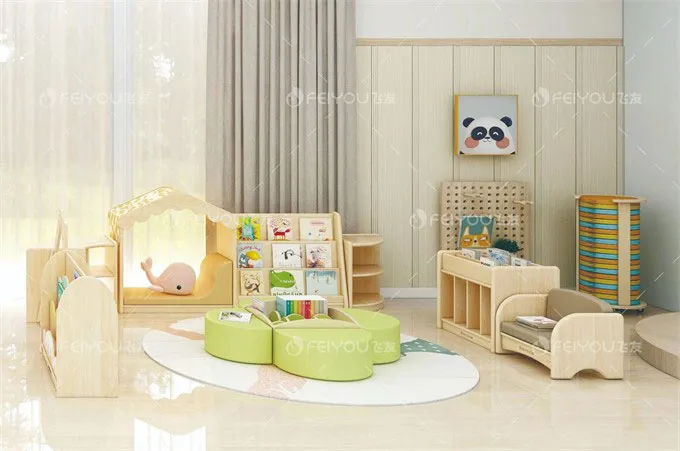
Furniture manufactured specifically for early childhood settings includes rounded corners, beveled edges, and smooth finishes as standard features — not retrofits.
Key design features to verify before purchase:
| Feature |
What to Verify |
Why It Matters |
| Corner radius |
Minimum 10mm (3/8 inch) for ages 3-7; larger for under 3 |
Meets EN 1729 standard |
| Edge beveling |
Smooth chamfer on all 90-degree junctions |
Prevents finger pinching and edge impact |
| Fully wrapped feet |
Chair and table legs covered with rounded caps |
Eliminates metal-to-floor impact hazards |
| No exposed fasteners |
Hardware recessed or capped |
Prevents scratching and impact injuries |
| Splinter-free guarantee |
Finish seals all wood grain |
Eliminates puncture and splinter risks |
What this means for your program: Adhesive guards provide immediate risk reduction and are appropriate for short-term fixes. But for furniture that will serve children for years, factory-designed safety features are more reliable, longer-lasting, and ultimately more cost-effective than retrofitting or repeatedly replacing peels foam guards.
Two Common Classroom Scenarios — And Their Solutions
Scenario A: A faith-based preschool with mixed-age classroom (2–5 years) and budget-limited resources
This program has solid wood tables from 15 years ago. They are sturdy and otherwise functional, but table corners are standard 90-degree angles at 22 inches high — directly at toddler forehead level. Budget for replacement is minimal.
Recommended approach: Professional retrofitting for the 4 most-used tables (approximately $120 total). Add foam corner guards to all other tables as immediate protection. Replace the worst-offending table over summer break. The combination approach provides safety now while spreading costs over time.
Scenario B: A newly licensed daycare center purchasing all furniture from scratch
This program has no existing furniture commitments. They are comparing suppliers for tables, chairs, and storage units.
Recommended approach: Verify EN 1729 or ASTM F963 certification for every furniture item before purchase. Request product images specifically showing corner radius and edge finishing. Visit showroom or request samples to perform the fingertip drag test. Factory-rounded edges cost no more than standard edges when specified at purchase — but cannot be added effectively after delivery.
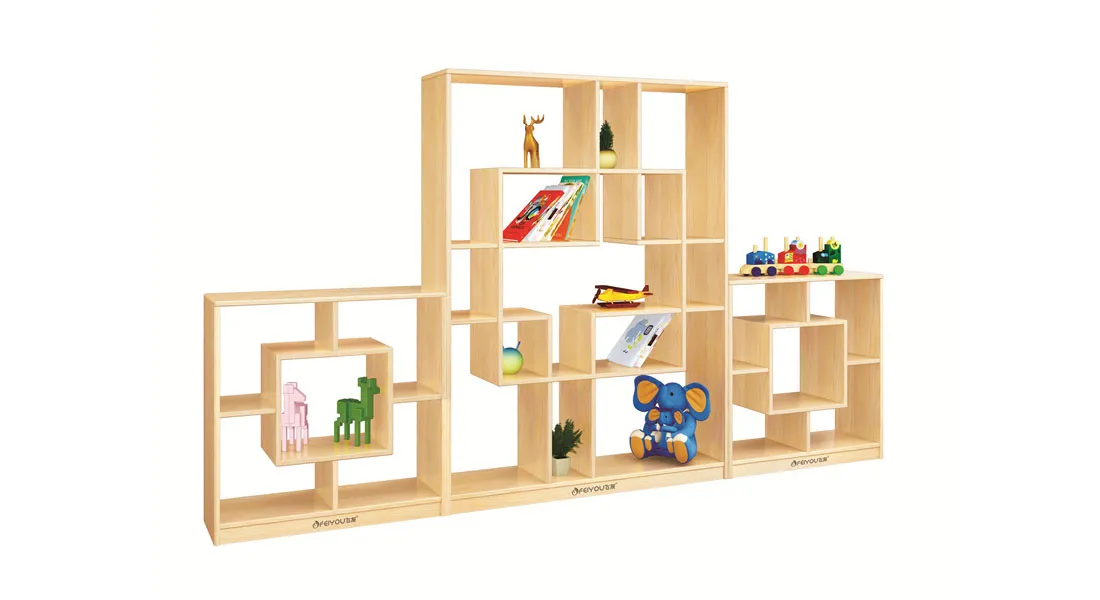
For programs in either scenario, exploring furniture collections with pre-certified safety features provides examples of how different classrooms have addressed edge safety through thoughtful product selection.
Beyond Corners — Other Overlooked Sharp Edge Hazards
While tables and shelves receive most attention, several other furniture elements commonly produce sharp edges in early childhood classrooms:
Drawer hardware: Exposed metal drawer pulls, especially D-ring or bar styles, create pinch and impact hazards. Look for recessed handles or fabric pull-tabs instead.
Chair back slats: Wooden chairs with open slats often have unfinished edges inside the slat gaps — exactly where children insert fingers. Verify that all slat edges are sanded and sealed.
Storage bin rims: Plastic bins stored on low shelves develop sharp edges at rim seams when cracked or aged. Replace cracked bins immediately; sand rough seams on otherwise intact bins.
Metal leg glides: The plastic or metal caps on chair and table legs. When cracked or missing, the exposed metal tube creates a sharp ring at floor level — at child hand height during crawling or retrieving dropped items.
Hinge mechanisms: Cabinet doors, folding tables, and storage lids have hinge gaps that can pinch. Look for covered hinges or pinch-guard designs.
A 2021 safety audit guide published by the American Academy of Pediatrics (AAP) notes that approximately 20% of preventable sharp-edge injuries in childcare settings involve furniture elements other than primary table corners — highlighting the importance of comprehensive inspection.
What this means for your program: When you conduct your hazard inventory using the 5-step process above, do not stop at table corners. Include drawers, chairs, bins, legs, and hinges in your inspection. The most dangerous edge is often the one nobody thought to check.
From Hazard Identification to Action
By now, you have a complete framework for addressing sharp edge hazards in your kindergarten or daycare classroom. You understand why certain edge heights and locations present specific risks to children of different ages. You know which safety standards provide reliable benchmarks for evaluation. You have a 5-step process for identifying every hazard in your facility. And you understand the trade-offs between immediate fixes, professional retrofitting, and replacement with safety-designed furniture.
Your next steps are clear:
-
Schedule your hazard inventory using the 5-step process — this week if possible
-
Document every identified edge using the A-B-C priority system
-
Apply immediate foam guards to all A-priority hazards within days
-
Develop a remediation plan for B and C hazards based on your budget timeline
-
For future purchases, verify EN 1729 or ASTM F963 certification before ordering
Once you have completed your hazard inventory and prioritized your remediation needs, comparing furniture options becomes straightforward — especially if replacement is the right path for your highest-risk items. You can now evaluate specific furniture collections based on how well their edge design, corner radius, and finishing details align with the safety standards discussed in this guide.
Related Reading






 English
 Español