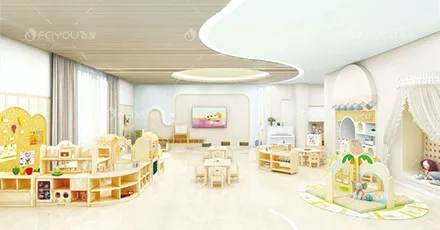
Walking into a daycare classroom, you notice the furniture immediately — not just its color or style, but how it holds up under daily use by twenty active toddlers. Every director and educator faces the same quiet question when furnishing a new space or replacing worn pieces: which material will truly serve the children and the program best over time?
This guide walks you through the evidence-based factors that matter most — safety certifications, cleaning protocols, longevity under heavy use, and total ownership cost — without recommending specific products. By the end, you will have a clear framework for comparing options from any manufacturer.

Understanding What “Safe” Really Means for Daycare Furniture
Safety is the non-negotiable foundation for any early childhood environment. However, safety standards differ between wood and plastic construction, and understanding these differences helps you ask better questions when evaluating furniture from any supplier.
Key safety dimensions to evaluate:
| Safety Factor |
Wood Furniture |
Plastic Furniture |
| Edge and corner design |
Can be rounded during manufacturing; splinter risk if damaged |
Typically molded with rounded edges; no splinter risk |
| Surface coating safety |
Requires non-toxic, lead-free sealants or water-based paints |
Requires BPA-free, phthalate-free formulations |
| Structural stability |
Heavier, less likely to tip during climbing |
Lighter, may require wider bases or anchoring |
| Fire resistance |
Naturally slower to burn (solid wood) |
Requires added flame retardants; varies by type |
| Choking hazard potential |
Rare unless screws loosen |
Small breakage pieces possible with low-quality plastics |
According to the U.S. Consumer Product Safety Commission (CPSC), early childhood furniture must meet specific stability and sharp-edge requirements under 16 CFR Part 1500. Regardless of material, always verify that any furniture displays certification marks from recognized testing bodies such as TUV or ASTM International.
What this means for your daycare: Wood offers inherent stability and fewer chemical concerns when unfinished or sealed with non-toxic coatings. Plastic offers impact resistance without splintering, but requires careful verification of additive safety. Neither is universally “safer”—it depends on the specific product’s design and certifications.
For classrooms prioritizing maximum stability and natural materials, many early childhood programs explore options within carefully engineered wooden collections. Learn how stable, rounded-edge wooden furniture is constructed for active toddler environments →
Durability in Real-World Daycare Conditions — A Side-by-Side Comparison
Walk into any daycare after afternoon snack time, and you will see the truth about durability. Spills, drops, climbs, kicks, and the occasional marker art — furniture faces constant stress. Both wood and plastic have distinct durability profiles.
| Durability Factor |
Wood Furniture |
Plastic Furniture |
| Scratch and dent resistance |
Moderate; shows wear but can be sanded/refinished |
High; color molded through, less visible wear |
| Stain resistance |
Depends on sealant; unfinished wood stains easily |
High; most stains wipe clean |
| Moisture damage risk |
High if sealant fails; can warp or rot |
None; waterproof |
| Impact breakage |
May split or crack under heavy force |
May crack or shatter at stress points |
| Repairability |
High — sand, fill, repaint |
Low — cracks typically mean replacement |
| Typical lifespan (heavy use) |
10–15+ years with maintenance |
5–8 years (premium grades) or 2–4 years (budget grades) |
A 2023 facilities management report from the National Association for the Education of Young Children (NAEYC) noted that programs replacing furniture every 3–4 years often selected budget-grade plastic, while those with 10+ year replacement cycles predominantly used solid wood with periodic refinishing. The upfront cost difference of 30–50% often narrowed or reversed over a decade.
What this means for your daycare: If you expect to rearrange classrooms frequently, plastic’s lighter weight is an advantage. If you plan to keep furniture for a decade or more and can perform simple maintenance (tightening screws, reapplying sealant), quality wood offers lower long-term cost.
Six Steps to Evaluate Any Daycare Furniture Material Before Buying
Use this practical framework when comparing samples from any manufacturer — whether wood, plastic, or mixed materials.
Step 1: Request and review independent safety certifications
Ask for documentation showing compliance with ASTM F963 (toy safety) or EN 1729 (educational furniture standards). Do not accept generic “tested” claims without certificate numbers.
Step 2: Perform the “corner and edge” test
Run your hand along every edge. Even “rounded” should feel smooth, with no sharp transitions. For wood, check for splinter risk along grain lines.
Step 3: Simulate cleaning 1,000 times
Take a sample and scrub one square inch with bleach solution or the strongest cleaner you use — 50 times back and forth. Does the finish discolor, bubble, or wipe away?
Step 4: Check weight and stability
Try to tip a chair or table sideways. For plastic, light weight means higher tip risk. For wood, confirm leg attachments won’t loosen over time.
Step 5: Ask about repair and replacement parts
Can you buy just one replacement leg? A bottle of touch-up finish? Plastic’s repairability is limited — wood typically offers more options.
Step 6: Search for independent complaints
Search “[brand name] daycare furniture recall” or “[material type] toddler chair broken” to see real-world failure patterns reported by other centers.
Two Common Daycare Scenarios — Matching Material to Reality
Scenario A: A new urban daycare with 40 children and limited storage space
This director needs furniture that can be sanitized daily (state licensing requires it) and moved frequently for different activities. Plastic may be preferable here: lightweight for teachers, waterproof for daily wet cleaning, and colorful to create engaging environments without added decorations. The key is selecting commercial-grade, not residential, plastic furniture with reinforced corners.
Scenario B: A nature-based preschool operating in a converted home
This program emphasizes natural materials and sustainability. Wooden furniture aligns with the educational philosophy, provides the stability children need for table activities, and develops a pleasing patina over time that families appreciate. The staff has time for seasonal maintenance (checking screws, reapplying beeswax or sealant). Quality wood is the clear choice.
For mixed-age classrooms or programs wanting material flexibility, many manufacturers now offer collections that combine wooden frames with plastic or fabric components. Explore how classroom layout and age mix influence furniture material decisions →

Beyond Material — What Actually Predicts Daycare Furniture Longevity?
While the wood-versus-plastic question dominates initial searches, experienced directors know that construction quality and fastener design often matter more than the primary material.
According to a 2022 durability study published in the Journal of Facilities Management, furniture failure in institutional settings correlates most strongly with:
-
Joint type (mechanical fasteners vs. glue-only vs. molded unified construction)
-
Corner reinforcement (metal brackets or gussets vs. simple butt joints)
-
Surface hardness (measured by Janka scale for wood; Shore hardness for plastics)
A poorly constructed wooden chair with stapled joints will fail faster than a well-designed plastic chair with ribbed reinforcement. Conversely, a thin-shell plastic table will crack long before a solid wood table with mortise-and-tenon joinery.
Your takeaway: Ask every supplier — regardless of material — to describe their joint construction method and show cutaway images or assembly videos. If they cannot or will not, consider that a red flag.
From Material Decisions to Confident Purchasing
By now, you have a framework for comparing wood and plastic based on your specific program’s needs: cleaning frequency, expected lifespan, staff strength for moving furniture, educational philosophy, and budget timeline.
You know to ask for third-party certifications, test samples aggressively, and verify joint construction — not just admire surface appearance. You also recognize that no material is inherently superior; the right choice depends on your unique balance of durability needs, maintenance capacity, and child safety priorities.
With these decision factors clarified, comparing specific product lines becomes straightforward. You can now evaluate furniture collections based on how well their design details align with your classroom realities.
For programs seeking additional guidance on furniture configuration — such as determining the right table heights for mixed-age rooms or creating traffic patterns that minimize collisions — detailed planning resources are available to support your facility decisions.
Related Reading






 English
 Español