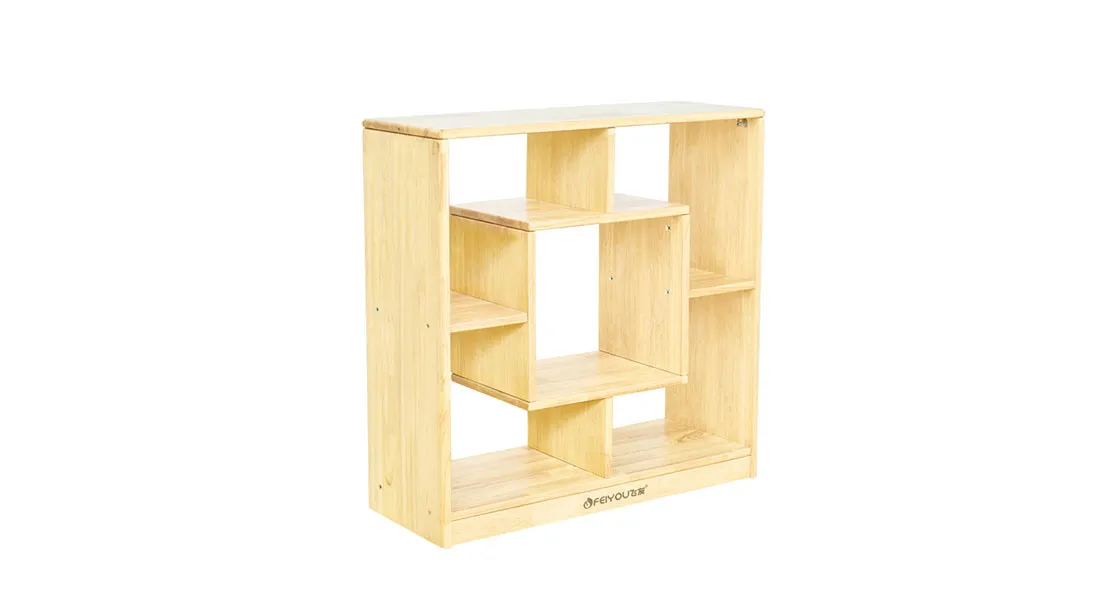
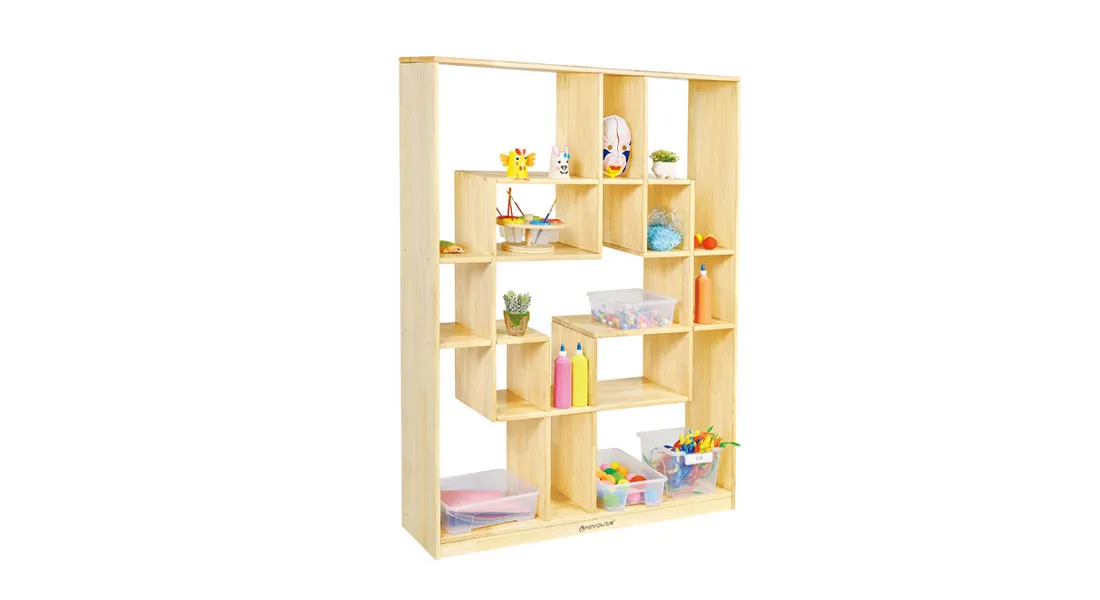
A kindergarten classroom cabinet holds art supplies, books, and toys—dozens of pounds of materials that children access daily. A storage shelf near the block area supports heavy wooden unit blocks. A cubby unit stores backpacks and lunchboxes. These storage units are used constantly, loaded and unloaded, and sometimes climbed on. How much weight can they actually hold? And how do you know?
The answer lies in load testing—a systematic process of applying forces to furniture to verify its strength, durability, and stability under real-world conditions. For early childhood environments, where children’s safety depends on furniture that stays upright and intact, understanding load testing standards is essential.
This guide explains what load testing means for kindergarten storage units, the international standards that govern it, and how to evaluate whether a product has been properly tested. By the end, you will know what questions to ask and what documentation to request before purchasing storage furniture for your early childhood program.
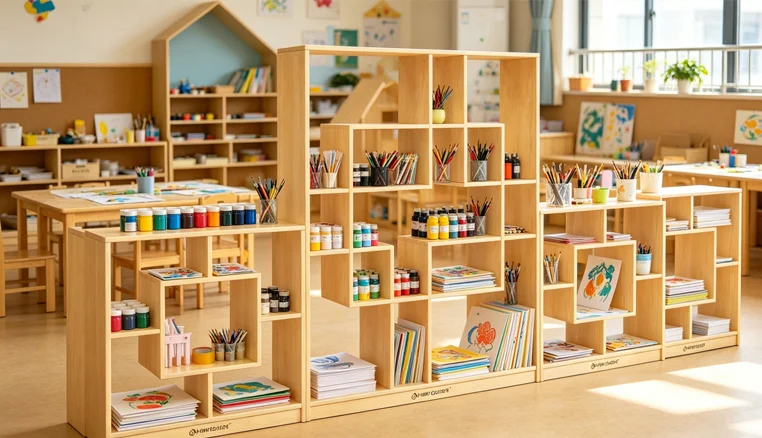
What Is Load Testing—And Why Does It Matter for Kindergarten Storage?
Load testing is the application of controlled forces to furniture to verify that it can withstand expected use without failing. For storage units—cabinets, shelves, cubbies, lockers, and wardrobes—this means testing:
-
Strength: Can the unit support the weight of its contents without collapsing?
-
Durability: Can it withstand repeated use (opening drawers, loading shelves) over time?
-
Stability: Will it tip over if a child climbs on it or pulls on an open drawer?
These are not abstract concerns. The U.S. Consumer Product Safety Commission (CPSC) has documented that furniture tip-overs and collapses can result in serious injury or death to children. For early childhood programs, storage units that fail under load create immediate safety hazards: collapsing shelves can trap children, falling cabinets can cause head injuries, and tipped-over units can block emergency exits.
What load testing tells you about a storage unit:
| Test Type |
What It Measures |
Why It Matters for Kindergartens |
| Vertical load (top surface) |
Force applied downward on the top panel |
Simulates children sitting or climbing on top |
| Shelf load |
Weight placed on each shelf |
Verifies shelves won't sag or collapse under books/toys |
| Drawer load |
Weight placed inside extended drawers |
Simulates fully loaded drawers; checks for tipping |
| Horizontal force |
Pulling force applied to open doors/drawers |
Simulates a child pulling on furniture |
| Fatigue/cycle testing |
Repeated opening/closing (e.g., 500+ cycles) |
Verifies durability over years of daily use |
What this means for your program: A storage unit that passes load testing has been verified to withstand the forces it will encounter in a real classroom. A unit without testing documentation is a gamble—and in a kindergarten environment, that gamble involves children's safety.
For programs evaluating furniture options for early learning environments, reviewing kindergarten storage units with documented load test results can help identify manufacturers who conduct proper strength and stability verification for their cabinets, shelving, and cubbies.
International Standards for Storage Unit Load Testing
Several international and national standards specify test methods and requirements for storage furniture. Understanding these frameworks helps you evaluate products and ask manufacturers the right questions.
ISO 7170:2021 — Furniture — Storage units — Test methods for the determination of strength, durability and stability
ISO 7170:2021 is the primary international standard for testing storage units. It specifies test methods for determining the strength, durability, and stability of storage units when fully assembled, including movable and non-movable parts. The standard does not specify acceptance criteria—instead, it provides suggested loads, cycles, and forces in Annex B, depending on the applicability of the furniture. This means manufacturers can choose which test severity levels to apply based on the intended use of the product.
Key tests specified by ISO 7170:2021 include:
-
Stability tests with doors and drawers in various positions
-
Static load tests on top surfaces, shelves, and bottoms
-
Impact tests on surfaces and edges
-
Fatigue tests for opening/closing mechanisms
EN 16122 — Domestic and non-domestic storage furniture — Test methods for the determination of strength, durability and stability
EN 16122 covers test methods for all types of domestic and non-domestic storage furniture. It does not apply to office, industrial, or retail storage—making it relevant for educational settings. Strength and durability tests do not evaluate wall attachments; they focus only on the cabinet and its fittings.
EN 16121 — Non-domestic storage furniture — Requirements for safety, strength, durability and stability
EN 16121 goes beyond test methods to specify actual requirements. Crucially for kindergarten applications, Annex B of EN 16121 provides specific requirements for schools, kindergartens, and similar applications. This annex addresses the higher usage intensity and safety expectations in early childhood environments. The standard does not apply to domestic storage, industrial storage, or kitchen/catering equipment.
ASTM F2057 — Standard Safety Specification for Clothing Storage Units
ASTM F2057 is the U.S. standard for clothing storage units—chests, dressers, armoires, bureaus, and similar items. It applies to units that are:
-
27 inches (686 mm) or greater in height
-
30 lb (13.6 kg) or greater in mass
-
3.2 ft³ (90.6 dm³) or greater in enclosed storage volume
The standard requires units to pass stability tests with a simulated clothing load—all drawers loaded with a weight representative of filled drawers. In the latest revision, the test apparatus was updated to reflect a 60 lb. weight (up from 50 lb. previously). Three new test methods were added: simulated clothing load, dynamic force on the unit, and reaction on carpet.
GB 28007-2024 — 婴幼儿及儿童家具安全技术规范 (Safety Technical Specification for Infant and Children’s Furniture)
China’s mandatory national standard for children’s furniture, effective January 1, 2026, covers furniture for children aged 0–14. It includes requirements for materials, structure, flammability, electrical safety, and hazardous substances.
For storage units specifically, the new standard has an important change: it has deleted the mechanical performance requirements for strength and durability testing that were present in the previous version. This means that for general children's storage furniture, the standard no longer mandates specific strength and durability tests—though the structural safety requirements (sharp edges, gaps, pinch points, etc.) remain. For specific products like bunk beds and high chairs, separate method standards apply.
What this means for your program: The most directly applicable standards for kindergarten storage units are EN 16121 (with Annex B for schools/kindergartens) and ISO 7170. For products sold in the U.S., ASTM F2057 applies to clothing storage units. For products from China, GB 28007-2024 covers structural safety but no longer specifies strength testing—so you should request additional testing documentation. Always ask manufacturers which standards their products have been tested to.
For programs seeking professional guidance on safety audits and compliance verification, detailed planning resources are available to support your facility decisions, including checklists for verifying load test reports, anchoring requirements, and storage unit stability documentation.
What Load Testing Actually Looks Like — Understanding the Tests
To evaluate storage units meaningfully, it helps to understand what the actual tests involve. Here are the key test procedures from the major standards.
Stability testing (ASTM F2057)
The unit is tested in two conditions: empty and with a simulated clothing load. For the loaded test, drawers are filled with weight—typically 5 lb per cubic foot of drawer volume. All drawers are opened to their most dangerous position. A horizontal pulling force (10 lb outward) is applied to the drawer front or handle. The unit must not tip over or be supported only by an open drawer or door.
Vertical load testing (ISO 7170 / EN 16121)
For units with top surfaces accessible to children, a vertical force is applied through a loading pad positioned 50 mm from the outer edge. The force simulates a child sitting or climbing on top of the unit. The unit must not tip over or be supported by an open drawer or door.
Shelf load testing
Each shelf is loaded with a specified weight (typically based on the intended use). The shelf must not deflect beyond a certain limit or show permanent deformation. For kindergarten storage, shelves holding books and toys should be tested to higher load levels than light-duty household storage.
Drawer fatigue testing
Drawers are loaded with weight and opened and closed repeatedly—often 500 cycles or more. This simulates years of daily use and verifies that slides, runners, and locking mechanisms remain functional and safe.
Finger entrapment and pinch point testing (EN 16121 Annex A)
Annex A of EN 16121 specifies test methods for finger entrapment and shear/compression hazards. This is particularly relevant for kindergartens, where children's fingers can easily be caught in drawer mechanisms, doors, or folding components.
What this means for your program: When a manufacturer claims their storage unit is “tested,” ask for specifics: Which tests were performed? What loads were applied? How many cycles? Which standard was used? Vague claims are not sufficient—you need documented test results.
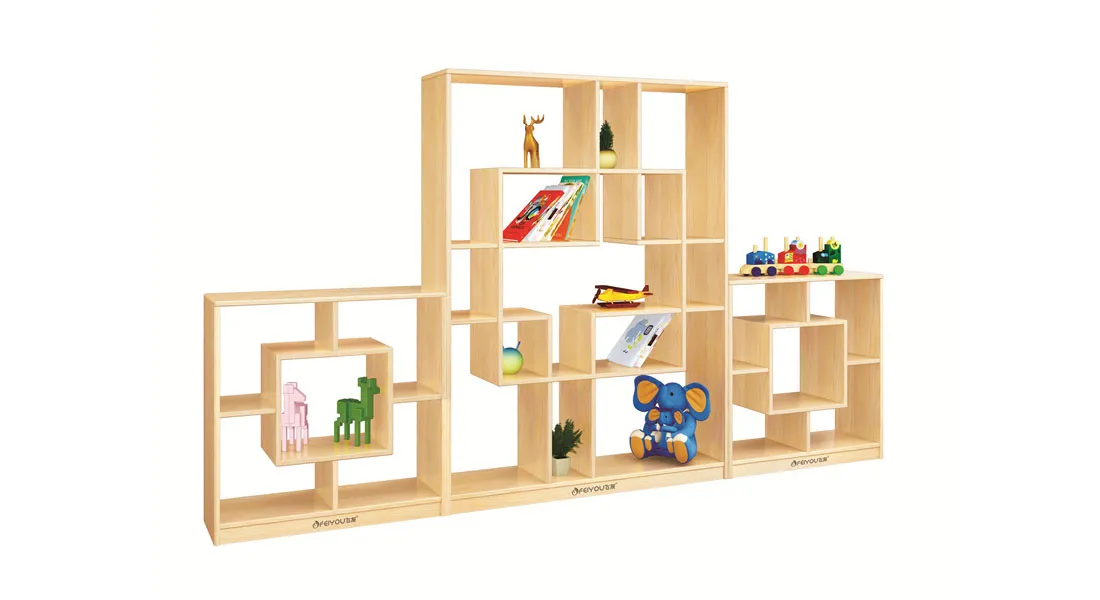
Practical Questions to Ask Before Purchasing
Use this checklist when evaluating storage furniture for your kindergarten or daycare program.
Which standards does this product comply with?
-
EN 16121 (with Annex B for kindergartens)?
-
ISO 7170?
-
ASTM F2057 (if clothing storage)?
-
GB 28007-2024 (if from China)?
Can you provide test reports?
-
Third-party lab test reports (not just manufacturer self-certification)
-
Dates of testing (should be recent)
-
Which specific tests were performed?
What are the load capacities?
-
Maximum load per shelf (in kg or lb)
-
Maximum total load for the unit
-
Maximum load for drawers (fully extended)
Has the unit been tested for stability with children climbing?
-
Vertical load on top surface
-
Horizontal pulling force on open drawers
-
Loaded drawer stability test
Are there anti-tip requirements?
-
Does the unit require wall anchoring?
-
Are anti-tip devices included?
-
Are anchoring instructions provided?
Have pinch points and finger entrapment been tested?
What this means for your program: Do not accept “we test our products” as an answer. Request specific test reports, standard names, and load capacities. A manufacturer who cannot provide this documentation may not have conducted proper testing.
Classroom Scenarios — Applying the Principles
Scenario A: A preschool is purchasing new cubby units for 24 children
This program needs storage for backpacks, lunchboxes, and personal items. The cubbies will be accessed multiple times daily by children aged 3–5. They will be loaded with up to 5–10 lb per cubby.
Recommended approach: Request EN 16121 compliance with Annex B (kindergarten requirements). Ask for shelf load test results showing capacity of at least 20 lb per shelf (to account for the heaviest items plus safety margin). Verify that the units can be anchored to the wall—and confirm that anti-tip devices are included.
Scenario B: A home daycare with limited space using tall storage cabinets
This provider needs tall cabinets (over 48 inches) for storing art supplies and toys. The cabinets will be in a room where toddlers play.
Recommended approach: Stability is the primary concern here. Request ASTM F2057 compliance (if the unit meets the height/mass criteria). Verify that the unit has been tested with loaded drawers and horizontal pulling force. Most critically: anchor the unit to the wall immediately upon installation, regardless of test results. CPSC data shows that 71% of tip-over fatalities involve children ages one to three.
Scenario C: A program ordering custom storage from a non-specialty manufacturer
This program is having custom cabinets built by a local woodworker. The cabinets will hold heavy blocks and books.
Recommended approach: Since custom furniture is unlikely to have been tested to formal standards, specify load requirements in writing. Request that the woodworker use ISO 7170 test methods as a design guide. Consider having a sample shelf independently load-tested before full production. Document the load capacity and include it in the product specification.
From Testing to Selection
By now, you have a comprehensive understanding of load testing for kindergarten storage units. You know why load testing matters—it verifies that furniture can withstand real-world forces without collapsing or tipping. You understand the key standards: ISO 7170 for test methods, EN 16121 for non-domestic storage requirements (with Annex B specifically for kindergartens), ASTM F2057 for U.S. clothing storage units, and GB 28007-2024 for China’s children’s furniture requirements. You have a practical checklist for evaluating products and asking the right questions.
Your next steps:
-
Review your current storage furniture—does it have documented test results?
-
For new purchases, include load testing documentation in your procurement requirements
-
Request EN 16121 compliance (with Annex B) for kindergarten storage units
-
Verify that all tall storage units can be anchored—and anchor them
-
For custom furniture, specify load requirements and consider independent testing
With these decision factors clarified, evaluating storage furniture options from any manufacturer becomes straightforward. You can now assess products based on how well their load capacities, stability features, and safety certifications align with the principles outlined in this guide—whether you are furnishing a new classroom or replacing aging units in your early childhood environment.
Related Reading






 English
 Español