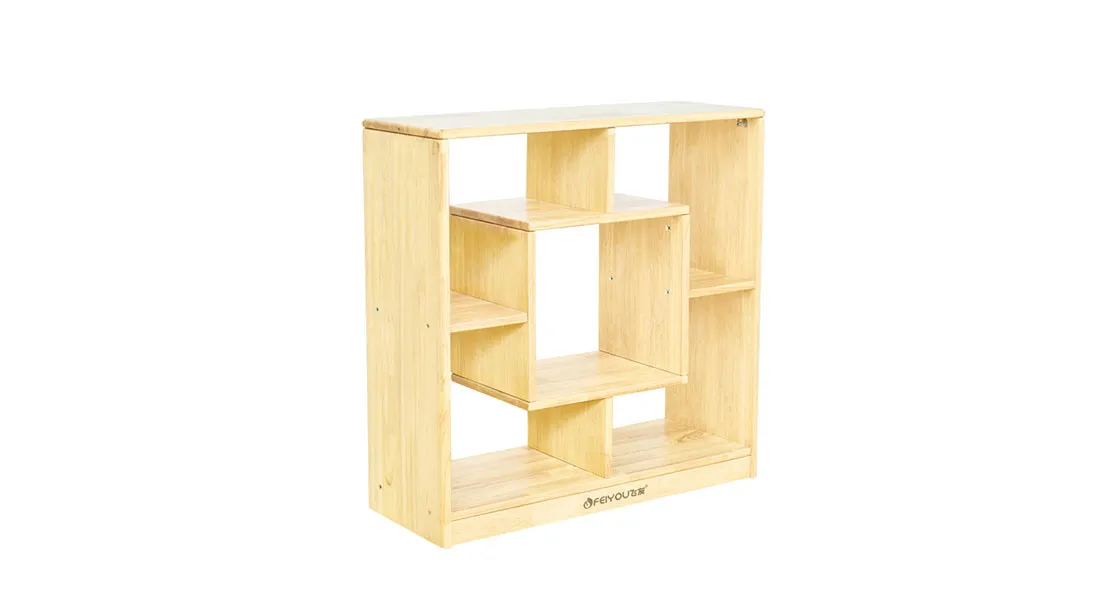
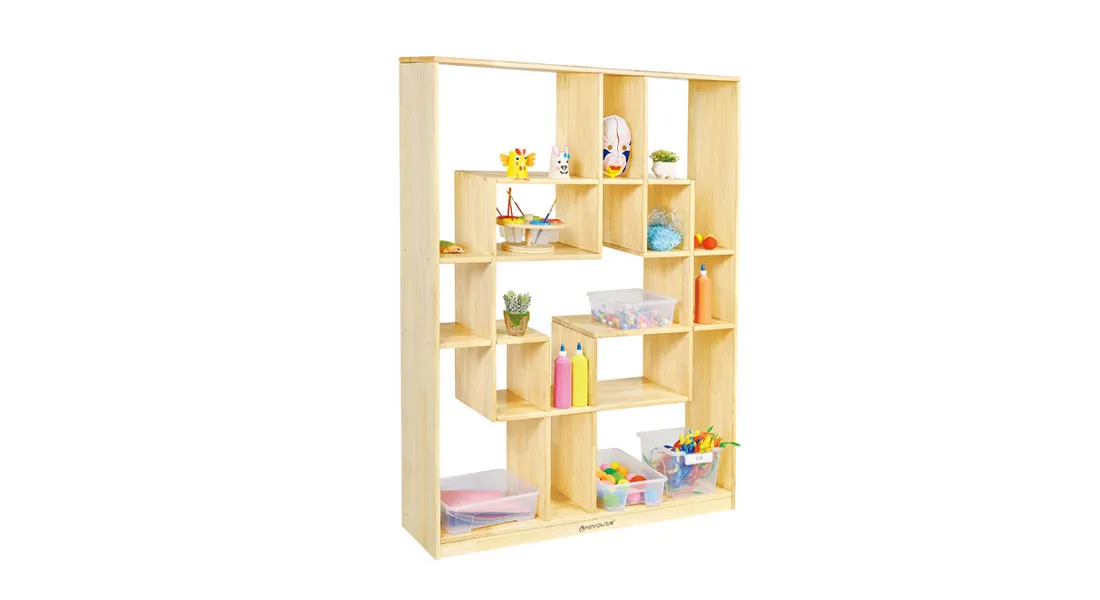
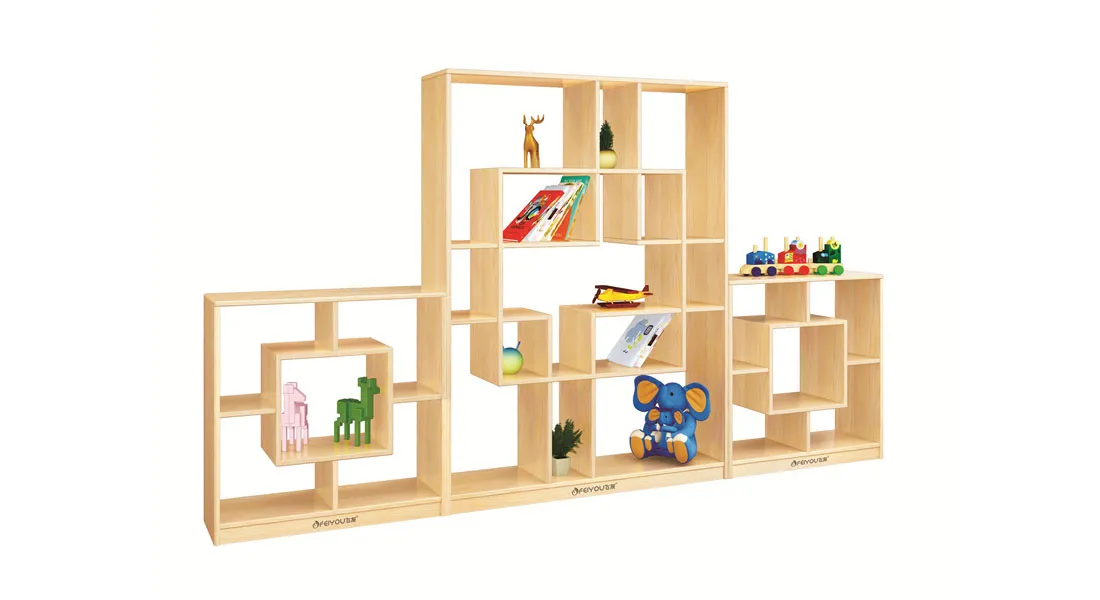
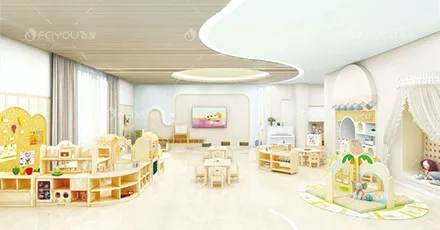
You have a clear vision for your kindergarten — an ocean-themed classroom with mermaid-shaped chairs, a forest-inspired reading nook with tree-branch shelving, or a space-themed activity area with cloud-shaped tables. You have the educational philosophy, the curriculum, and the brand identity. But the standard furniture catalog from any supplier does not match your vision. The colors are wrong. The shapes are generic. The designs do not tell your story.
This is where ODM (Original Design Manufacturer) kindergarten furniture becomes the solution. Unlike OEM (Original Equipment Manufacturer), where you provide complete designs, and the factory produces them, ODM allows you to leverage a manufacturer‘s existing design expertise while customizing colors, dimensions, materials, and branding to fit your specific theme.
This guide explains what ODM kindergarten furniture entails, how the process works from concept to delivery, what safety standards must be met, and how to evaluate potential manufacturing partners. By the end, you will have a clear framework for turning your themed classroom vision into reality.
ODM vs OEM — Understanding the Difference
Before diving into the customization process, it helps to understand the two primary manufacturing models available for custom kindergarten furniture.
OEM (Original Equipment Manufacturer) — “Contract Manufacturing”
Under OEM, you provide the complete design — detailed CAD drawings, material specifications, dimensions, colors, and finishing requirements. The factory‘s role is purely production: manufacturing the furniture exactly according to your specifications. All intellectual property belongs to you.
Best for: Programs with in-house design capabilities, existing furniture designs that need scaling, or projects requiring complete proprietary control.
ODM (Original Design Manufacturer) — “Design + Manufacturing”
Under ODM, the manufacturer provides design and development services alongside production. The factory‘s R&D team develops the initial design, creates 3D renderings and engineering drawings, produces prototypes, and manufactures the final product. You can customize colors, dimensions, materials, branding placement, and packaging.
Best for: Programs with a clear theme vision but limited in-house design capacity, or projects where leveraging the manufacturer’s existing design expertise reduces costs and timelines.
| Factor |
OEM |
ODM |
| Design ownership |
Yours, entirely |
Shared or transferred |
| Design cost |
Higher (you pay for full development) |
Lower (leverages existing capabilities) |
| Lead time |
Longer (design from scratch) |
Shorter (adapt existing designs) |
| Customization options |
Complete control |
Flexible within manufacturer‘s capabilities |
| Best for |
Unique, proprietary designs |
Themed, branded, semi-custom projects |
What this means for your program: If you have a fully developed furniture design and the budget to develop it from scratch, OEM is the right path. If you have a theme vision but need a manufacturing partner to help bring that vision to life through their existing design expertise, ODM is the more practical and cost-effective approach.
For programs just beginning to explore how classroom layout and themed furniture work together, understanding how classroom layout and age mix influence furniture decisions provides essential context before starting the customization process. Browse our Kindergarten Furniture Project Case to gain real-world layout and matching furniture reference inspiration.
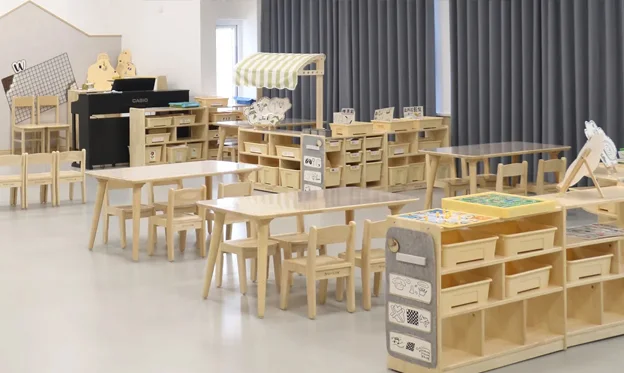
The ODM Process — From Concept to Classroom
A well-executed ODM project follows a structured process. Understanding each stage helps you plan your timeline, budget, and expectations.
Stage 1: Needs Assessment and Scope Definition
The process begins with a deep consultation to define the project scope. Key questions to answer at this stage:
-
What is your educational theme or brand story? (Ocean, forest, space, fairy tale, etc.)
-
What furniture items do you need? (Tables, chairs, storage units, reading nooks, etc.)
-
What are the age groups and room dimensions?
-
What is your target market and budget?
-
What safety standards apply to your region? (ASTM, EN, CPSIA, etc.)
The manufacturer‘s project team will analyze your requirements and provide initial conceptual input.
Stage 2: Design Development and Visualization
Once the scope is clear, the manufacturer‘s design team develops 3D renderings and CAD engineering drawings. This is the most critical stage for theme integration:
-
Theme translation: How will your ocean theme translate into chair shapes (mermaid forms), table designs (cloud shapes), and color palettes (aquatic blues and greens)?
-
Ergonomic fit: Are dimensions appropriate for your children‘s age group? ODM furniture can be customized for specific heights and developmental stages.
-
Functional integration: Can adjustable-height features or modular designs be incorporated?
You should review and approve these visual designs before any physical production begins.
Stage 3: Prototype Development and Sample Approval
After design approval, the manufacturer develops a physical prototype or sample set. This is your opportunity to verify:
-
Aesthetics: Does the actual color match the rendering? Is the finish quality what you expected?
-
Ergonomics: Is the size appropriate for children? Do chairs provide proper support?
-
Safety: Are all edges rounded? Is the structure stable? Are there any pinch points?
-
Durability: Does the prototype withstand basic load and stability tests?
Stage 4: Certification and Compliance Verification
Before mass production, all quality, safety, and environmental standards for your target market must be verified. The manufacturer should provide full compliance documentation, including:
-
CPSIA certification (U.S. market): Lead in surface coatings ≤ 90 ppm; total lead in accessible parts ≤ 100 ppm; phthalates (DEHP, DBP, BBP) ≤ 0.1%
-
ASTM F963 compliance: Heavy metal solubility limits for accessible materials
-
EN 71-3 (European market): Migration limits for heavy metals
-
Formaldehyde emission standards: E0-grade or better panels recommended
Stage 5: Mass Production and Quality Control
After sample approval and certification verification, mass production begins. Reliable manufacturers inspect every production stage:
-
Material thickness and surface smoothness
-
Edge finishing and corner rounding
-
Screw fitting and assembly stability
-
Coating adhesion and durability
-
Packaging protection for export
Stage 6: Delivery and Installation
The final stage is shipping and, where applicable, installation support. ODM projects typically require 20-35 days from order confirmation to delivery for standard customizations.
What this means for your program: The ODM process is not a simple “order from a catalog“ transaction. It is a partnership that requires clear communication, realistic timelines, and active participation in design review and sample approval. Programs that invest time upfront in the design and prototype stages consistently report higher satisfaction with the final product.
For programs seeking professional guidance on the ODM process and compliance verification, detailed planning resources are available to support your facility decisions, including checklists for evaluating manufacturer capabilities and safety documentation.
Themed Design — Integrating Your Vision with ODM Capabilities
The “custom“ in ODM kindergarten furniture is what makes it uniquely valuable for themed classrooms. But how do you translate a theme concept into actual furniture?
Theme-to-Furniture Translation Framework
| Theme Element |
Furniture Application |
Example |
| Color palette |
Coating, fabric, or laminate selection |
Ocean theme: blues, greens, teals |
| Iconic shapes |
Chair backs, tabletops, storage units |
Ocean: mermaid-shaped chairs, cloud-shaped desks |
| Narrative elements |
Decals, carved details, integrated features |
Forest: tree-branch shelving, leaf-shaped seating |
| Texture |
Surface finishes, material choices |
Nature theme: wood grain finishes over smooth plastic |
Popular Theme Directions for 2025-2026
The global kids‘ furniture market is valued at USD 67.5 billion in 2025 and is projected to grow at a CAGR of 19.6% to reach USD 338 billion by 2034. Customizable furniture — via color options, themed decals, and even 3D printing — is a growing trend as educators seek personalized pieces that reflect a child‘s developmental stage and the program‘s unique identity.
Current theme trends include:
-
Nature and forest: Wood textures, leaf and tree motifs, earthy color palettes
-
Ocean and underwater: Mermaid and sea creature shapes, aquatic colors
-
Space and exploration: Star and planet motifs, futuristic shapes
-
Fairy tale and storybook: Castle elements, whimsical shapes, warm tones
-
Minimalist and calm: Soft color palettes, natural materials, clean lines
The “Third Teacher“ Concept
Educational architecture theory describes the environment as the “third teacher“ — after parents and classroom educators. Themed ODM furniture transforms the classroom from a generic space into a tactile, explorable landscape that encourages children to use their imagination. A forest-themed reading nook with tree-branch shelving does not just hold books — it invites exploration. An ocean-themed activity table with cloud-shaped desks does not just provide workspace — it sparks curiosity.
What this means for your program: Themed ODM furniture is not decoration — it is a pedagogical tool. When furniture reflects your educational philosophy and brand identity, it communicates values to children, families, and staff before a single lesson is taught. The investment in themed design is an investment in your program‘s identity.
Safety Standards for Custom ODM Kindergarten Furniture
Safety is the non-negotiable foundation of any kindergarten furniture project. Themed designs must never compromise on safety — and a responsible ODM manufacturer will ensure that fun and safety are integrated, not traded off.
Core Safety Requirements for Children‘s Furniture
| Safety Area |
Requirement |
Applicable Standard |
| Edge and corner safety |
All edges accessible to children must be rounded, smooth, and free of sharp corners |
ASTM F963, EN 1729-2, 16 CFR Part 1500 |
| Lead in surface coatings |
≤ 90 ppm |
CPSIA |
| Total lead in accessible parts |
≤ 100 ppm |
CPSIA |
| Phthalates (DEHP, DBP, BBP) |
≤ 0.1% |
CPSIA |
| Heavy metal migration |
Solubility limits for 8 elements |
ASTM F963, EN 71-3 |
| Structural stability |
No tipping under normal use and foreseeable misuse |
ISO 7170, EN 16121 |
| Finger entrapment |
No pinch points in hinges, drawers, or folding mechanisms |
EN 16121 Annex A |
| Formaldehyde emissions |
E0-grade or better panels recommended |
Various national standards |
Questions to Ask Your ODM Manufacturer About Safety
-
“Which safety standards does your furniture comply with?” — Request specific standards: ASTM F963, CPSIA, EN 71-3, EN 1729-2, or applicable local regulations.
-
“Can you provide third-party test reports?” — Manufacturer self-certification is not sufficient. Request reports from CPSC-accepted or ISO-accredited laboratories.
-
“How are edges and corners handled in your themed designs?” — Themed shapes (mermaids, clouds, animals) must maintain rounded, safe profiles. Verify that decorative elements do not create sharp points or pinch hazards.
-
“What materials do you use for themed finishes?” — Themed colors and textures require coatings and laminates. Verify these meet lead, phthalate, and heavy metal limits.
-
“Have you manufactured themed kindergarten furniture before?” — Experience with themed designs indicates familiarity with balancing aesthetics and safety.
What this means for your program: Themed ODM furniture is safe when manufactured by experienced partners who prioritize safety alongside design. Always verify certification documentation and request third-party test reports before committing to production.
Evaluating an ODM Partner — What to Look For
Not all manufacturers offering ODM services are equal. Use this framework to evaluate potential partners for your themed kindergarten furniture project.
Manufacturer vs Trader
A direct manufacturer controls material preparation, cutting, edge treatment, drilling, assembly, coating, inspection, and packing — giving better control over size consistency, corner safety, and batch quality. A trader may offer many styles, but production depends on outside factories, creating risks in material consistency, color matching, and quality control.
Key Evaluation Criteria
| Criteria |
What to Check |
Red Flags |
| Factory ownership |
Direct manufacturer or trading company |
Trader cannot show factory floor |
| Production capacity |
Factory size, equipment, monthly output |
Vague capacity claims |
| Quality control |
Inspection points, testing protocols |
No documented QC process |
| Certification |
ISO, FSC, TUV, CE, CPSIA compliance |
Cannot provide certificates |
| Design capability |
In-house R&D team, 3D rendering, prototyping |
No design portfolio |
| Themed experience |
Portfolio of themed kindergarten projects |
Only generic classroom furniture |
| Export experience |
Track record in your target market |
No export documentation |
| MOQ flexibility |
Minimum order quantity for ODM projects |
Inflexible MOQ for your project size |
Questions to Ask a Potential ODM Partner
-
“Can we visit your factory or see a virtual tour?” — If a manufacturer cannot show their production facility, consider it a significant risk.
-
“What is your typical ODM lead time from concept to delivery?” — Standard ODM orders typically require 20-35 days from order confirmation. Clarify timelines for each stage.
-
“How many design revisions are included in your ODM service?” — Understand what is included before additional costs apply.
-
“Can you provide references from previous themed kindergarten projects?” — Speaking with past clients provides insight into the manufacturer‘s reliability.
-
“What is your quality control process for export orders?” — Reliable factories inspect edge finishing, coating adhesion, screw fitting, and carton protection before shipment
What this means for your program: Choosing the right ODM partner is as important as the design itself. A manufacturer with proven experience in themed kindergarten furniture, robust quality control, and transparent communication will deliver a better product than the lowest-cost option.
For programs ready to evaluate ODM partners and explore Kindergarten furniture collections, reviewing manufacturers with documented quality control and safety certifications can help identify partners capable of delivering both themed design and safety compliance.
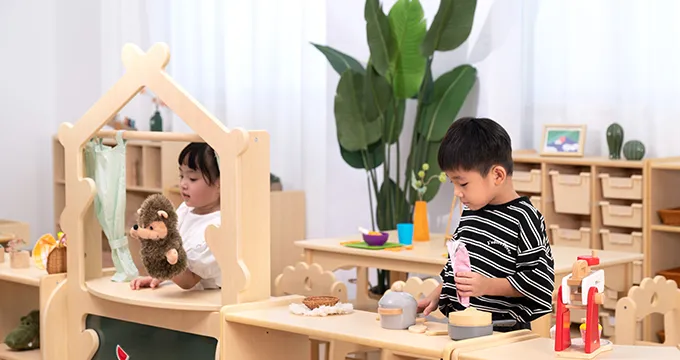
From Theme Vision to Custom Order — Your Next Steps
By now, you have a comprehensive understanding of custom ODM kindergarten furniture. You understand the difference between OEM and ODM, and why ODM is often the more practical path for themed classroom projects. You know the six-stage process from concept to delivery, and how to integrate your theme vision into furniture design. You understand the safety standards that must be met — from CPSIA lead and phthalate limits to ASTM F963 and EN 71-3 compliance. And you have a framework for evaluating potential ODM partners.
Your next steps:
-
Define your theme vision clearly — Develop a theme brief with color palettes, inspirational images, and specific furniture needs. The clearer your vision, the easier it is for an ODM partner to execute.
-
Determine your regulatory requirements — Identify which safety standards apply to your target market (U.S., Europe, or other regions).
-
Research potential ODM partners — Evaluate manufacturers based on factory ownership, design capability, themed experience, and certification.
-
Request initial design consultations — Share your theme brief with 2-3 shortlisted manufacturers and compare their design proposals.
-
Review and approve 3D renderings — Verify that the visual design matches your theme vision before prototype development.
-
Test and approve physical prototypes — Never skip this stage. Verify safety, ergonomics, durability, and aesthetics on actual samples.
-
Verify certification documentation — Request third-party test reports before mass production begins.
With these factors addressed, you can confidently move from theme concept to custom ODM order. Themed kindergarten furniture is an investment in your program‘s identity and the children‘s learning environment — and the right ODM partnership turns that investment into reality.
Related Reading
-
How to Develop a Theme Brief for Custom Kindergarten Furniture
-
ODM vs OEM for Early Childhood Furniture: Which Model Fits Your Project?
-
Evaluating ODM Manufacturers in China: A Practical Audit Checklist for Kindergarten Furniture
-
From 3D Renderings to Classroom Reality: Navigating the Prototype and Sampling Stage
-
Budgeting for Custom Kindergarten Furniture: How to Allocate Costs Across Design, Production, and Shipping






 English
 Español