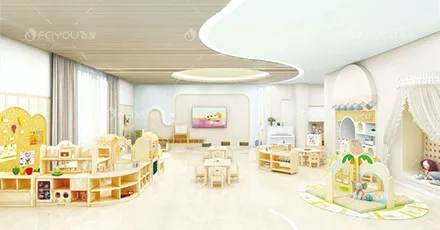
A child who has never shown interest in books suddenly picks one off a tree-shaped shelf, curls up on a cushion, and begins turning pages with focused attention. This is not an accident — it is the result of an environment designed to invite rather than instruct.
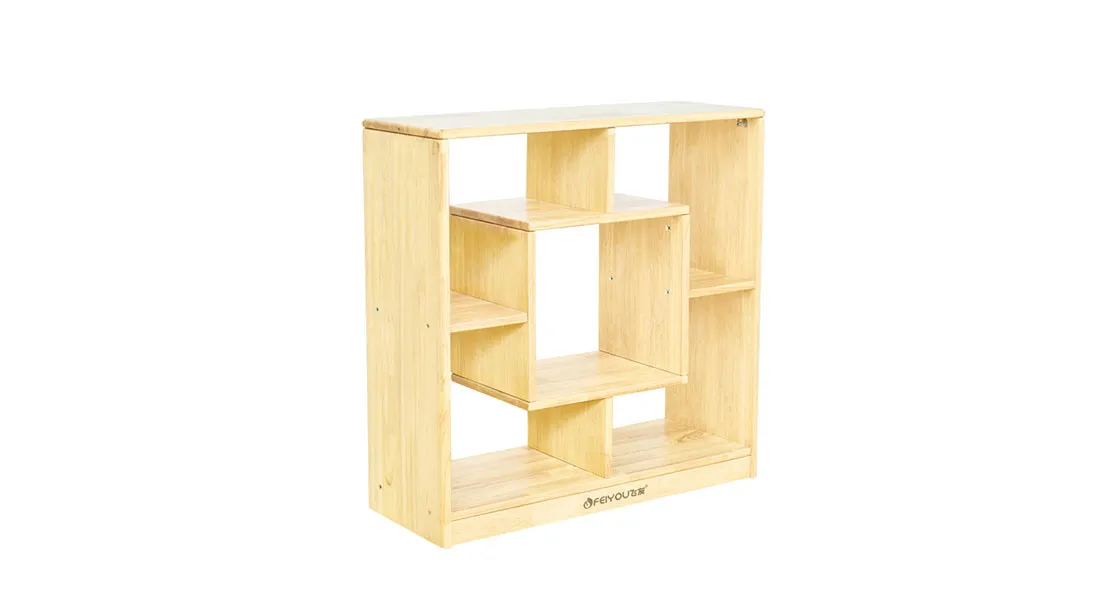
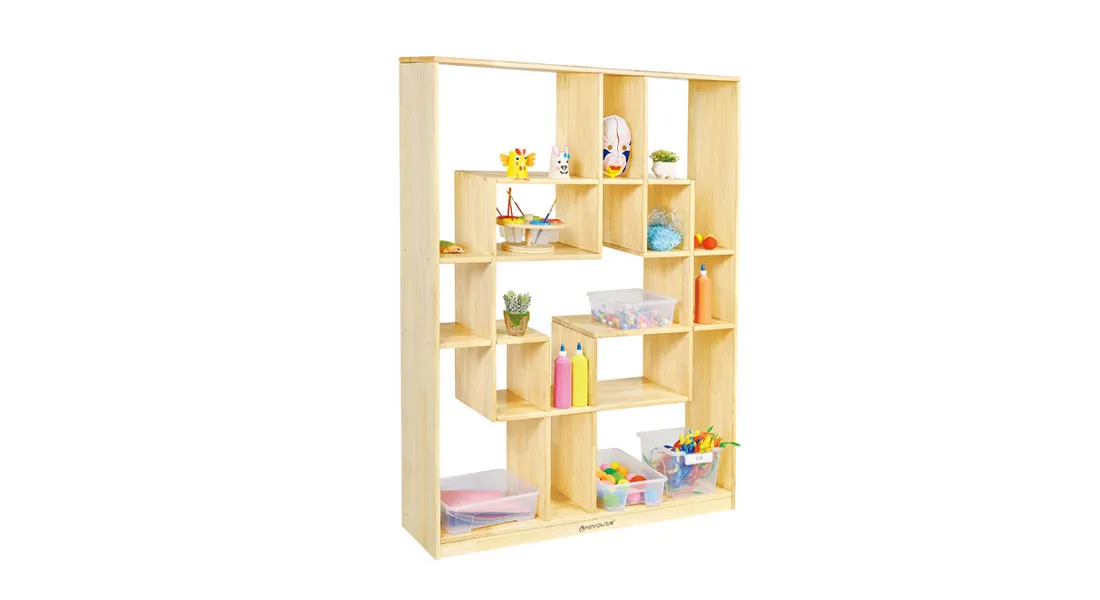
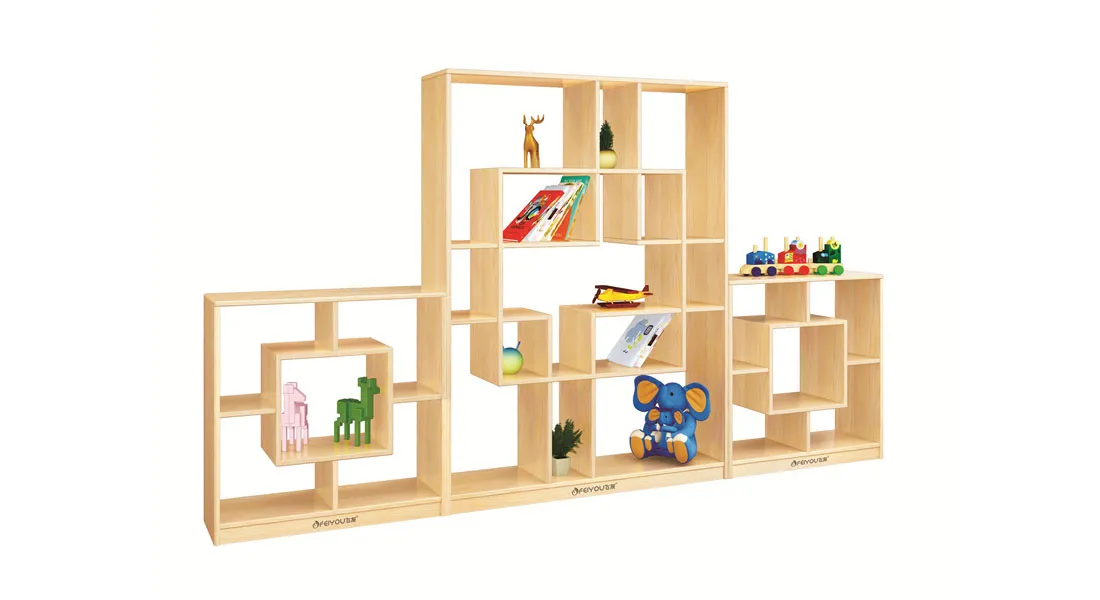
The way books are displayed, the furniture that holds them, and the space that surrounds them send powerful signals to young children. A row of books lined up spine-out on a tall shelf looks like a storage system — formal, adult-directed, and uninviting. A low, front-facing display where book covers are fully visible looks like an invitation: “Pick me. Read me.”
Research on early childhood classroom environments suggests that the physical space in which literacy occurs significantly shapes children’s engagement with reading. Given the lasting impact of early literacy development on academic achievement, understanding how to create an inviting, developmentally appropriate reading environment — one that includes thoughtfully designed themed bookshelves — is essential for any early childhood program.
This guide walks you through the key principles of designing reading corners with themed toddler bookshelves. You will learn why front-facing displays matter for emergent readers, how to select and position furniture for safety and accessibility, what thematic approaches engage young children, and how to create a space that children naturally gravitate toward.

For programs looking to understand how furniture choices interact with the overall classroom layout and age mix, exploring how classroom layout influences furniture decisions provides helpful context before implementing a reading corner design.
Why Dedicated Reading Corners Matter in Early Childhood Settings
A well-designed classroom reading corner is more than a cozy nook — it functions as a tool that nurtures independent learning in young minds. In this environment, children develop essential skills such as concentration, time management, and self-direction, while having the freedom to engage with books at their own pace.
Research cited in a Peter Barrett study found that well-defined learning zones, including reading corners, can improve student learning progress by as much as 16% annually. Furthermore, young learners feel a strong sense of belonging to their classroom reading corners, especially when they are involved in shaping the space. A supportive, social reading environment, like a reading corner in the classroom, has also been shown to help support reciprocal reading engagement among children.
Key benefits of dedicated reading corners for young children:
-
Develops independent attention and concentration skills
-
Encourages vocabulary, memory, and reasoning development
-
Helps build emotional awareness and self-regulation
-
Provides a dedicated space to practice early reading skills
-
Supports calm-down and de-escalation practices
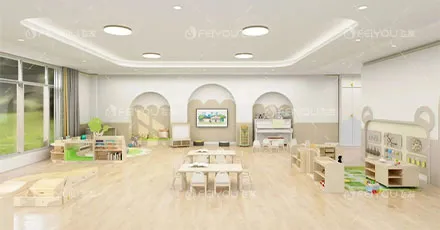
The physical literacy environment matters because children interact with spaces before they interact with content. A reading corner designed with intentionality — comfortable seating, visible book storage, easy accessibility — signals that reading is valued, enjoyable, and something children can choose for themselves.
What this means for your program: A dedicated reading corner is not an optional luxury. It is a foundational element of an early childhood classroom that supports literacy development. Even in small spaces, a well-designed reading nook can be created without elaborate or expensive furniture.
Core Principles of Reading Corner Design
Principle 1: Front-facing displays invite, while spine-out shelves hide
Young children choose books with their eyes first. Front-facing displays help them notice book covers, make independent choices, and build excitement around reading. Adults can scan book spines and remember titles, but young children usually cannot. A row of thin book spines looks like a wall of color blocks; a forward-facing cover — with its picture, character, or color — gives the child a reason to reach for it.
When books are at a child‘s eye level, they can pick, read, and return books without asking an adult every time. That small act of independence makes reading part of the room instead of a supervised activity that only happens at designated times.
Principle 2: Comfortable, accessible seating signals “this space is for me.”
Soft, inviting seating helps children settle into reading mode. Options appropriate for early childhood classrooms include floor cushions, beanbag chairs, small rugs with calm patterns, and a single soft chair where space permits. The goal is not elaborate furniture — just comfortable enough to signal that this is a special place for reading.
Principle 3: Warm, soft lighting creates a calm atmosphere
Harsh overhead lighting makes spaces feel cold and institutional; soft lighting creates a cozy, calming mood suitable for quiet activities. Effective lighting choices include a small lamp with a soft bulb, a clip-on light on the shelf, or battery-operated string lights. Where windows are available, natural light makes the space more inviting.
Principle 4: Clear boundaries help children understand the space
A reading corner should be easily accessible yet distinct from the rest of the classroom‘s activities. An area rug or carpet can help designate the space as a whole, and simple posted visual routines — such as “Take one book at a time,” “Use a whisper voice,” and “Take care of our reading corner” — help children understand expectations.
Front-Facing Bookshelves — The Foundation of an Inviting Reading Corner
The shelf style you choose fundamentally shapes how children interact with your reading corner. Standard spine-out shelving is designed for adult browsing habits; front-facing display shelving is designed for how young children actually choose books.
Why front-facing works better for toddlers and preschoolers:
| Shelf Type |
Child‘s Experience |
Reading Engagement |
| Spine-out traditional shelf |
Books appear as rows of colored spines; no visual cues |
Low: child must pull book to see cover |
| Front-facing display shelf |
Covers face outward; images, colors, characters visible |
High: child chooses by cover recognition |
| Combined approach |
Some covers facing out, some spine-out |
Moderate: best for preschoolers ready for both |
Forward-facing shelves work best for toddlers because the cover does the choosing for them. A 12 to 24 inch shelf height is usually sufficient for board books, cloth books, and a few favorite stories at this age. For preschoolers, a 24 to 36 inch bookshelf allows independent reach for most books, and a hybrid approach — some covers facing out, some stored spine-out — can work well.
Key features to look for in classroom book storage:
| Feature |
Why It Matters |
What to Verify |
| Height-appropriate design |
Shelves at child eye level encourage independent selection |
Toddler reach: 12–24 inches; Preschool: 24–36 inches |
| Durable materials |
High-use environments demand scratch-resistant surfaces |
Solid wood construction, durable finish |
| Low open shelving |
Supports self-selection, a core principle of child-led learning |
No doors or barriers to access |
| Front-facing display orientation |
Covers visible, not just spines |
Angled or stepped shelves work best |
| Rounded corners |
Essential safety feature for toddler-accessible furniture |
Verify no sharp edges or corners |
Front-facing book displays invite children to browse independently, while low open shelving supports self-selection. When books and media are easy to see and reach, children are more likely to engage with them regularly.
What this means for your program: If your current reading corner uses adult-style spine-out shelving, a simple change — replacing with front-facing display units or adding wall-mounted ledges for cover display — will meaningfully increase how often children choose books independently.
For programs evaluating furniture options specifically designed for early childhood reading environments, exploring furniture collections suitable for early learning spaces provides examples of front-facing shelving designs built for classroom durability and child safety.
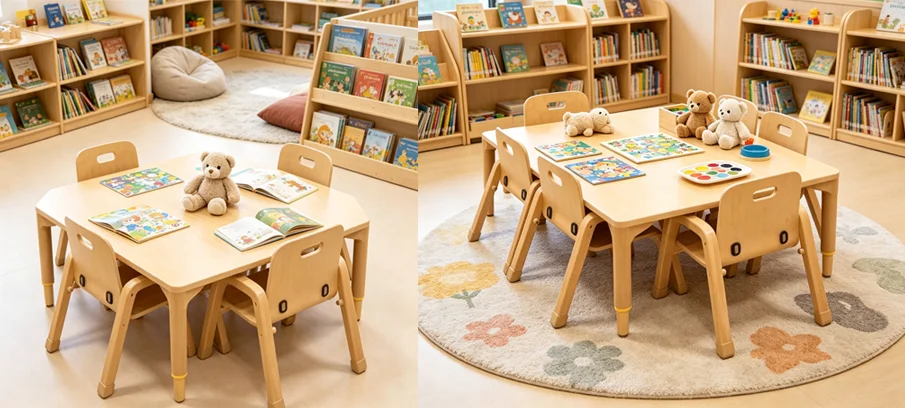
Theme Ideas for Toddler Bookshelves — Engaging Children Through Design
Themed bookshelves transform reading corners from functional storage into destinations that children actively seek out. The right theme does not just decorate — it communicates that this space is playful, welcoming, and different from the rest of the classroom.
Tree-shaped and nature-inspired bookshelves
Nature-inspired bookshelf designs — particularly tree-shaped units — have gained popularity in early childhood settings. A Montessori-style reading tree shelf with tiered branch storage and an integrated seating nook creates a reading environment that feels like exploration rather than instruction.
The effectiveness of this design is not merely cosmetic. The curved canopy mimics natural canopies found outdoors, softening visual lines while encouraging physical engagement. Unlike stacked horizontal bins that force vertical scanning, each branch displays four to six titles at child-eye level across multiple depths, and built-in seating naturally invites children to settle into quiet time. These designs align with core principles of early childhood spatial cognition: environments should support autonomy through intuitive structure.
Seasonal theme rotations
One of the most effective ways to keep reading corners feeling fresh without major reinvestment is rotating the theme seasonally. A few simple changes can maintain novelty and engagement throughout the school year:
-
Fall: Pumpkins, warm-toned blankets, harvest-themed book selections
-
Winter: Twinkle lights, soft white or blue accents, winter story collections
-
Spring: Nature books, fresh greenery or dried flowers, lighter fabrics
-
Summer: Beach-themed books, brighter colors, outdoor reading options
Seasonal touches keep reading corners feeling magical throughout the year.
Genre-based organization for older preschoolers
For children ages 4 and older, organizing books by theme or category helps build early information literacy. Grouping books by topic — bedtime stories, feelings and emotions, animal adventures — makes selection easier and supports comprehension. This approach also helps children begin to understand how books are organized, a foundational library skill.
Small-space theme solutions
You do not need a dedicated playroom to create a themed reading nook. Even the smallest corner can become a retreat with the right theme. Options for compact spaces include a small canopy over a cushion in a corner, a tent in a preschool room that creates a sensory-friendly reading area, or a simple window nook with a floating bookshelf, a warm lamp, and a small selection of books.
What this means for your program: The theme you choose matters less than the intention behind it. Any theme that makes the space feel distinct, welcoming, and child-owned will increase engagement. Seasonal rotation requires minimal effort and provides ongoing novelty.
Safety Standards and Furniture Stability
Safety is non-negotiable in any early childhood environment, and reading corner furniture is no exception. Bookshelves present specific safety considerations because they are tall, contain heavy items, and children may attempt to climb them.
ASTM F963 and edge safety
ASTM F963 is the consumer product safety specification for toys intended for use by children under 14 years of age. While this standard directly applies to toys, its safety principles inform child-safe furniture design. For early childhood reading corners, this means selecting furniture engineered to eliminate sharp edges, pinch points, and tip-over risks.
Furniture safety features include: rounded corners (no sharp 90-degree edges), smooth finishes without burrs or splinters, hardware recessed or capped (no exposed fasteners), and no scissoring or pinching mechanisms on any moving parts.
Furniture anchoring requirements
Any bookshelf or storage unit in a classroom accessible to children must be secured to prevent tip-over accidents. This applies regardless of the shelf’s stated weight or stability. CPSC guidelines for early childhood facilities specify that open-front cubbies and shelving units must be secured to the floor and wall to prevent tipping accidents. Acceptable securing methods include furniture anchor straps, L-brackets, anti-tip kits, and drywall anchors.
Age-appropriate shelf heights by developmental stage
Choosing the correct shelf height for your children’s age group is both a safety measure and an accessibility feature. Shelf heights that are too tall encourage climbing; shelves that are too low may be ignored by older children.
| Age Group |
Recommended Shelf Height |
Book Type |
Selection Size |
| 0–2 years (infant/toddler) |
12–24 inches |
Board books, cloth books |
5–10 books at a time |
| 2–5 years (preschool) |
24–36 inches |
Mixed board and picture books |
15–25 books at a time |
| 5–8 years (early reader) |
36–48 inches (lower shelves) |
Picture books, early readers |
25–35 books |
For infants and toddlers, a 12 to 24 inch shelf height is sufficient, and forward-facing shelves work best because the cover does the choosing for them. For preschoolers, a 24 to 36-inch bookshelf lets them reach most books without climbing.
What this means for your program: Before purchasing any bookshelf or reading corner unit, verify that it can be securely anchored to wall studs. Anchor straps or brackets should be included with the furniture or available separately. If a shelf cannot be anchored, it should not be placed in a child-accessible area.
For programs seeking professional guidance on classroom safety audits and furniture anchoring, detailed planning resources are available to support your facility decisions, including safety inspection checklists.
Step-by-Step Reading Corner Setup
Step 1: Select the location
Choose a quiet area of the classroom that is away from high-traffic zones like the block area or dramatic play zone. Natural light is ideal but not essential. The space should be visible for supervision — a core safety requirement in early childhood settings, as teachers must have an unrestricted view of the children at all times. Avoid placing the reading corner in a blind spot or behind tall shelving.
Step 2: Define the boundaries
Use an area rug or floor mat to visually separate the reading corner from adjacent zones. This simple boundary helps children understand where the reading space begins and ends. If the reading corner adjoins a noisier activity area, low open shelving (under 30 inches) can serve as a visual buffer while maintaining sightlines.
Step 3: Select and position front-facing shelving
Place front-facing bookshelves at child eye level. For toddlers (2–3 years), this means shelf tops at 24–30 inches; for preschoolers (3–5 years), 30–36 inches is appropriate. Position shelves against a wall and anchor them immediately.
Step 4: Add comfortable seating
Include 2–4 seating options appropriate for the space: floor cushions, a small rug, beanbag chairs, or a soft chair. Soft textiles help a reading corner feel warmer and more inviting. Ensure seating does not block the anchor points of shelving or create tripping hazards.
Step 5: Install warm lighting
Replace harsh overhead lighting with a small table lamp, clip-on book light, or battery-operated fairy lights. Warm lighting helps create the magical, storybook-inspired feeling children naturally gravitate toward.
Step 6: Curate the book selection
Keep the selection focused and manageable. Five to ten books are easier for a toddler to handle than a crowded shelf. Fifteen to twenty-five books is a healthy range for preschool daily access. Rotate the rest in a closet or adult shelf so the reading space remains calm and uncluttered.
Step 7: Establish simple routines
Post a small, picture-based sign with 2–3 rules: “Take one book at a time,” “Use a whisper voice,” “Return books to the shelf.” Clear expectations keep the space peaceful and usable all year.
Step 8: Plan for regular rotation
Rotate the book selection weekly or biweekly using themes, seasons, authors, or phonics patterns. This simple practice refreshes the corner without adding new furniture.
What this means for your program: You do not need to execute all eight steps at once. Start with the basics: a front-facing shelf, a rug, two cushions, and 10 books. Add the remaining elements over time. A functional reading corner can be created in under an hour with the right components.
Common Classroom Scenarios — Tailoring the Reading Corner
Scenario A: A small home daycare operating in a converted living room (under 300 square feet)
This program has no dedicated classroom; every piece of furniture must serve multiple purposes. The provider wants a reading corner but cannot dedicate permanent space.
Recommended approach: Use a wall-mounted front-facing ledge shelf (12–18 inches wide) that takes up zero floor space. Add two floor cushions that can be stacked and stored when not in use. Use a small basket for book storage rather than a full bookshelf. Rotate 5–8 books weekly. This approach creates a reading corner without sacrificing valuable play space.
Scenario B: A preschool with a dedicated 6×8-foot alcove off the main classroom
This program has ample space to create a reading destination. The teacher wants the space to feel special and distinct from the rest of the room.
Recommended approach: Install a canopy or soft ceiling fabric to define the space vertically. Use a tree-shaped or nature-inspired front-facing shelf as the anchor piece, positioned at child height and anchored to the wall. Add a soft rug, 3–4 floor cushions, and a small lamp. Include a small posted “reading menu” showing choices: “Read the pictures,” “Read the words,” “Read with a buddy.” This creates an immersive reading environment that children will seek out.
From Design Decisions to Classroom Implementation
By now, you have a complete framework for designing a reading corner with themed toddler bookshelves in your early childhood classroom. You understand why dedicated reading spaces matter for literacy development, the core design principles that make reading corners effective, and why front-facing bookshelves are essential for how young children choose books. You have theme ideas to engage children, safety standards to verify before purchasing, and an eight-step setup process to implement immediately.
Your next steps:
-
Assess your current reading corner against the core design principles — are books front-facing? Is the space distinct from adjacent zones?
-
Measure your available space and choose a shelf height appropriate for your children’s age group
-
Verify that any bookshelf you purchase can be anchored securely to wall studs
-
Begin with a small selection of 10–15 books and a simple seating option
-
Establish 2–3 picture-based rules and post them at child eye level
-
Plan a rotation schedule — weekly themes or seasonal updates
With these design factors clarified, comparing specific furniture options from any manufacturer becomes straightforward. You can now evaluate front-facing bookshelves, themed display units, and reading nook furniture based on how well their height, stability features, safety certifications, and storage capacity align with the needs of your program and age group.
For programs ready to move from design to implementation, several furniture collections are designed specifically for early childhood reading environments and can be reviewed with your reading corner plan in hand — whether you need a compact wall-mounted ledge or a full reading nook with integrated shelving and seating.
Related Reading






 English
 Español