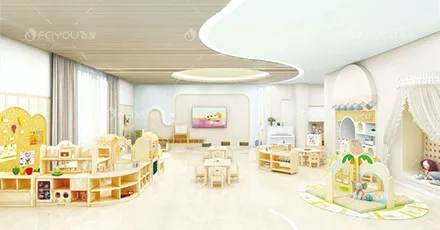
A new kindergarten building is complete. The classrooms are painted, the floors are laid, and the opening date is set. But when the furniture arrives, nothing fits—tables are too tall for toddlers, storage units block emergency exits, and the chairs lack the rounded edges required for children under six. The project is delayed, the budget is blown, and the learning environment is compromised before a single child walks through the door.
This scenario is more common than it should be. Kindergarten furniture projects involve complex coordination: age-appropriate ergonomics, stringent safety compliance, budget planning, stakeholder alignment, and logistical execution. Yet many buyers begin the process without a clear framework, leading to costly mistakes.
This guide consolidates what buyers need to know before starting a kindergarten furniture project—from budgeting and compliance standards to supplier qualification and classroom layout planning. Whether you are a school administrator, procurement officer, or early childhood project manager, this checklist helps you prepare for a successful project.
Understanding the Project Scope and Timeline
Before contacting any supplier, establish a clear understanding of your project's scope and constraints. Many projects fail because these fundamentals were never defined.
Key questions to answer at the project outset:
| Question |
Why It Matters |
| How many classrooms are being furnished? |
Determines total volume and supplier capacity requirements |
| What age groups will use the furniture? |
Directly impacts dimensions, safety standards, and ergonomic requirements (e.g., 12–24 months vs. 3–6 years) |
| What is the target opening date? |
Defines lead time and supplier selection criteria |
| What is the total project budget? |
Guides furniture options and staging strategy |
| Is this a new build or a renovation? |
Impacts installation logistics and potential building constraints |
According to UNICEF's school furniture procurement guidelines, poorly defined specifications are one of the most significant barriers to successful education projects. Without clear requirements, procurement processes become burdensome, and the resulting furniture is often poorly suited for its intended purpose—a risk magnified in early childhood settings where safety and ergonomics are paramount.
Project timeline considerations for kindergartens:
| Phase |
Duration |
Key Activities |
| Needs assessment and specification |
4–6 weeks |
Age group analysis, room measurement, stakeholder consultation |
| Supplier research and RFQ |
2–4 weeks |
Supplier identification, document preparation, proposal review |
| Sample review and approval |
2–4 weeks |
Physical sample testing, safety verification, teacher feedback |
| Production |
30–45 days |
Manufacturing, quality control, pre-shipment inspection |
| Shipping and delivery |
14–30 days |
Freight, customs clearance, on-site delivery |
| Installation |
1–2 weeks per classroom |
Assembly, placement, final safety check |
A key insight from early childhood education project experts is that furniture selection and procurement needs to be genuinely integrated into project planning—it should be considered early in the process, and its value emphasized until the project is completed. When furniture is treated as an afterthought, the risk of misalignment with the building design increases significantly, particularly for specialized items like low shelving, child-sized tables, and nap cots.
Budget Planning — Beyond the Purchase Price
The single most common mistake in kindergarten furniture procurement is optimizing for unit price alone. Procurement teams that focus exclusively on initial cost often encounter total cost overruns driven by logistics, installation breakage, and shortened replacement cycles.
Build a per-classroom budget model
A structured budget approach allocates cost per classroom rather than per unit. A 25-child kindergarten classroom requiring child-sized tables, chairs, storage units, cots, and shelving represents a discrete budget cell. Across an 8-classroom kindergarten project, multiply that cell cost by the number of rooms, then apply a 10–15% project contingency to cover installation breakage, accessory requirements (bag hooks, book boxes, display rails), and quantity adjustments identified during room surveys.
Calculate annualized lifecycle cost
Quality kindergarten furniture typically has a design life exceeding 10–15 years, compared to 2–4 years for cheap conventional furniture. This is particularly significant in early childhood settings where furniture may be used by multiple age cohorts over time.
| Cost Factor |
Budget Furniture |
Quality Educational Furniture |
| Average lifespan |
2–4 years |
10–15+ years |
| Replacement cycles |
Frequent (3–5x over 15 years) |
Infrequent (1x over 15 years) |
| Maintenance cost |
Higher (unrepairable components) |
Lower (replaceable parts, refinishable surfaces) |
| Teacher workflow impact |
High (wobbly chairs, stuck drawers) |
Low (reliable daily operation) |
| Total cost over 15 years |
3–4x purchase price |
1.2–1.5x purchase price |
Costs to include in your kindergarten project budget:
-
Furniture purchase price: Per-unit costs for tables, chairs, storage, cots, shelving, soft seating
-
Shipping and freight: Often 10–15% of total, particularly for international orders
-
Installation and assembly: Professional installation reduces breakage and ensures safety compliance
-
Third-party inspection: Recommended for orders above 300 units
-
Project contingency: 10–15% for unexpected costs
-
Waste disposal: Packaging removal and disposal of old furniture
A key principle from early childhood design experts is that furniture should be considered an investment in children's development, not just filling classrooms. When budget constraints require compromise, prioritize furniture in high-use areas first—activity tables, storage units, and seating used daily—and consider phased upgrades for less frequently used items.
Safety Standards and Compliance Documentation
Safety compliance is non-negotiable for kindergarten projects. Young children have developing bodies and limited awareness of hazards, making furniture safety standards particularly critical.
Essential safety standards for kindergarten furniture:
| Standard |
Applicability |
Key Requirements for Kindergartens |
| ASTM F963 |
U.S. market |
Heavy metal limits, sharp edge requirements, structural integrity for children's products |
| CPSIA |
U.S. market |
Lead in coatings ≤ 90 ppm; phthalates ≤ 0.1%; tracking labels |
| EN 1729-2 |
Europe |
Educational furniture safety—rounded corners, stability testing, edge safety |
| EN 71-3 |
Europe |
Heavy metal migration limits for children's products |
| GB 28007-2024 |
China (effective Jan 2026) |
Comprehensive safety for children aged 0–14: edge rounding (radius ≥ 10mm), formaldehyde limits, anti-tip requirements, age-specific labeling |
| GB 18580-2017 |
China |
Formaldehyde emission limits for wood products used in indoor environments |
Kindergarten-specific safety requirements to verify:
| Safety Feature |
Why It Matters for Kindergartens |
Standard Reference |
| Rounded corners and edges |
Children are unsteady; sharp corners cause serious injuries |
EN 1729-2, GB 28007-2024 (radius ≥ 10mm) |
| Non-toxic finishes |
Children's mouth furniture; surfaces must be safe |
CPSIA (lead ≤ 90 ppm), EN 71-3 |
| Anti-tip stability |
Young children climb furniture; tip-overs are a leading cause of injury |
CPSC Anchor It! guidance, GB 28007-2024 |
| Appropriate height and dimensions |
Furniture must fit children's proportions for safety and comfort |
EN 1729-1, GB 28007-2024 |
| Finger entrapment prevention |
Drawers and doors can pinch small fingers |
EN 16121 Annex A |
| Formaldehyde emissions |
Young children are more vulnerable to indoor air pollutants |
GB 18580-2017, ENF-level |
Institutional buyer compliance checklist:
-
Request third-party test reports from CPSC-accepted, CNAS-accredited, or ISO/IEC 17025-certified laboratories
-
Verify certification documentation aligns with applicable standards for the target market
-
Check labeling requirements (tracking labels, warning labels, age ranges)
-
Confirm material safety — formaldehyde emissions, heavy metals, phthalates
-
Verify edge and corner safety — rounded edges (radius ≥ 10mm for GB 28007-2024 compliance)
For programs seeking professional guidance on compliance verification, including checklists for evaluating third‑party test reports and manufacturer safety documentation, reach out to our team for complete compliance‑verification checklists and customized consultation.
Supplier Qualification — What to Verify Before Ordering
Supplier selection for a kindergarten project must go beyond catalogue browsing. Institutional buyers need to verify that the supplier can deliver age-appropriate, safety-compliant furniture at scale and within the required timeline.
Production capacity and MOQ verification
Confirm the supplier's minimum order quantity (MOQ) and available production capacity for your required delivery window. A supplier with an MOQ of 200 units per SKU may not accommodate a 50-unit trial order without a confirmed scale-up commitment in writing. Request a production schedule document showing available capacity for your target delivery period before issuing a purchase order.
Kindergarten-specific manufacturing experience
Request evidence of completed early childhood education projects from the past 24 months, including order size, specific age groups served, and delivery destination. A supplier with documented experience fulfilling 300–1,000+ unit kindergarten orders demonstrates the design understanding, quality control processes, and logistics infrastructure required for institutional procurement. Project references without verifiable detail—age group, client type, delivery timeline—should be treated as unverified.
Pre-shipment inspection and quality control access
Confirm whether the supplier supports pre-shipment inspection by a third-party inspection agency. For kindergarten orders above 300 units, pre-shipment inspection is a risk mitigation standard that should be written into the purchase contract. Clarify at the RFQ stage whether inspection costs are absorbed by the supplier or billed separately.
Key supplier evaluation criteria:
| Criteria |
What to Check |
Red Flags |
| Manufacturing capability |
Factory size, equipment, monthly output |
Cannot provide facility tour or virtual tour |
| Quality control |
Documented inspection protocols, 2-year warranty offered |
No documented QC process, no warranty |
| Safety compliance |
Third-party test reports for kindergarten standards |
Cannot provide test reports or certificates |
| Kindergarten experience |
Reference projects from past 24 months |
Vague or unverifiable references |
| Production capacity |
Available capacity for your timeline |
Cannot commit to delivery date |
| MOQ flexibility |
MOQ aligns with your order size |
Inflexible MOQ for kindergarten-scale orders |
Specifying Requirements in the RFQ
A well-structured RFQ reduces supplier ambiguity and produces comparable quotes across multiple vendors. Procurement teams that use vague product descriptions receive inconsistent proposals that cannot be objectively evaluated against one another.
Dimension and ergonomic criteria by age group
For kindergarten-aged children (3–6 years), specific dimension requirements apply:
| Age Group |
Table Height |
Chair Height |
Seat Depth |
Shelf Height (access) |
| 3–4 years |
46–50 cm |
26–28 cm |
26 cm |
60–80 cm |
| 4–5 years |
50–54 cm |
28–30 cm |
28 cm |
70–90 cm |
| 5–6 years |
54–58 cm |
30–32 cm |
30 cm |
80–100 cm |
For younger children (12–36 months), dimensions are smaller:
| Age Group |
Table Height |
Chair Height |
Seat Depth |
| 12–24 months |
38–42 cm |
18–20 cm |
20 cm |
| 24–36 months |
42–46 cm |
20–24 cm |
22 cm |
Finish codes and batch consistency requirements
For multi-classroom rollouts, finish code consistency is a critical procurement control. Specify the required colour codes—RAL references for frame powder coat and laminate reference codes for surface finishes—and include a clause requiring batch finish documentation from the manufacturer with each delivery.
Material specifications for kindergarten safety
Based on institutional procurement requirements, include specific material and safety parameters in your RFQ:
-
For wood products: Formaldehyde emissions must meet GB 18580-2017 ENF-level standards (≤ 0.025 mg/m³)
-
For coatings: Water-based paints with VOC ≤ 80g/L and free formaldehyde ≤ 100mg/kg, compliant with HJ2537-2014
-
For edge safety: All corners must be rounded (radius ≥ 10mm for GB 28007-2024 compliance)
-
For storage units: Anti-tip devices required for units over 60cm height
Sample and testing requirements
Including sample requirements in the RFQ protects your project. For example, one institutional tender required that pre-bid samples be submitted with:
-
Water-based paint test reports (VOC ≤ 80g/L, free formaldehyde ≤ 100mg/kg)
-
Rubberwood finger-joint board test reports (formaldehyde meeting GB 18580-2017 ENF level)
-
Physical safety verification (rounded edges, stability, finish quality)
Classroom Layout Planning for Kindergarten
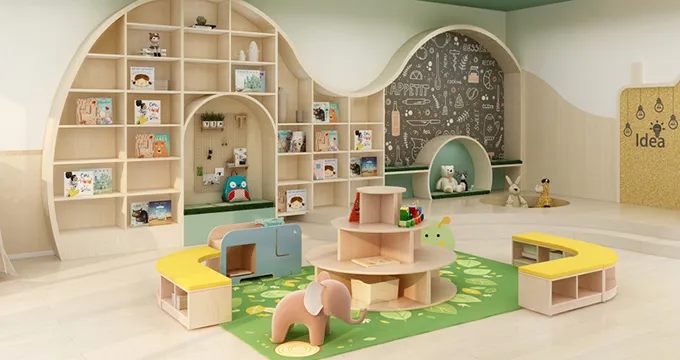
Furniture procurement cannot be separated from classroom layout. The most beautiful furniture will fail if it doesn't fit the space or support young children's developmental needs.
Layout principles for kindergarten classrooms:
-
Create distinct learning zones: Position furniture to define quiet reading areas, active play zones, art and sensory corners, and group gathering spaces
-
Maintain clear sightlines: Teachers must be able to see all children from multiple positions in the room—a supervision requirement in many regulations
-
Ensure clear pathways: At least 36 inches between activity zones and to exits for safe movement
-
Consider evacuation requirements: Furniture placement must not block emergency routes—a critical safety consideration
-
Plan for nap time transition: Furniture that can be reconfigured for cots during rest periods
-
Support independence: Low, accessible storage that allows children to select and return materials without adult assistance
Space planning checklist for kindergartens:
| Checkpoint |
Verification |
| Measure all classroom dimensions |
Accurate floor plans with door and window locations |
| Mark fixed elements |
Sinks, electrical outlets, pillars, built-in cabinets |
| Map circulation paths |
Primary and secondary pathways through the room |
| Define learning zones |
Assign activities to specific areas (reading, art, blocks, dramatic play) |
| Place furniture on paper |
Layout before ordering, not after delivery |
| Verify supervision sightlines |
Teachers can see all zones from key positions |
| Check evacuation routes |
Minimum 36-inch clearance to all exits |
For programs planning kindergarten classroom layouts, reviewing furniture collections designed for early learning environments can help identify options that support both daily functionality and flexible teaching methods.
The Importance of Stakeholder Engagement
A critical lesson from successful kindergarten furniture projects is the importance of involving all stakeholders in the process. One school district that created an innovative early learning environment emphasized several key principles:
Give teachers a voice and choice: When teachers are involved in furniture selection, they take ownership of the space. Kindergarten teachers have specific expertise in how young children use furniture—their input is essential for practical, age-appropriate design.
Get everyone involved: Teachers, staff, and even families provided ideas in the design process. Children's perspectives can reveal what is genuinely inviting and comfortable.
Test furniture before full order: Furniture should be comfortable and suit young children's needs before ordering. A trial period with children and teachers using selected pieces in a sample classroom for a week is the most effective way to avoid decision errors.
Two Common Kindergarten Scenarios — Applying the Principles
Scenario A: A new public kindergarten opening with a government procurement budget
A new kindergarten in China is procuring 12 classrooms of furniture for children aged 3–6. The budget is fixed through a public tender process.
Recommended approach: Build the procurement around specific, verifiable specifications. Include in the RFQ:
-
Detailed dimensions for each furniture type based on age group requirements
-
Material specifications (rubberwood finger-joint board meeting GB 18580-2017 ENF level)
-
Coating requirements (water-based paint with VOC ≤ 80g/L, free formaldehyde ≤ 100mg/kg, compliant with HJ2537-2014)
-
Edge safety requirement (radius ≥ 10mm per GB 28007-2024)
-
Sample submission requirements (CMA/CNAS test reports)
This approach protects the project by ensuring all suppliers quote against identical criteria and by verifying compliance before order confirmation.
Scenario B: A private preschool in the United States sourcing furniture for a new classroom
A preschool in California is opening a new classroom for 18 children aged 2–4. The director has a moderate budget but wants to ensure safety, comfort, and age-appropriate design.
Recommended approach: Start with an online search for suppliers with documented early childhood experience. Request third-party test reports for CPSIA (lead and phthalates) and ASTM F963. Visit a showroom or request samples to test furniture for safety, stability, and child appeal. Consider a "pilot classroom" approach—furnish one room first, gather teacher and child feedback, then order the remaining furniture based on lessons learned.
From Preparation to Procurement
By now, you have a comprehensive understanding of what buyers need before starting a kindergarten project. You understand the importance of defining project scope and timeline upfront. You know how to build a total cost budget, including lifecycle costs and contingencies. You have a framework for safety compliance documentation, supplier qualification, and RFQ specifications. And you understand the critical role of classroom layout planning and stakeholder engagement.
Your next steps:
-
Define your project scope — Number of classrooms, age groups, opening date, total budget
-
Build a per-classroom budget model — Include contingency and lifecycle costs
-
Identify applicable safety standards — U.S. (CPSIA, ASTM F963), Europe (EN 1729, EN 71-3), China (GB 28007-2024)
-
Develop a detailed RFQ specification — Dimensions, materials, finishes, testing requirements
-
Qualify suppliers — Verify production capacity, kindergarten experience, QC processes
-
Create a classroom layout plan — Define zones, pathways, and furniture placement
-
Engage stakeholders — Involve teachers, staff, and families in selection and testing
-
Request samples and test reports — Verify before full order
With these factors addressed, you can confidently move from preparation to procurement. A well-prepared kindergarten furniture project is not just about buying furniture—it's about creating an environment where young children can learn, grow, and thrive.
Once you have established these key decision factors—scope, budget, compliance requirements, and layout needs—comparing specific furniture options becomes straightforward. You can now evaluate suppliers based on how well their products, certifications, and service capabilities align with your kindergarten project's unique requirements. For programs ready to explore furniture collections designed specifically for early childhood environments, reviewing furniture for kindergarten and daycare settings can help identify products that meet both age-appropriate ergonomic standards and rigorous safety requirements.
Related Reading
-
Safety Standards Every Education Project Should Know
-
How to Plan Classroom Layouts That Support Different Learning Zones
-
Load Testing for Kindergarten Storage Units: What Every Buyer Should Know
-
ODM vs OEM for Early Childhood Furniture: Which Model Fits Your Project?
-
Best Kindergarten Furniture Ideas for Modern Classrooms






 English
 Español