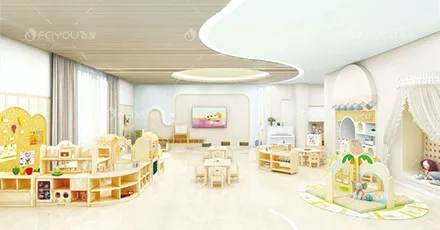
When selecting furniture for kindergartens and daycares, the coating on each surface is not merely an aesthetic choice—it directly affects the indoor air quality children breathe every day. Unlike residential settings where ventilation can be managed, preschool environments host young children with developing respiratory systems for six to eight hours daily, making coating safety a critical operational decision. This guide examines the safety differences between water-based and solvent-based coatings, drawing from current Chinese national standards and peer-reviewed research, to provide a framework for evaluating furniture finishes.
Understanding the Core Difference: What Makes Each Coating Type Distinct?
The fundamental distinction between water-based and solvent-based coatings lies in their carrier medium. Water-based coatings use water as the primary solvent or dispersing agent, while solvent-based coatings rely on organic solvents such as toluene, xylene, and ethylbenzene. This seemingly technical difference has profound implications for safety.
The carrier medium determines what evaporates into the air during application and, more importantly, what continues to off-gas from finished furniture over time. Solvent-based coatings release volatile organic compounds (VOCs) as the organic solvents evaporate—a process that can continue for weeks after the coating has dried. Water-based coatings, by contrast, release primarily water vapor and minimal amounts of additives.
According to the World Health Organization, water-based paints rarely contain intentionally-added lead, and the paint industry historically categorizes paints by solvent base: water-based (commonly called latex paint) and organic solvent-based (commonly called alkyd paint). This classification matters because the solvent base determines the types and quantities of hazardous substances present in the final product.
VOC Emissions: The Most Critical Safety Metric
Volatile organic compounds are the primary concern when evaluating coating safety. VOCs contribute to indoor air pollution and have been associated with respiratory issues, neurological effects, and in some cases, carcinogenic risks.
Quantitative differences are substantial. Under China’s mandatory national standard GB 18581-2020 for wood coatings, solvent-based coatings have VOC limits ranging from approximately 500 to 760 g/L, while water-based coatings range from 100 to 420 g/L. More recent standards have tightened these limits further. GB 30981.2-2025, effective June 2026, sets VOC limits for water-based wood coatings at ≤250 g/L for pigmented finishes and ≤300 g/L for clear finishes. Solvent-based wood coatings under the same standard are limited to ≤420 g/L.
To put these numbers in context: a solvent-based coating at 500 g/L contains roughly five times the VOC concentration of a water-based coating at 100 g/L. In practical terms, this means significantly higher airborne chemical concentrations in enclosed preschool spaces.
A 2023 field study published in the Journal of Cleaner Production examined eight furniture manufacturing enterprises using five different coating types in China’s Pearl River Delta. The researchers found that solvent coating VOC concentrations measured 143.32 mg/m³—far higher than solvent UV coating at 45.96 mg/m³ and other low-VOC coatings at ≤11.81 mg/m³. The study also determined that solvent coatings have the greatest contribution to ozone formation potential and secondary organic aerosol formation.
Interpreting these numbers for preschool decision-making: A VOC concentration differential of this magnitude means that furniture finished with solvent-based coatings will release substantially more airborne chemicals into the classroom environment. For children spending extended periods in these spaces, the cumulative exposure difference is significant.
For an overview of FEIYOU’s approach to material safety and coating standards in preschool furniture manufacturing, explore the quality assurance framework that guides production decisions.
Beyond VOCs: Hazardous Substances Unique to Each Coating Type
VOC levels tell only part of the safety story. Each coating type contains distinct hazardous substances that require separate consideration.
Solvent-based coatings carry several unique risks:
-
Aromatic hydrocarbons (benzene, toluene, ethylbenzene, xylene): These compounds dominate solvent coating emissions. A 2025 study published in the Journal of Environmental Sciences found that aromatics constitute the highest emissions from solvent-based coatings. Benzene is classified as a known human carcinogen.
-
Free isocyanates (TDI, HDI): Polyurethane solvent-based coatings must管控 free diisocyanates, which are strongly irritating and pose significant health threats to workers and occupants.
-
Formaldehyde: Research published in the Journal of Hazardous Materials (2023) found that formaldehyde in solvent-based paints (using xylenes as the solvent) presents inhalation reproductive or developmental health risks exceeding safety thresholds.
-
Ethylbenzene carcinogenic risk: The Pearl River Delta study identified a carcinogenic risk from ethylbenzene in solvent coating spraying workshops at 8.53 × 10⁻⁶. Xylene in solvent coatings presented a non-carcinogenic risk index of 1.07—the only coating type in the study to exceed the safety threshold for non-carcinogenic risk.
Water-based coatings present a different risk profile:
-
Oxygenated VOCs: These compounds constitute the primary emissions from water-based coatings. While they contribute to ozone formation, their health risk profile differs substantially from aromatic hydrocarbons.
-
SVOC: Under GB 30981.2-2025, water-based wood coatings must meet SVOC limits of ≤100 g/L for pigmented finishes and ≤150 g/L for clear finishes. Solvent coatings have a lower SVOC limit of ≤60 g/L—an important distinction as SVOCs can persist longer in indoor environments.
-
Formaldehyde: Water-based coatings管控 formaldehyde at ≤50–100 mg/kg, with limits significantly lower than historical solvent-based levels.
-
Biocides: Some water-based coatings contain biocides to prevent microbial growth during storage. A 2023 high-throughput screening study noted that while water-based paints generally pose lower health risks than solvent-based paints, they may contain biocides of high concern.
The critical takeaway: solvent-based coatings introduce multiple known carcinogens and respiratory irritants that are absent from water-based formulations. The risk profile is not merely a matter of degree—it involves qualitatively different hazardous substances.
Health Impact Evidence: What the Research Shows
Multiple peer-reviewed studies have quantified the health impact differences between coating types.
A 2025 study published in Environmental Pollution investigated VOC emission profiles from solvent-based and water-based paints through field experiments. The research revealed a dramatic reduction in VOC concentrations from solvent-based paints in recent years—with benzene, toluene, and xylene decreasing by 99.0% and 99.8% respectively. However, water-based paints consistently exhibited low VOC levels, with only modest further reductions possible. This finding underscores that while solvent-based technology has improved, water-based coatings start from a fundamentally lower baseline.
The Pearl River Delta study offers another critical insight: solvent-based workshops pose a higher carcinogenic risk than water-based coating workshops. The researchers concluded that strict control measures for fugitive emissions should be implemented to mitigate human health risks.
A 2023 high-throughput screening of interior paints published in the Journal of Hazardous Materials compared the total human health impact of a single painting event on all household adults. The impact ranged from 1.5 × 10⁻³ to 2.1 × 10⁻² DALYs (disability-adjusted life years) for solvent-based paints, compared to 4.1 × 10⁻⁴ to 9.5 × 10⁻⁴ DALYs for water-based paints. This represents a difference of approximately one order of magnitude in health impact.
For preschool environments, where furniture is used daily by young children, these differences compound over time. Children are more vulnerable to airborne chemicals due to their higher respiratory rates, developing organs, and greater time spent in indoor environments.For context on how FEIYOU integrates safety considerations into preschool furniture design, see the design decision framework that guides material and finish selection.
Regulatory Standards: The Evolving Compliance Landscape
Understanding the regulatory framework helps purchasers evaluate coating safety claims. Several mandatory Chinese national standards govern coating safety:
| Standard |
Scope |
Key Provisions |
| GB 18581-2020 |
Wood coating hazardous substance limits |
Solvent-based VOC ≤420–550 g/L (varies by type); water-based VOC ≤250–300 g/L |
| GB 30981.2-2025 |
Industrial coating hazardous substance limits (effective June 2026) |
Water-based wood coatings: pigmented ≤250 g/L, clear ≤300 g/L; toy coatings ≤420 g/L; SVOC limits introduced |
| GB 18584-2024 |
Furniture hazardous substance limits (effective July 2025) |
Covers all furniture including children's furniture;可迁移 elements apply to all accessible coating areas for children's furniture |
| GB/T 33394-2016 |
Water-based wood coatings for children's rooms |
Specialized voluntary standard for children's space applications |
The regulatory trend is unmistakable: limits are tightening, and water-based coatings are increasingly favored. GB 30981.2-2025 reduces toy coating lead content from 600 mg/kg to 90 mg/kg and expands phthalate管控 from 6 to 7 substances with limits dropping from 0.2% to 0.1%. The standard also introduces mandatory coating hazard labeling (format: “GB30981.2-model-Pb content-contact marking”) to prevent misuse of toxic coatings.
Industry observers note that with EU regulations restricting and prohibiting solvent-based wood coatings, China's furniture industry faces转型升级—with water-based coatings projected to become the most popular product. Some industry forecasts suggest China's water-based coating market has at least 10 times replacement growth potential.
For preschool furniture purchasers, these regulatory trends provide a clear direction: selecting water-based coatings aligns with both current best practices and future compliance requirements.
Practical Decision Framework for Preschool Furniture Purchasers
Based on the evidence above, here is a practical framework for evaluating coating safety when purchasing preschool furniture:
Step 1: Request coating documentation. Ask suppliers for:
-
Coating type (water-based or solvent-based)
-
VOC test reports from accredited laboratories (CMA/CNAS认证)
-
Compliance certification with GB 18581-2020 or newer standards
-
For water-based claims, request SVOC test results under GB 30981.2-2025
Step 2: Verify the "water-based" claim. Some products labeled "water-based" may still contain significant organic solvents. Look for:
-
VOC test results below 250 g/L for pigmented finishes
-
Third-party certification rather than self-declaration
-
Transparent disclosure of all hazardous substances tested
Step 3: Consider the entire lifecycle. Coating safety extends beyond initial installation:
-
Off-gassing period: Solvent-based coatings release VOCs over weeks; water-based coatings release primarily water vapor
-
Durability requirements: Water-based coatings have improved significantly but may have different hardness characteristics
-
Maintenance impact: Re-coating or touch-ups introduce additional VOC exposure if solvent-based products are used
Step 4: Evaluate the supplier's coating expertise. Not all water-based coatings are equal. Suppliers with dedicated quality assurance systems and established testing protocols are more likely to deliver consistent, safe finishes.
For examples of how preschool environments benefit from thoughtful furniture selection, review the kindergarten furniture project cases and daycare furniture project cases for real-world applications.
From Safety Evaluation to Product Selection
The decision between water-based and solvent-based coatings for preschool furniture is not merely a technical choice—it is a commitment to the health and well-being of children. The evidence from Chinese national standards, peer-reviewed research, and international health organizations consistently points in one direction: water-based coatings offer a substantially safer profile for indoor environments where children spend extended periods.
Key decision factors to clarify before proceeding with any furniture purchase:
-
Required safety level: Are you furnishing a space for infants (higher vulnerability) or older preschoolers?
-
Ventilation conditions: Can the space be adequately ventilated during and after installation?
-
Durability expectations: Does the furniture need to withstand intensive daily use, and does the coating type meet those requirements?
-
Regulatory compliance: Will the furniture need to meet specific certification requirements (e.g., for government-funded projects)?
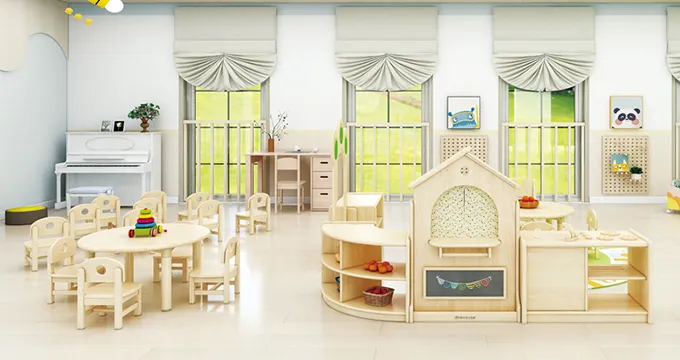
Once these factors are clarified, comparing the specific specifications of available options becomes the logical next step. For preschool environments with extended daily occupancy, water-based coatings represent the safer choice—a conclusion supported by both regulatory standards and scientific evidence.You can review FEIYOU’s product series that apply water-based finishes designed for preschool safety requirements—for example, the Childhood Fort Series and the Fany Garden Series —or explore specific applications through the project case studies linked above.
Related Reading






 English
 Español