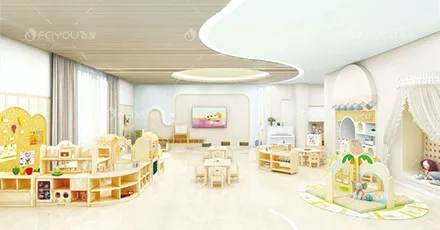
A few years ago, I walked into a kindergarten classroom designed like an underwater adventure. Blue waves painted across every wall. Fish-shaped seating is scattered around. A massive whale cutout hangs from the ceiling.
The children loved it. For about three weeks.
Then something interesting happened. The teacher noticed that during quiet reading time, children were still buzzing with ocean-themed energy. The blue walls, meant to be calming, had become overstimulating. The fish chairs, meant to be fun, had become distractions. The whale, meant to be inspiring, was just... there.
The director leaned over and asked me a question that stuck: "Did we choose the wrong theme? Or did we choose the wrong approach to theming?"
That question sits at the heart of a debate many kindergarten administrators face. Decorative classroom environments can inspire imagination. Understated educational settings can promote focus. Neither is universally better. The right choice depends on how you use each approach.
The Real Cost of Over-Theming
Let me share what I have observed across dozens of kindergarten classrooms.
Heavily themed spaces often look incredible in photographs. They win awards. Parents ooh and aah during tours. But there is a hidden price.
According to research published in Early Childhood Research Quarterly, visually complex classroom environments can actually reduce children's ability to sustain attention on learning tasks by up to 24% compared to moderately decorated spaces. The study found that when every surface competed for visual attention, children spent more time looking around and less time engaging with activities.
One kindergarten teacher put it bluntly: "My pirate-themed room was exhausting. The children were constantly play-fighting. The theme drove the behavior instead of the curriculum. I spent more time managing pirate drama than teaching."
The issue is not theming itself. It is a single-narrative design—when every element reinforces one story, leaving no room for children's own imagination or for quiet focus.
The Case for Understated Educational Settings
On the other end of the spectrum, minimalist kindergarten interiors have gained traction, particularly in Reggio Emilia-inspired and Montessori environments.
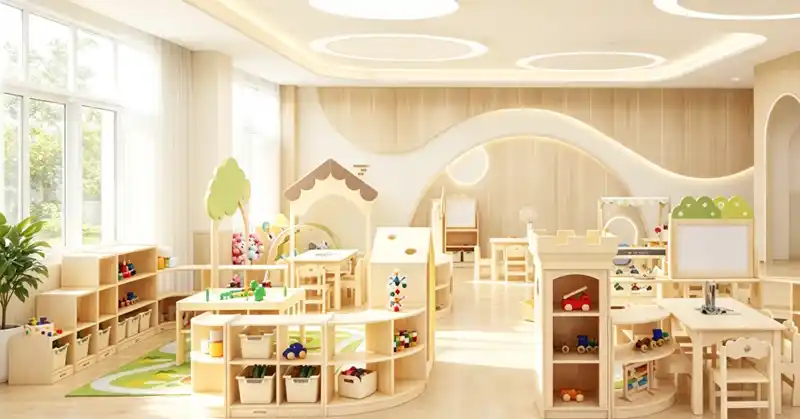
These spaces use natural materials—wood, cotton, plants—and muted colors. Walls display children's own work rather than commercial decorations. Furniture is simple, functional, and often neutral in color.
The benefits are measurable. A 2022 study from the University of Salford found that classrooms with natural light, adaptable furniture, and controlled visual clutter improved learning outcomes by 16% compared to traditionally decorated rooms.
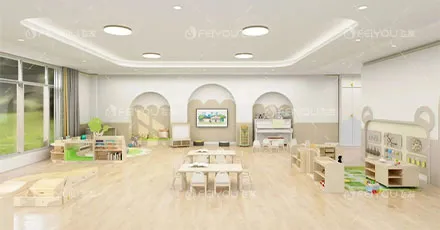
I visited a neutral-designed kindergarten where the walls were soft cream, the shelving was natural birch, and the only "decoration" was a rotating gallery of children's paintings. The room felt calm. Children moved between activities without chaos. The teacher told me: "The room doesn't compete with the learning. It supports it."
But there is a downside. Some neutral spaces feel sterile. Children who thrive on imaginative play may find them uninspiring. Parents touring the facility might perceive the lack of decoration as a lack of warmth.
Where Theming Works Best
Let me be clear: I am not anti-theme. Strategic thematic design can be powerful.
Zone-based theming offers a middle path. Instead of theming an entire classroom, apply thematic elements to specific zones. A jungle-themed reading nook with leafy canopies and soft animal seating creates a distinct, cozy atmosphere for books. The rest of the room remains neutral. Children learn to associate the theme with a specific activity—reading time.
Rotating themes keep novelty without overwhelming. One kindergarten I visited changes its "feature wall" every six weeks—space, ocean, farm, construction. The rest of the furniture remains neutral. The rotating element provides excitement and curriculum integration without permanent visual noise.
Child-created themes represent the most developmentally appropriate approach. Instead of buying expensive themed furniture, provide neutral, high-quality pieces and let children decorate with their own art, projects, and temporary displays. The theme emerges from their learning rather than being imposed on them.
A director who switched to this approach told me, "I stopped buying castle-shaped shelves and pirate ship tables. Now I buy beautiful neutral pieces. The children turn them into castles, ships, or space stations, depending on what we are studying. My furniture lasts longer, and my curriculum is more flexible."
The Neutral Anchor Strategy
Here is a framework I recommend to kindergarten decision-makers.
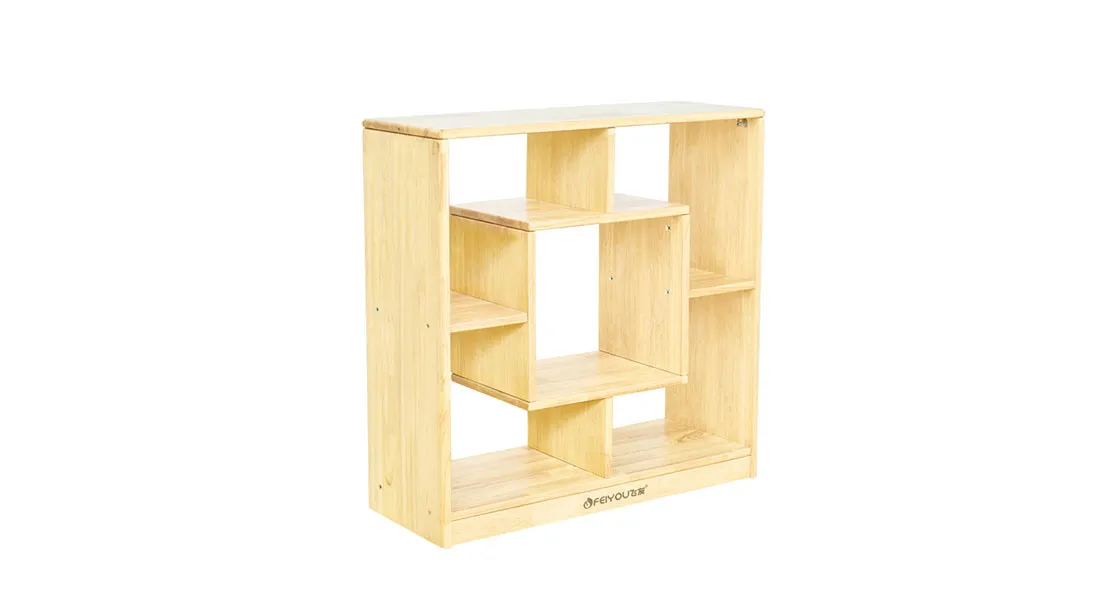
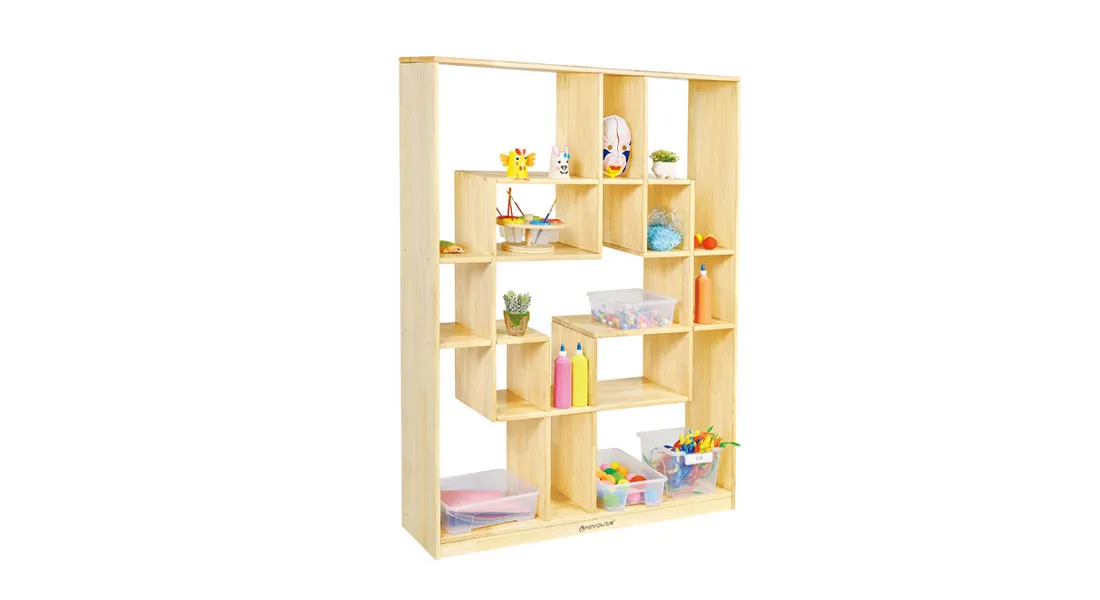
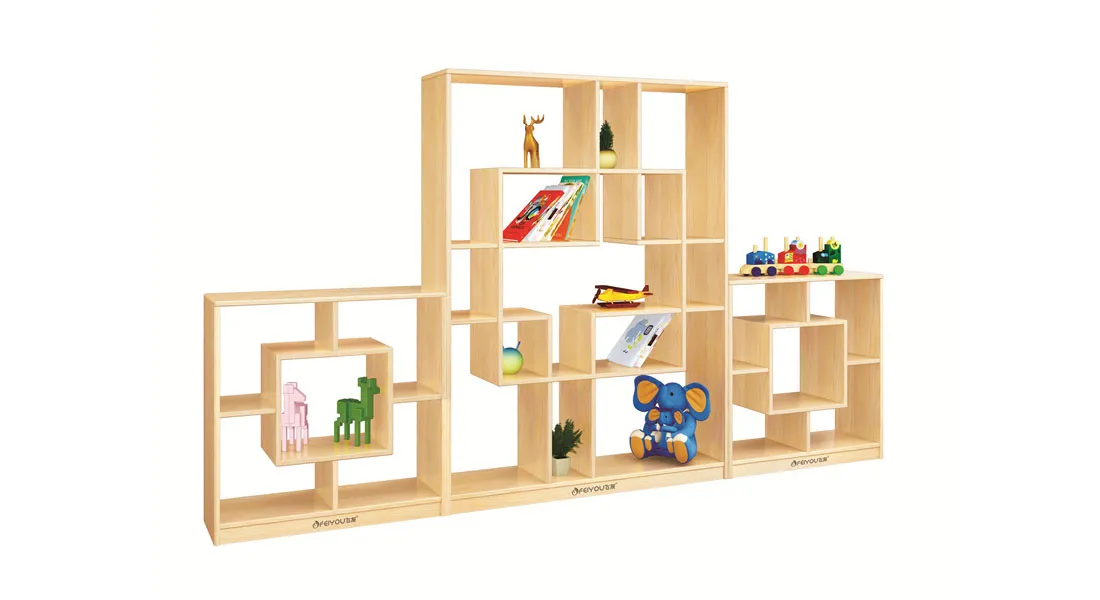
Anchor 80% of your classroom with neutral furniture. Choose pieces in natural wood tones, soft whites, or gentle grays. These pieces—shelving, tables, storage units—will serve you for years, through any theme, any curriculum, any age group.
Use 20% for thematic accents. These are the elements you can change: rugs, cushions, wall decals, temporary displays, and movable screens. When you switch from an ocean unit to a space unit, you swap the accents, not the furniture.
This approach gives you the best of both worlds. You get the calm, focus, and longevity of neutral furniture. You get the engagement and excitement of thematic design. And you avoid the trap of being locked into a theme that no longer serves your children.
Service Case: When Theming Saved an Outdoor Space
A real project illustrates how thoughtful theming—integrated with neutral anchors—can transform a space.
One kindergarten had an underutilized outdoor area. The space was functional but uninspiring. Children walked through it without stopping. The director wanted to create distinct activity zones without committing to a permanent, expensive theme.
The solution combined neutral outdoor furniture with nature-based thematic elements. Low wooden tables and benches (neutral, durable) formed the anchor. Around them, designers added a sand and water play kingdom—a thematic zone with textured surfaces, gentle color variations, and natural materials. A tree-integrated climbing area used the existing trees as the "theme" rather than artificial decorations.
The result? A space that felt thematic and engaging but could easily be reconfigured. The neutral anchor pieces remained. The thematic elements—sand, water, climbing features—were permanent but not visually overwhelming because they grew from the natural environment rather than being applied as decoration.
The director noted, "Children spend 40% more time in this area now. They are not distracted by a theme. They are engaged by purposeful activity zones that happen to be beautiful."
The Practical Decision Framework
So how do you choose? Ask yourself these questions.
How often does your curriculum change? If you follow a fixed yearly calendar of themes (ocean in spring, farm in fall), permanent thematic furniture might work. If your curriculum emerges from children's interests (as in Reggio Emilia or play-based approaches), neutral anchors with flexible accents serve you better.
What age group are you serving? Younger toddlers (1-2 years) can be overstimulated by complex themes. Older preschoolers (4-5 years) may engage more deeply with well-designed thematic zones. Mixed-age classrooms benefit from neutral anchors with adjustable accents.
What is your budget horizon? Permanent themed furniture costs more upfront and has lower resale value if you change directions. Neutral furniture costs similar or less and holds value across multiple configurations and even multiple classrooms.
What does your licensing require? Some jurisdictions have specific requirements about wall coverage, display density, or color use. Check your local regulations before committing to either extreme.
Maintenance and Longevity Considerations
Neutral kindergarten furniture generally lasts longer because it does not go out of style. A natural wood table is timeless. A castle-shaped shelf with fading painted turrets looks dated after a few years.
Themed furniture requires more maintenance. Painted details chip. Decorative elements break. Touch-up paint never matches perfectly. One director told me her pirate ship bookcase needed repainting every 18 months at a cost of $300 each time.
Themed rugs, cushions, and wall decals—the accent pieces in the 80/20 approach—are inexpensive and easy to replace. Themed tables, built-ins, and custom millwork are not.
A Balanced Recommendation
After years of observing kindergartens and talking to directors, here is what I consistently recommend.
Purchase neutral, high-quality anchor furniture for the pieces that matter: storage units, tables, shelves, and seating. These represent 70-80% of your investment. They should be durable, safe, and timeless in design.
Use thematic accents for the remaining 20-30%: rugs, cushions, wall displays, movable elements. Change these as your curriculum and children's interests evolve.
When you do theme a permanent element, keep it zone-specific and purpose-driven. A reading nook can be a castle. A sensory table can be a spaceship. But keep the rest of the room neutral enough to support focus and flexibility.
For kindergartens seeking durable, adaptable furniture that serves as the perfect neutral anchor for any theme, explore the detailed specifications of flexible classroom furniture here.
The best kindergarten environments are not the ones with the most elaborate themes. They are the ones where children can focus, imagine, create, and rest—all in the same space. Neutral anchors give you that foundation. Strategic theming adds the spark. Together, they serve children better than either approach alone.
For programs ready to invest in furniture that adapts to any theme and any curriculum, review the full collection of versatile kindergarten solutions here.






 English
 Español