Outdoor Kindergarten Furniture for Play Zones
Here is a question I hear from kindergarten directors constantly: "Why can't I find outdoor furniture that actually fits my space?"
Their frustration makes sense. Standard catalogs show perfect rectangles. Perfect rectangles do not exist in real kindergartens. You have a tree in the middle of the planned art zone. You have an oddly shaped corner that nothing fits into. You have a slope that makes standard tables wobble. You have exactly 437 square feet for an outdoor classroom—neither the 400-square-foot "small" option nor the 500-square-foot "large" option works.
The answer is not settling for "close enough." The answer is customized outdoor furniture designed specifically for your unique constraints.
According to the North American Association for Environmental Education, over 60% of early childhood programs report that their outdoor learning spaces are irregularly shaped or contain fixed natural features (trees, slopes, existing structures) that standard furniture cannot accommodate. Yet most suppliers only offer one-size-fits-all solutions.
Why "Standard" Usually Means "Compromise"
Let me explain what happens when you buy non-custom outdoor furniture for a non-standard space.
Wasted perimeter space. Standard rectangular tables sit in the middle of zones because they cannot fit against curved walls or around tree trunks. The space between the table and the actual boundary becomes dead square footage—too small for activities, too large to ignore.
Awkward traffic flow. Standard furniture dimensions ignore your specific pathways. A 48-inch-wide table blocks a 44-inch-wide pathway. You end up moving the table away from the ideal location just to keep the walkway clear.
Underutilized vertical space. Standard pieces have fixed heights. But your space might have a low-hanging branch at 52 inches that prevents a 60-inch-tall shelf. Or you might have a tall fence at 72 inches that could support hanging elements—if anyone made hanging elements that attach to your specific fence.
Incompatible material needs. Your climate might require marine-grade polymer for salt air. Standard catalogs offer "weather-resistant" wood that rots in two years near the coast.
A director once told me: "I spent $4,000 on standard outdoor tables that mostly fit. The 8 inches of gap around each table drove me crazy for three years before I replaced everything with custom pieces that actually matched my space."
A Real-World Service Case: When Standard Won't Work
Consider what happened in an actual kindergarten project. The school had something most catalogs ignore: mature trees over twenty years old growing right in the middle of their outdoor space.
A standard playground supplier would have recommended cutting the trees down or building around them with generic ground-level equipment. Neither solution was acceptable. The trees were too valuable to remove. Generic equipment would have ignored the vertical potential of those trunks.
The custom approach looked completely different. Designers built aerial tree houses that wrapped around the trunks. Swing bridges connected one tree to another. Climbing ladders attached using non-invasive mounting brackets. The trees became the furniture. The furniture respected the trees.
The result used zero additional ground space while adding over 80 square feet of elevated activity area. No standard product could have achieved this. Customization made it possible.
This is not an isolated example. It illustrates the fundamental advantage of tailored outdoor learning environments over off-the-shelf alternatives.
What Customization Actually Includes
When I say "custom outdoor furniture," I mean specific adjustments that solve real problems.
Dimension customization. Your space is 137 inches wide. Standard tables come in 120-inch or 144-inch widths. A custom piece at 137 inches uses every inch. No gaps. No wasted space. No awkward overhang.
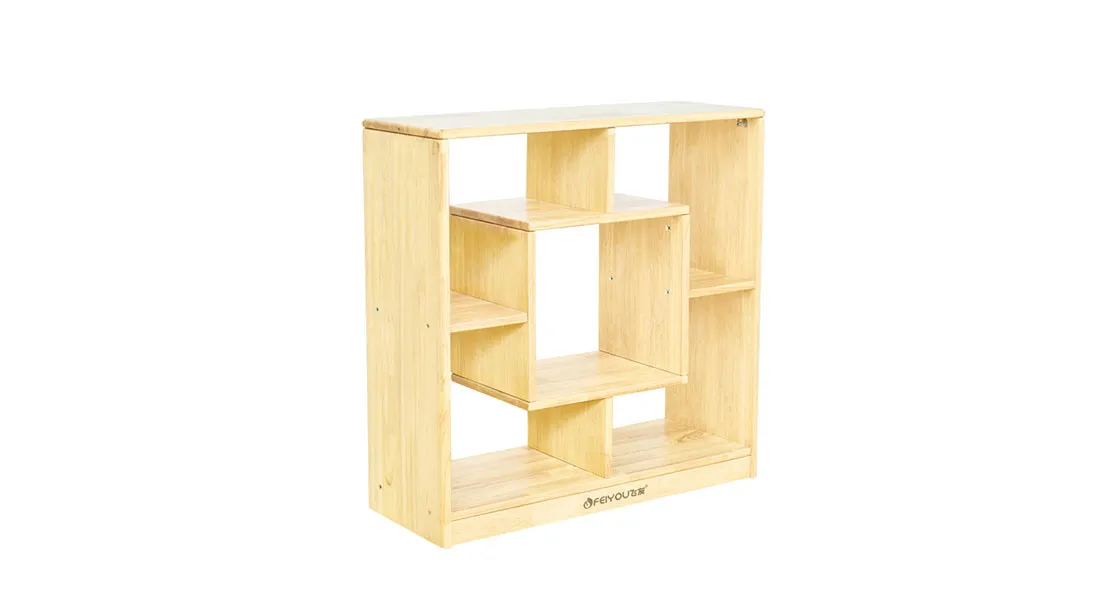
Shape customization. Your zone is L-shaped, curved, or triangular. Custom furniture matches that shape. A curved bench follows your circular gathering area. A corner-specific sand table fills that odd alcove perfectly. Angled storage units fit into wedge spaces that rectangular pieces cannot enter.
Feature integration. Your space has a tree, a boulder, or an existing post. Custom furniture incorporates these features rather than avoiding them. Notched tabletops wrap around tree trunks. Bench cutouts accommodate existing boulders. Mounting brackets attach to your specific fence or wall.
Height customization. Your children have specific age ranges. Custom heights match their developmental stage perfectly. Lower surfaces for younger toddlers. Higher workstations for older kindergarteners. Multi-level designs serve mixed-age groups in the same footprint.
Material and finish customization. Your climate demands specific materials. Your aesthetic requires specific colors. Customization gives you HDPE for humid environments, powder-coated aluminum for coastal salt air, cedar for natural aesthetics, or marine-grade polymer for year-round rain exposure.
The Zone-Based Customization Framework
Effective customization starts with zone planning, not product selection.
Zone 1: Messy Play (sand, water, art). This area needs waterproof, non-porous surfaces with integrated drainage. Custom sand tables can include covered storage for tools, removable dividers for material separation, and wheeled bases for repositioning. In one service case, the sand area used custom dimensions to fit between two existing trees—a space exactly 62 inches wide where standard 48-inch or 72-inch tables would have left unusable gaps.
Zone 2: Active Climbing (gross motor). This area needs impact-absorbing surfaces underneath and secure anchoring above. Custom climbing structures can incorporate existing trees, utilize unusual wall heights, or fit into narrow side yards. The tree-friendly mounting brackets developed for one project are now available as a customization option for other kindergartens with similar natural features.
Zone 3: Quiet Learning (reading, observation, nature study). This area needs comfortable seating and stable surfaces in shadier locations. Custom benches can follow the curve of a tree canopy or wrap around planting beds. Semicircular seating creates intimate gathering spaces that rectangular benches cannot match.
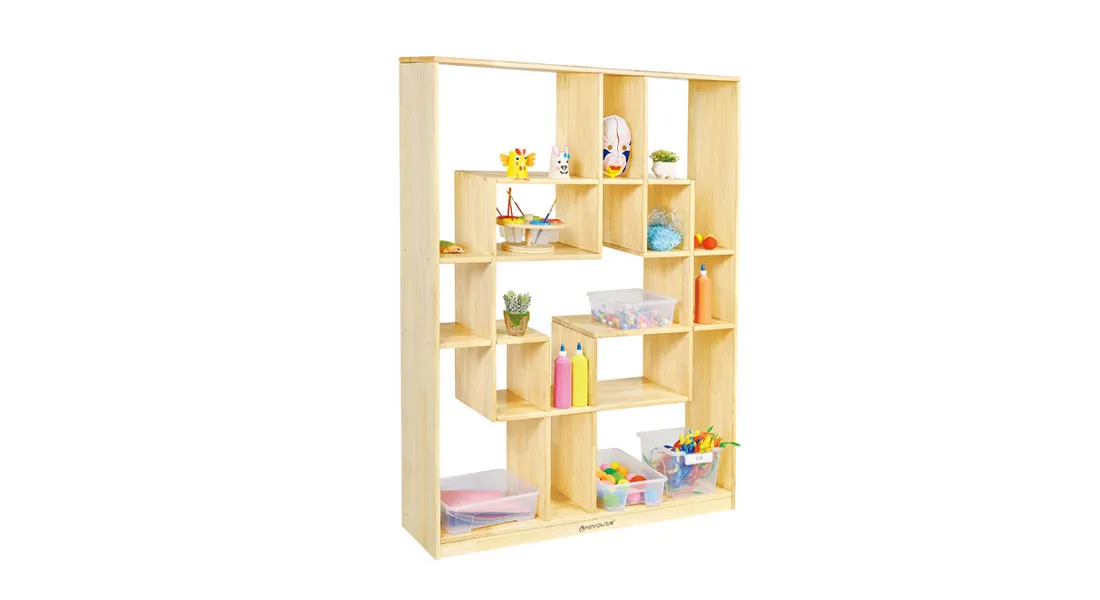
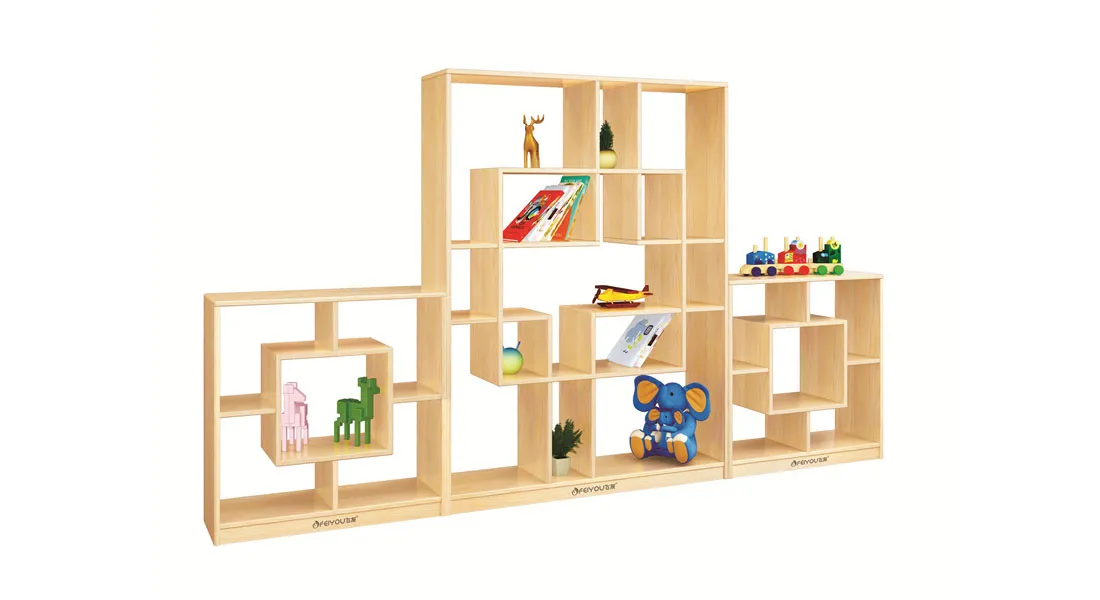
Zone 4: Transition and Storage. This area needs efficient pathways and accessible equipment housing. Custom storage units can fit into under-stair spaces, attach to fence lines, or serve as room dividers between zones. Low, wide cabinets at child height keep outdoor supplies organized without blocking sightlines.
The Design Process: How Custom Happens
Let me walk you through how a typical custom outdoor furniture project unfolds based on actual service experience.
Step 1: Site measurement and mapping. A designer visits your space or works from detailed plans. Every tree, slope, pathway, and fixed feature gets documented. This is not a "standard template" visit. It captures the specific quirks of your site.
Step 2: Zone planning and function mapping. You identify what activities need to happen where. The designer looks for overlaps and conflicts. That sunny morning spot becomes your art zone. That naturally shaded afternoon area becomes your reading nook.
Step 3: Concept design and 3D modeling. The designer creates visual renderings of furniture placed in your actual space. You see how the curved bench follows your circular patio. You see how the notched table fits around your heritage tree.
Step 4: Material and finish selection. You choose materials based on your climate, maintenance capacity, and aesthetic preferences. The designer provides climate-specific recommendations based on real project outcomes from past installations.
Step 5: Fabrication and installation. Custom pieces are built to your exact specifications. Installation accounts for your specific ground conditions, anchoring requirements, and access constraints.
One completed service case followed exactly this process. The result was not "furniture delivered to a kindergarten." It was an integrated outdoor learning environment that could not have been created with standard products.
The Cost Question: Custom vs. Standard
I hear this concern constantly. "Isn't custom much more expensive?"
The answer depends on how you calculate value.
Upfront cost: Standard furniture typically costs 20-40% less than custom. A standard rectangular table at 800versusacustomcurvedtableat800versusacustomcurvedtableat1,200. The difference feels significant at purchase.
Utilization cost: Standard furniture that wastes 15% of your space due to poor fit is not saving you money. That 15% represents square footage you paid for but cannot use effectively. In high-rent areas, the annual cost of wasted space often exceeds the furniture premium within 12-18 months.
Replacement cost: Standard furniture that does not quite fit gets used less. Teachers avoid moving it. Activities happen elsewhere. The piece sits underutilized while you eventually buy something better. That is not savings. That is spending twice.
Long-term value: Custom furniture designed for your specific space gets used every day because it works exactly where it sits. In one service case, custom tree houses and climbing structures saw daily use for years. That is value standard products cannot replicate.
A director who chose custom for her oddly shaped rooftop playground told me: "I paid 35% more upfront. I have 100% usable space instead of 70%. That extra 30% of my rooftop was worth every penny."
Customization Options by Challenge Type
Different site challenges require different custom solutions based on real service cases.
| Site Challenge |
Custom Solution |
From a Real Service Case |
| Mature trees in play zone |
Tree houses, notched tables, trunk-wrapping benches |
Kindergarten with 20+ year old trees |
| Sloping or uneven ground |
Height-adjustable legs, terraced platforms, embedded leveling systems |
Hillside kindergarten project |
| Narrow or irregular footprint |
Slim-profile storage (12-15 inches deep), multi-functional combo units, vertical climbing walls |
Urban rooftop program |
| Extreme weather exposure |
Climate-specific materials (HDPE for humidity, marine-grade for salt air, UV-stabilized for high altitude) |
Coastal kindergarten installation |
| Mixed-age groups (2-6 years) |
Multi-height tables, adjustable elements, zone-specific sizing |
Large public kindergarten with multiple classrooms |
| Heritage or rental building restrictions |
Freestanding non-permanent structures, clamp-on attachments, weighted bases |
Historic building conversion project |
What a Real Service Case Achieved
Looking at an actual completed project, here is what customization enabled that standard products could not.
Preservation of existing natural features. No trees were cut. No roots were damaged. The furniture worked with the existing landscape rather than replacing it.
Vertical space utilization. Aerial tree houses added over 80 square feet of activity space without consuming additional ground footprint. In a small urban kindergarten, this transformed what was possible.
Integrated design philosophy. The "ecological, life-based, living" concept became real because every piece was designed for that specific environment, not adapted from a catalog.
Child-scale everywhere. The child-height perspective applied to indoor and outdoor elements because designers could specify exact heights, reach ranges, and sightlines for that specific age group.
Long-term maintainability. The maintenance schedule emerged from the actual materials and installation methods chosen for that specific climate—not generic recommendations that ignore local conditions.
You cannot achieve these outcomes with standard products. You can only achieve them through tailored kindergarten environment design.
For kindergartens seeking professionally designed outdoor solutions based on real project outcomes, explore the detailed specifications of nature-integrated play zone furniture here.
Questions to Ask Any Custom Furniture Provider
Before committing to a custom project, verify these capabilities.
-
Do you conduct on-site measurement or work from detailed plans? Remote-only customization misses critical site quirks.
-
Can you provide 3D renderings of furniture in my actual space? Seeing is believing. Renderings reveal fit issues before fabrication.
-
What climate-specific materials do you offer? One material does not work everywhere. They should offer options based on real project outcomes.
-
Do you have completed project references in similar settings? Ask to see kindergartens with challenges like yours.
-
What is your typical design-to-installation timeline? Custom takes longer. Know what you are committing to.
-
Do you offer post-installation adjustments? Even custom pieces may need fine-tuning after placement.
The Bottom Line
Your outdoor space is unique. Your trees, slopes, sun patterns, and existing features do not match any catalog page. Standard furniture will always be a compromise—sometimes small, often significant.
Customized outdoor kindergarten furniture eliminates the compromise. Every inch works. Every piece fits. Every material suits your climate. Every height matches your children.
Real service cases have proven this approach works—preserving natural features while creating engaging, usable outdoor learning environments that standard products simply cannot deliver.
For kindergartens ready to stop compromising and start customizing, explore the detailed specifications of personalized play zone solutions here.






 English
 Español