Let me describe a conversation I have had thirty times with small daycare directors.
"I have 450 square feet for eight toddlers," she told me. "I need a changing table, a book display, art storage, and a sensory play station. That is four pieces of furniture. I only have room for two."
She was thinking in single-function terms. Changing table does one thing. Book display does one thing. Separate pieces, separate footprints, no overlap.
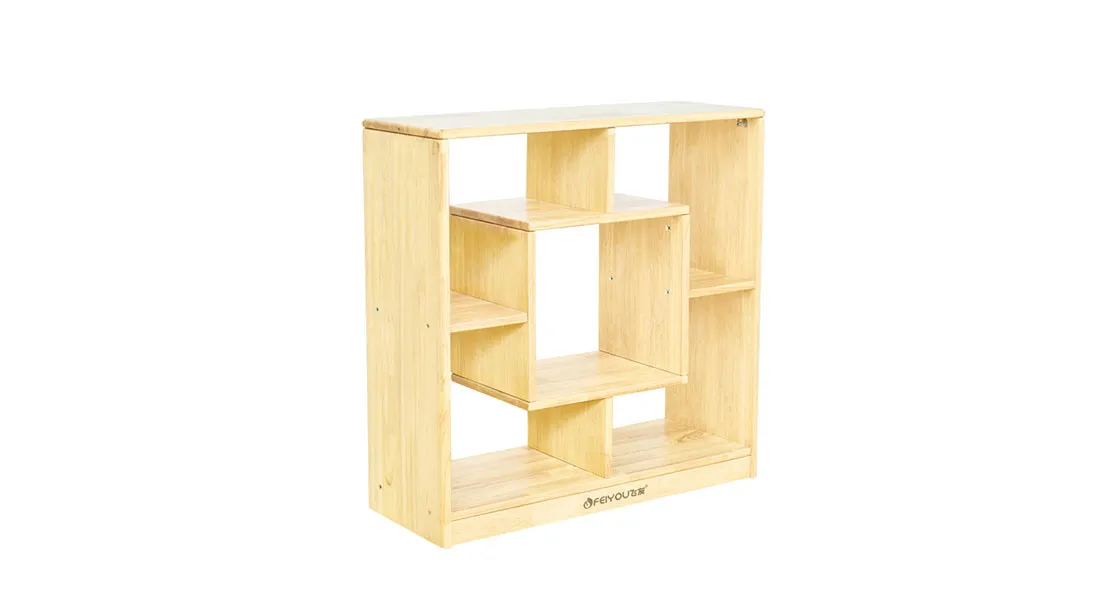
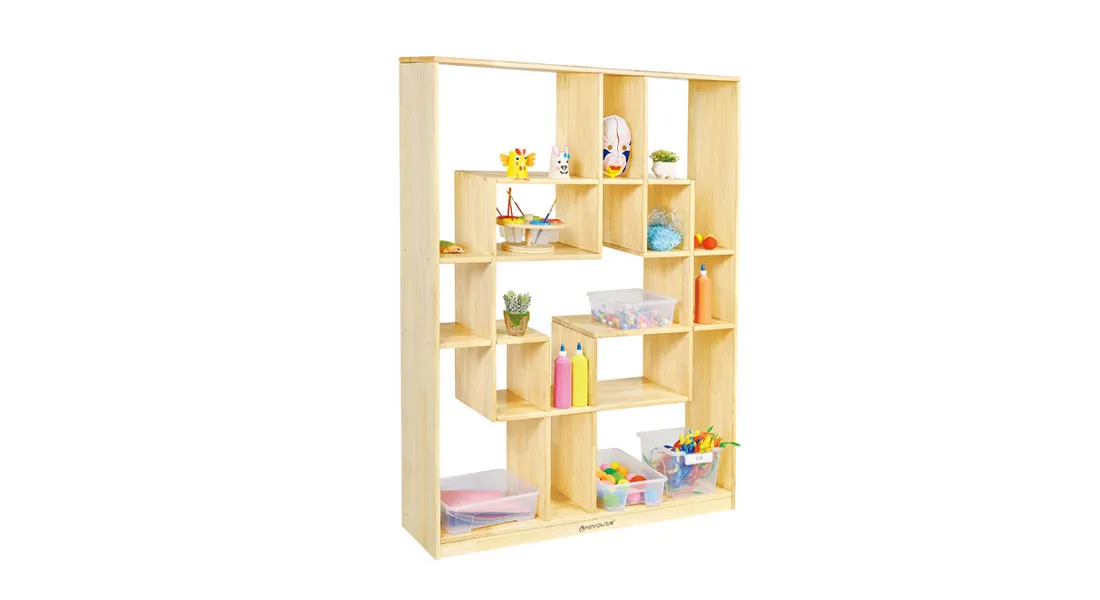
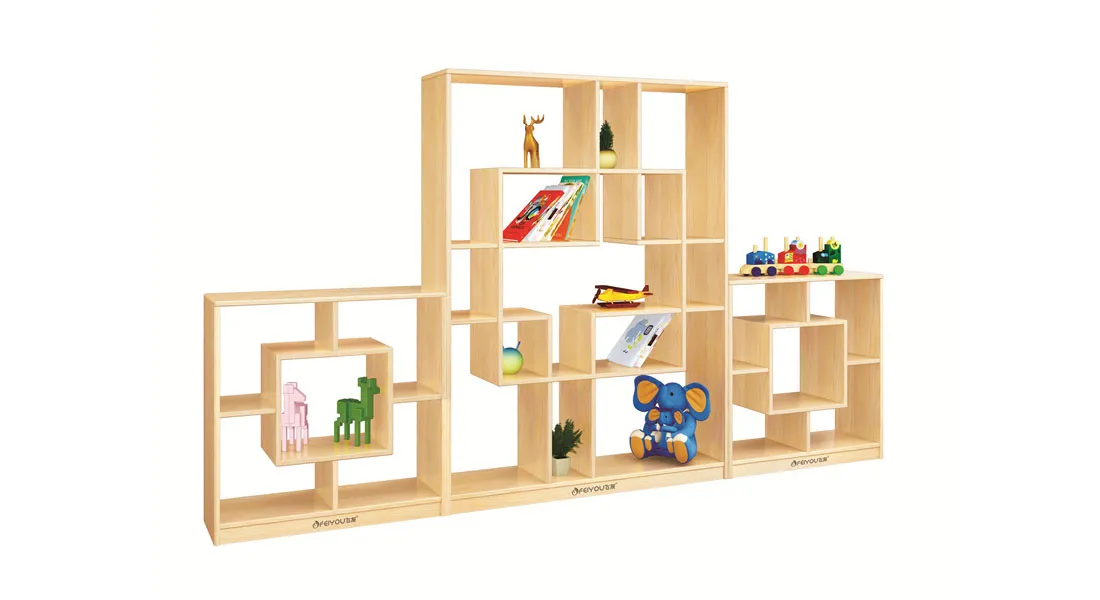
The solution arrived as a single combination unit—a piece that functioned as a changing station on top, bookshelves in the middle, and art supply drawers below. One footprint. Three functions. Her room suddenly breathed.
According to the National Association for the Education of Young Children (NAEYC), over 40% of childcare centers operate in spaces smaller than 1,000 square feet. Every square inch matters. Multi-functional combo units exist specifically for this constraint.
The Math of Small Space Childcare
Let me show you what traditional furniture costs in square footage.
A standard changing table occupies about 12 square feet. A bookshelf takes another 8. Art storage adds 6. A sensory table consumes 10. Total footprint: 36 square feet for four pieces that serve four functions.
Now consider circulation space. Each piece needs clearance around it—at least 24 inches on the front side for access. That clearance space multiplies the footprint by roughly 2.5 times. Those four pieces actually consume closer to 90 square feet of floor area when you account for how teachers move around them.
In a 500-square-foot room, 90 square feet represents nearly one-fifth of your entire space. For functions that could be stacked, nested, or combined.
Vertical integration changes this math completely. A tall combo unit with a changing top at 36 inches, open shelves at 24 inches, and enclosed storage at floor level occupies the same 12 square feet as a changing table alone. But it delivers three functions.
That is not space efficiency. That is space alchemy.
Combination Unit Anatomy: What to Look For
Not all combo units deserve a spot in your classroom. Here is what separates useful from useless.
Zone separation matters for sanity. A good unit clearly delineates the wet zone (changing surface) from the dry zone (book storage) from the messy zone (art supplies). When these functions bleed into each other, you get damp books and paint on diapers.
Surface material varies by zone. The changing area needs waterproof, non-porous coating that withstands bleach wipes. The book display needs smooth, snag-free edges that will not tear pages. Art storage needs wipe-clean surfaces that resist marker stains.
Access height determines usability. A changing surface at 36 inches saves staff backs. Book display shelves at 18-24 inches put covers at toddler eye level. Art drawers at 12 inches allow small hands to retrieve their own supplies—promoting independence while reducing teacher interruptions.
I visited a program that rejected their first combo unit because the designer put everything at adult height. "The children could not see the books," the director explained. "They lost interest. The piece looked efficient on paper but failed in real life."
The Operability Advantage of Thoughtful Design
Here is where many combo units fall short. They combine functions but become immovable behemoths.
A well-designed combination piece allows for repositioning. Not weekly necessarily, but when your classroom layout needs to shift for a new enrollment or a different activity flow, you should be able to move it.
Lift points—recessed handholds or underside grips—make carrying possible without straining backs or damaging edges. Modular sections allow you to separate the changing top from the storage base for transport through narrow doorways.
One director shared her experience: "Our first combo unit was a single welded piece. It weighed over 100 pounds. It never moved from the spot where the delivery guys left it. Our second unit breaks into three sections. One teacher carries each section. Now we rearrange every month."
Relocatable classroom solutions should enable movement without requiring a moving crew. If a piece cannot be repositioned by your existing staff, assume it will stay in its delivery location forever.
Types of Combo Units That Actually Save Space
Let me categorize what works based on real classroom observations.
Changing station + storage combos serve infant and young toddler rooms. The changing surface folds down or lifts up to reveal storage below. When not in use for diapering, the top becomes a display surface or activity area. These pieces typically occupy 10-12 square feet while replacing three separate items.
Activity table + storage combos work for older toddlers and twos. The table surface flips to reveal a sensory bin, a light table, or a magnetic board. Underneath, rolling bins or pull-out drawers store the materials for each activity type. One 16-square-foot footprint replaces a table plus two storage carts.
Room divider + shelving combos serve mixed-age classrooms. These freestanding units create distinct zones—reading area on one side, block play on the other—while offering storage on both faces. A single 8-foot-long, 15-inch-deep divider replaces a wall of shelving plus a separate partition. In open-plan daycare spaces, this function is invaluable.
Art center + drying rack combos solve a specific small-space problem. A vertical unit holds paper and paints on one side, with slide-out mesh drying racks on the opposite side. No more wet artwork spread across every horizontal surface in the room.

The Hidden Space: Walls and Corners
Small daycare directors often forget about vertical real estate and underutilized corners.
Wall-mounted combo systems free up floor space entirely. A track-mounted unit with interchangeable components—a fold-down changing table, cantilevered bookshelves, hanging art pockets—delivers multiple functions with zero floor footprint. The trade-off is installation complexity and wall strength requirements.
Corner-specific combo units transform dead zones into prime real estate. A standard 90-degree corner with a purpose-built unit can hold twice the storage of a straight-wall unit because you access two faces from the same spot. Look for corner-optimized designs with angled shelves and pivoting components.
One facility manager calculated that adding two corner combo units reclaimed 18 square feet of floor space and added 42 square feet of storage volume. That is like finding a small closet you never knew you had.
Material Selection for High-Traffic Combo Units
Combo units experience more wear than single-function furniture because they serve more purposes. More purposes mean more hands touching more surfaces more often.
Solid hardwood construction handles this multi-use stress better than particleboard or MDF. The changing surface alone undergoes hundreds of pounds of pressure daily. Drawers for art supplies open and close dozens of times per day. Shelf edges get bumped by toys, bodies, and cleaning carts.
Impact-resistant edge banding prevents the chipping and peeling that makes combo units look tired within months. Look for heat-fused banding rather than glued, with a minimum thickness of 2 millimeters.
Stain-resistant coating on all surfaces—not just the obvious ones—saves your sanity. Children will paint the underside of shelves. They will spill yogurt into drawers. Every surface needs to withstand bleach cleaning without degrading.
Ask suppliers for abrasion test results specific to their combo units. Numbers below 200 Taber cycles indicate residential-grade durability. Your classroom needs 300+.
Real-World Configuration: A Tuesday Morning
Let me walk you through how a well-designed combo unit performs during an actual morning.
7:30 AM: Changing station mode. A toddler arrives with a wet diaper. The teacher folds down the changing top from its vertical storage position. Wipes and diapers live in the pull-out drawer directly underneath. The teacher completes the change in under two minutes without leaving the unit.
8:15 AM: Book display mode. The same teacher folds the changing top back up. She rotates the front panel—a hinge reveals a shallow bookshelf with covers facing outward. Three toddlers select books independently because the display sits at their eye level.
9:45 AM: Art center mode. The teacher opens the lower cabinet doors. Inside, bins of crayons, glue sticks, and paper slide forward on pull-out trays. Two children stand at the adjacent flip-down table surface creating masterpieces.
11:00 AM: Lunch prep mode. Everything folds, closes, and locks. The unit presents a single flat surface suitable for a lunch tray or an activity mat. The floor space that would hold three separate pieces remains clear for movement.
That is five functions from one footprint. No other furniture category delivers this level of spatial efficiency.

Common Mistakes When Buying Combo Units
Avoid these errors that turn space-saving solutions into space-wasting frustrations.
Overloading the footprint. Some combo units try to pack too many functions into one piece. The result is a 24-inch-deep monster that protrudes into circulation paths. Measure your walkways before ordering. Anything deeper than 18 inches belongs against a wall, not in a traffic zone.
Ignoring transition zones. Where does the changing top go when folded up? Does it block adjacent shelves? Does it create pinch points? Test the transitions before buying. Smooth, one-motion operations get used. Awkward, two-handed operations get ignored.
Forgetting about cleaning access. Combo units have crevices. Crevices collect crumbs, paint, and mystery substances. Look for designs with removable trays, smooth interior corners, and surfaces you can wipe without disassembling the entire unit.
A veteran director told me: "I open every drawer and cabinet before buying. If I see staple marks, rough edges, or corners I cannot reach with a rag, I move on. Cleaning difficulty directly correlates with how disgusting the piece looks after six months."
Making the Right Choice for Your Small Daycare
Start with your actual program needs, not manufacturer claims.
List every function your classroom requires. Activity surfaces. Storage for supplies. Display space for books or art. Changing areas if you serve infants. Sensory zones if you serve toddlers.
Now look for overlap. Can the changing surface double as a display shelf when folded? Can the art storage roll out to become a sensory bin? Can the room divider hold books on both sides?
Integrated daycare furniture excels at these overlaps. The best combo units feel like they were designed specifically for your room because every inch serves a purpose.
For small daycare programs ready to maximize every square foot, explore the detailed specifications of space-saving combination units here.
The most successful small daycare I ever visited had a single piece of furniture that served as her art station, book nook, sensory table, and storage closet. "People walk in and ask where I keep everything," she told me. "I point to that corner. Eight functions, 16 square feet. Everything else is open floor for the children to move."
That is the promise of combination units. Not more furniture. More function from less footprint.
For centers seeking professionally engineered solutions that prioritize both space efficiency and daily usability, review the full collection of multi-function daycare combo units here.






 English
 Español