The email arrived at 4:47 PM on a Friday. "New state ratio requirements effective Monday. Infant-toddler rooms need 15% more floor space for cots. Please adjust."
The director who forwarded me that email had twenty-two pieces of furniture bolted to her floors. She spent the weekend with a screwdriver, a frustrated maintenance worker, and a realization: fixed furniture is a trap.
Here is what licensing visits, enrollment shifts, and pedagogical trends have in common—they all demand that your classroom changes. According to a 2024 survey of early childhood programs, the average center reconfigures its layout four to six times per year. Yet most furniture is designed to never move at all, or to fall apart after two relocations.
The solution is not wheels. Wheels introduce their own problems in rooms with mobile infants. The solution is lift-and-carry furniture—pieces light enough for one teacher to reposition, strong enough to survive hundreds of moves, and designed to serve multiple purposes across multiple years.
Why Your Furniture Needs to Live Multiple Lives
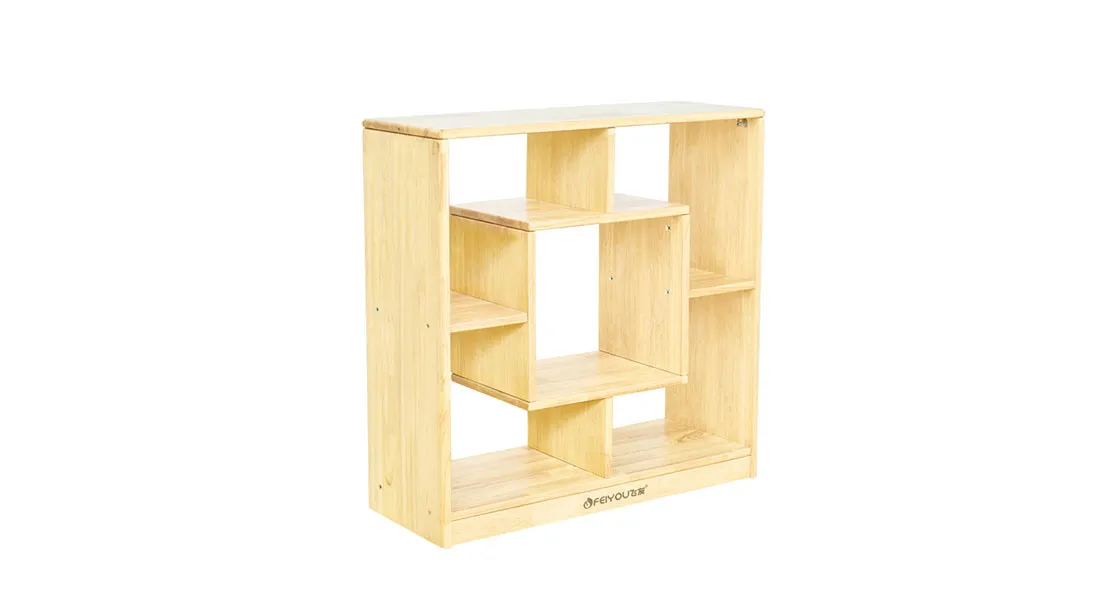
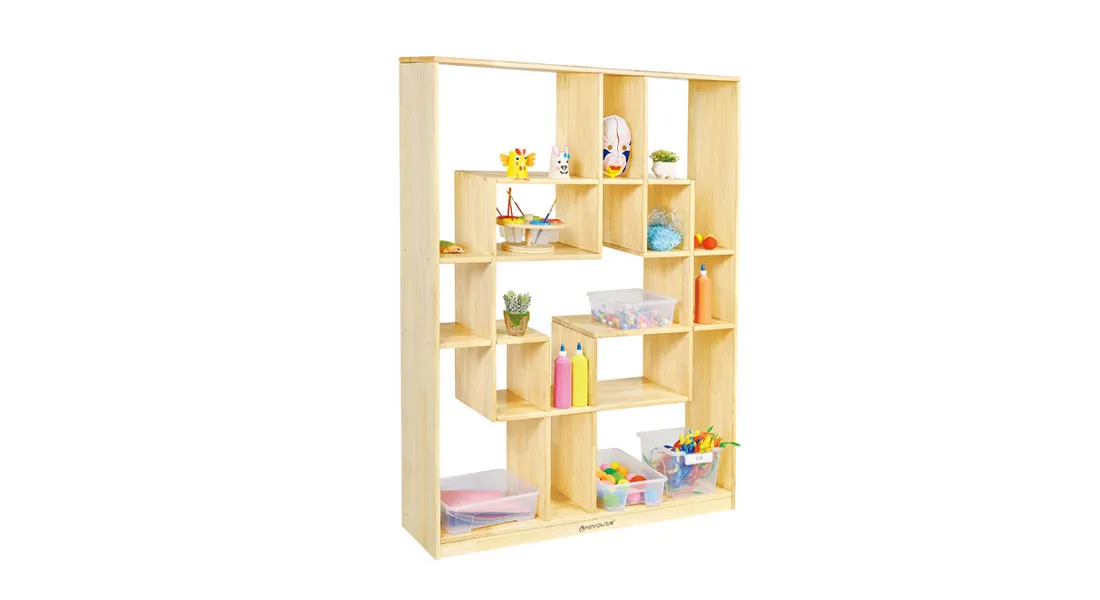
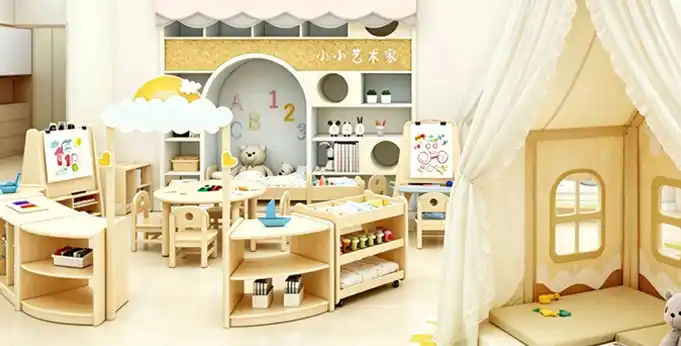
Let me introduce you to a concept called furniture lifecycle rotation. A single shelf unit arrives in your infant room storing diapers and burp cloths. Twelve months later, that same unit moves to the young toddler room, now holding board books. Another year passes. It relocates to the older toddler room, organizing art supplies by color.
One piece. Three rooms. Three distinct functions. Zero new purchases.
I visited a center that tracks these journeys on a simple log sheet attached to each furniture piece. Their oldest active unit—a simple low-profile storage cube—has served five different classrooms over nine years. The finish shows character. The structure remains rock solid.
What kills this kind of reusability? Single-use design. A changing table with curved cutouts cannot become a puzzle shelf. A cabinet with fixed interior dividers sized for specific bins cannot adapt when your storage needs change. Adjustable interior shelves and removable dividers are non-negotiable features for any piece you expect to move between rooms.
The Operability Question: Can Your Staff Actually Move It?
Here is the uncomfortable truth that furniture catalogs will not tell you.
Moving furniture damages furniture. Every lift stresses joints. Every reposition twists frames. Every placement on a slightly uneven floor creates new wear patterns. Yet most classroom furniture is tested for static use only—sitting, standing, storing. Nobody tests how a bookshelf handles being carried sideways through a doorway.
The solution requires examining specific engineering choices before you buy.
Corner block reinforcement—triangular wooden supports inside each corner—prevents the dreaded "parallelogram shift" when two people lift unevenly. A piece without corner blocks will rack on the first move. Once that happens, the joints never fully recover.
Through-bolt connections for legs and handles use metal bolts passing entirely through the material, secured with washers and nuts on the opposite side. Screws alone—especially screws driven into particleboard—pull out after repeated moves. Turn every piece upside down. If you see bolt tips with washers, good. If you see only screw heads, keep shopping.
Lightweight yet strong core materials reduce staff injury risk while maintaining durability. High-quality hollow-core construction uses internal ribbing and perimeter blocking to achieve strength at roughly half the weight of solid hardwood. A 35-pound shelf unit moves easily. A 75-pound unit stays where it is because nobody wants to throw out their back on a Tuesday morning.
One veteran director shared her rule during our conversation: "I lift every piece myself before signing anything. If I cannot comfortably carry it across the room alone, my staff will not either. And if they will not move it, we lose every flexibility benefit we paid for."
Space Utilization: Making Every Square Foot Work
A 650-square-foot toddler room costs between 13,000and13,000and26,000 annually in rent depending on your market. Wasted square footage is wasted money.
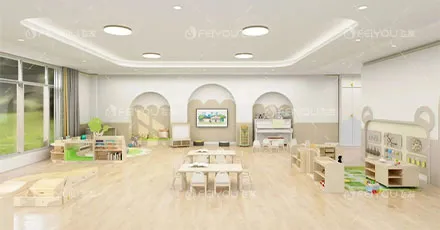
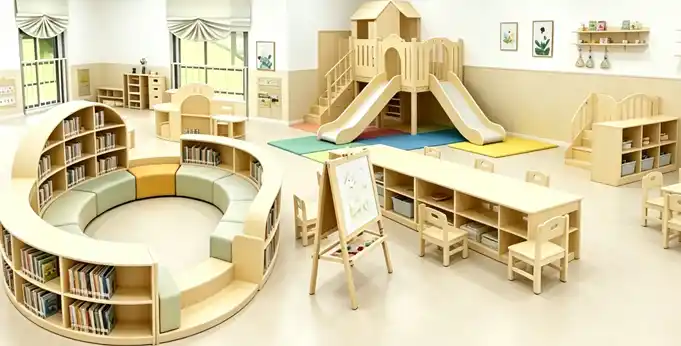
Reconfigurable classroom layouts unlock space that fixed arrangements trap permanently. The key is furniture that changes its footprint based on the activity.
Nesting tables deserve special attention here. A set of four trapezoidal tables occupies approximately 16 square feet when nested together. Pull them apart for small group work, and they cover 48 square feet of activity space. Return them to nested configuration for nap time, and you recover 32 square feet for cots. Fixed tables cannot perform this spatial algebra.
Stackable storage units transform vertical space into usable storage. Five stacking bins occupy 6 square feet of floor footprint but offer 30 cubic feet of storage volume. Spread them across the room during center time—each bin becomes a distinct activity zone. Stack them against one wall during cleanup. The floor reappears as if by magic.
Flip-top activity centers serve two functions in the exact same footprint. Art easel on one side. Puzzle table on the opposite side. Turn the top. The activity changes. The room footprint never does.
The common thread across all these pieces? They change configuration without requiring complex relocation or they minimize the move distance. That is space efficiency at its most practical.
The Weekly Reality of a Responsive Classroom
Let me walk you through a typical week in a well-run toddler classroom.
Monday morning: Free play centers. Low shelves arranged to form four distinct zones—blocks, puzzles, books, art.
Tuesday afternoon: A sensory activity requires more floor space. One teacher lifts the bookshelf and slides it against the wall. Another teacher carries the puzzle shelf and positions it underneath. Floor space opens by 30 square feet in under eight minutes.
Wednesday: Nap time arrives. Twelve cots need floor space. Staff nest all activity tables and stack the portable storage units. The room transforms from active play zone to sleep zone in twelve quiet minutes.
Thursday: A new child joins the class with mobility differences. Staff widen all pathways by lifting and shifting each piece six inches outward. No tools required.
Friday: Assessment day. Staff create a quiet observation corner by repositioning a reversible room divider—soft side facing the child, storage side facing the room.
This level of daily and weekly responsiveness requires furniture that moves easily, stores compactly, and reconfigures intuitively. None of these moves require wheels. All of them require thoughtful design for operability.
Connection Systems That Enable Modular Flexibility
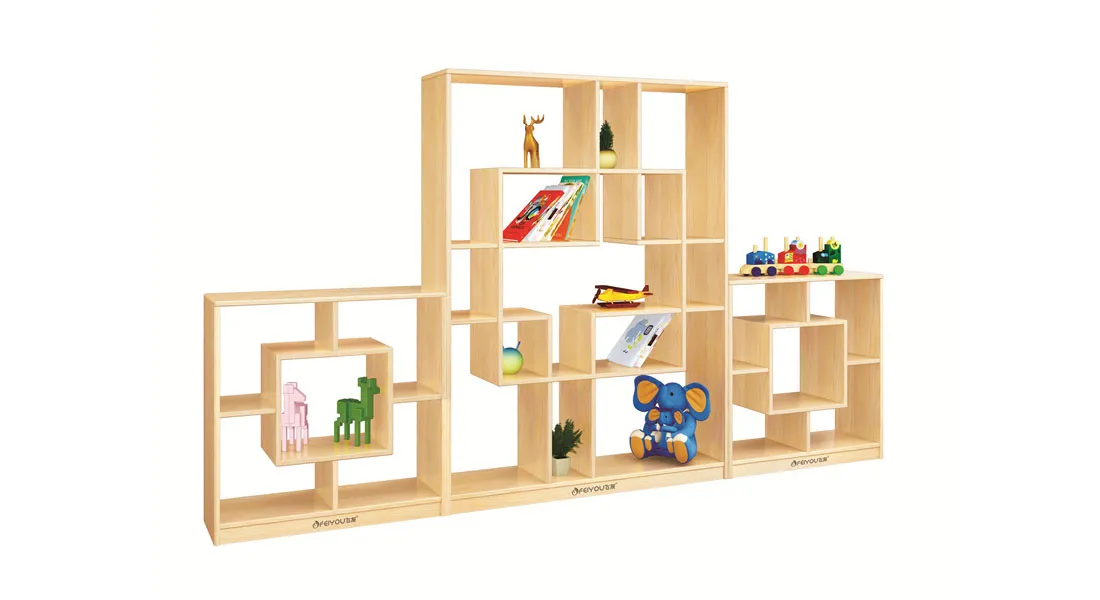
Modular classroom furniture—individual pieces designed to connect into larger assemblies—offers the ultimate in reusability and space flexibility. Connect two low shelves using interlocking brackets to create a room divider. Disconnect them five minutes later to create two distinct activity zones.
The connection hardware determines whether this system delights or frustrates your staff.
Captive fasteners remain attached to one piece even when completely disengaged. No loose parts falling on the floor. No choking hazards hidden in the carpet.
Tool-free connections use levers, latches, or spring-loaded pins. Your teachers can reconfigure layouts during nap without hunting for an Allen wrench that rolled under the radiator.
Color-coded connection points reduce assembly errors dramatically. Red bracket connects to red receiver. Blue to blue. When staff reconfigure a room at 7:15 AM with coffee in one hand and a crying toddler on their hip, simple beats clever every time.
Before purchasing any modular system, ask the supplier for video of their connection hardware being used. Watch for fumbling. Watch for dropped parts. Watch for visible frustration. The best systems work smoothly on the first attempt, every time.
Field Testing for Real-World Durability
Before committing your budget, run these three tests on any furniture you are considering.
The Doorway Test: Measure your classroom doorway. Then measure the furniture piece from every possible angle. Many pieces fit through doorways in only one specific orientation. Can a single teacher rotate the piece to that orientation while carrying it? If not, reconsider.
The Six-Month Simulation: Move the piece between two locations twenty times consecutively. Yes, this feels tedious. Yes, it reveals problems. Check for loosening joints, scratching feet, and any new wobble after the tenth move. A piece that survives twenty simulated relocations will survive two years of actual classroom use.
The One-Teacher Carry: Have one staff member lift and carry the piece across the room. Then ask them to do it again while pretending to hold a coffee cup in the other hand. Realistic conditions matter. Furniture that requires two people will rarely be moved at all, especially during the chaotic transition times when movement is most valuable.
Common Failure Points in Repositioned Furniture
Learn to spot these issues during your inspection visit.
Corner joints fail first on any moved furniture. Push sideways firmly on every assembled piece. If the frame shifts even slightly, the corner joints lack sufficient reinforcement. Walk away.
Edge banding peels after repeated handling during moves. Run your fingernail along every single edge. If you catch the banding seam with your nail, that banding will peel within months of regular relocation.
Surface coating scratches when furniture slides against door frames or other pieces during transport. Look specifically for scratch-resistant finishes rated for commercial use. Standard residential finishes fail immediately in this environment.
One experienced purchaser told me: "I always flip every piece and inspect the bottom before buying. If the manufacturer used cheaper material on the bottom than the top, they are cutting corners elsewhere too. The best brands build the same durability on every surface, visible or not."
The Financial Case for Reusable Furniture
Let me share real numbers from a center that made the switch to multi-lifecycle pieces.
Previously, they purchased room-specific furniture. Infant room furniture stayed in the infant room until it broke or the room closed. Average lifespan per piece: 2.5 years.
After switching to reusable, repositionable classroom sets, they now move pieces between rooms as enrollment and ages shift. The same shelves have served three different age groups across five years. Current average lifespan: 7+ years and still counting.
Their annual furniture replacement budget dropped by 62%. Their storage room emptied because pieces stay in active use rather than waiting indefinitely for the "right" room assignment.
The math is straightforward. Furniture sitting unused in storage generates exactly zero value for children. Furniture that moves between classrooms generates value in every single room it serves.
Making the Right Choice for Your Early Childhood Program
Not every piece needs to move weekly. A heavy storage unit for bulk supplies can remain permanently in place. A diaper-changing station might never relocate. But your core classroom set—the shelves, tables, and activity centers that define daily life—should absolutely support regular reconfiguration.
When evaluating suppliers, ask specifically about move-cycle testing alongside the usual static load testing. Ask how many relocations their furniture withstands before joint loosening occurs. Request video of their pieces being carried, stacked, nested, and reconfigured by actual teachers, not professional movers.
For early childhood programs that value adaptability as much as durability, explore the detailed specifications of repositionable classroom furniture here.
The best early education furniture quietly disappears into the background of a well-run room. It never demands attention because it always works—whether it is storing diapers in August or puzzles in March, whether it lives in the infant room or the toddler wing. It moves when you need movement. It stays when you need stillness. That quiet reliability is the highest form of durability.
For centers ready to invest in furniture that lives multiple lives across multiple classrooms, review the full collection of reusable, space-efficient classroom solutions here.






 English
 Español