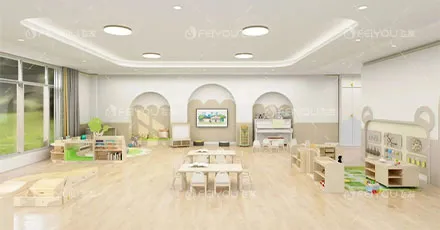
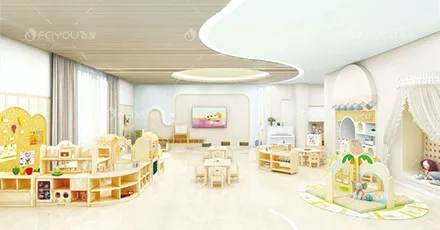
When you walk into any kindergarten classroom, one of the first things you’ll notice is the kindergarten table shapes on display. Some rooms feel open and inviting; others feel crowded or chaotic. The difference often comes down to one simple decision: round or rectangle?
Picking the right table shape isn’t just about looks. It affects how kids interact, how safely they move, and even how well they focus.
In this guide, we’ll break down the real-world pros and cons of round preschool tables versus rectangle activity tables. By the end, you’ll know exactly which shape fits your classroom’s needs. Let’s dig in.
.webp)
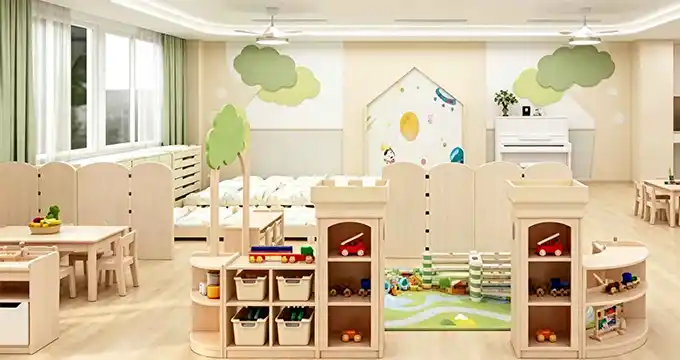
Understanding the Dynamics of Round Kindergarten Tables
Round tables have a special charm in early childhood settings. They break the traditional “rows and columns” mentality and create a sense of equality. But there’s more to them than just good vibes.
Fostering Group Discussion and Inclusion
Picture this: four or five children sitting around a circular surface. Every child faces the center. Eye contact is easy. Voices travel naturally. There’s no “head” of the table, so no single kid dominates the conversation unless you encourage turn-taking.
For teachers, this is gold. During morning check-ins or story retelling sessions, a round kindergarten table invites even shy children to participate. I’ve watched a quiet three-year-old open up simply because she could see everyone’s face without straining her neck.
In contrast, a rectangular table often creates “zones” – kids at the ends feel distant, and those on the long sides may end up talking sideways. If your curriculum values social-emotional learning or collaborative problem-solving, kindergarten table shapes that are round should be at the top of your list.
Enhanced Safety with No Sharp Corners
Let’s be real: kindergarteners fall. They trip, tumble, and bump into furniture on a daily basis. A rectangular table with 90-degree corners is a genuine hazard, even with protective caps (which tend to pop off after a few weeks).
Round tables eliminate that risk entirely. There’s no corner to catch a shirt sleeve, no sharp edge to meet a forehead during a sudden dash toward the block area. Many round preschool tables also feature slightly beveled edges, further reducing impact injuries.
One director I worked with in Chicago switched all her free-play areas to round tables after a child needed two stitches from a rectangular corner. Within six months, her incident reports dropped by nearly 40%. That’s not a coincidence – it’s smart design.
Space Efficiency in Small Corners
Not every classroom is a spacious dream. Urban preschools, church basements, and converted storefronts often have odd nooks or tight corners. A round table tucks beautifully into those spaces.
Because there’s no protruding corner, you can slide a round table into a bay window area or a carved-out alcove without wasting floor space. Kids can access every seat from the outside, too – no one gets trapped against a wall.
I’ve seen teachers place a 36-inch round table in a reading corner that could barely fit a 24”x48” rectangle. The round shape also allows easier traffic flow around it, since the curve naturally guides little bodies rather than blocking them.
Now, don’t go thinking rectangle tables are the villain here. They dominate many classrooms for good reasons. When used right, rectangular activity tables can be incredibly versatile.
Maximizing Classroom Layout Flexibility
Here’s where rectangles shine: they love walls. You can push a rectangular table flush against a wall to open up the center of the room for large motor activities. Try that with a round table – you’ll lose the back half of the surface and create awkward dead space.
Rectangular tables also come in standardized sizes (like 24”x48” or 30”x60”), making them easy to rearrange. Need a long train of tables for a science fair? Line them up end-to-end. Need separate stations for playdough, puzzles, and sorting? Space them out along the perimeter.
I often recommend rectangular tables for classrooms that serve multiple purposes – think a room that’s used for lunch, nap, and instruction. You can fold legs on some models (if they’re adjustable-height) or simply rotate the layout each week. The classroom table layout possibilities are nearly endless.
Optimizing Individual Workspace
For activities that require concentration and personal space, a rectangle is hard to beat. Each child gets a defined territory: “Your paper goes here, your crayons stay in front of you, and your elbow does not cross this invisible line.”
This clarity reduces squabbles over sharing space. During handwriting practice, assessment tasks, or one-on-one teacher check-ins, rectangle activity tables give each student a sense of ownership over their work zone. They’re not staring directly at a peer across the circle; they’re looking at their own worksheet or at the teacher walking around.
Many kindergarten teachers I’ve surveyed say they prefer rectangles for morning seatwork and use rounds for centers later in the day. That hybrid approach capitalizes on the strengths of both kindergarten table shapes.
Ease of Cluster Arrangement
When it’s time for group projects, rectangular tables become building blocks. Push two 24”x48” tables together, and you have a 48”x48” square that seats six to eight kids. Add a third table to make a U-shape for a puppet show or a long banquet for a “feast” during a Thanksgiving unit.
You can also create clusters of four tables facing each other to form a large square – each table holds two children, and they all face inward like a mega-round table. This flexibility is a lifesaver for teachers who love to change their room setup every few weeks to maintain student engagement.
The only downside? Clustering rectangles takes a bit more planning. You’ll need to ensure there’s enough clearance for chairs and adult movement between clusters. But once you get the hang of it, you’ll wonder how you ever managed with only round tables.
A Quick Reference: Round vs. Rectangle Kindergarten Tables
| Feature |
Round Kindergarten Tables |
Rectangle Kindergarten Tables |
| Primary Strength |
Promotes discussion & social interaction |
Space-efficient & layout-flexible |
| Safety |
No sharp corners – naturally safer |
Requires corner guards or rounded edges |
| Space Fit |
Ideal for corners or room focal points |
Perfect against walls, in rows, or clustered |
| Best For |
Reading nooks, group discussion, block play |
Art projects, independent work, and large group activities |
| Student Capacity (typical) |
4–5 children (36”–42” diameter) |
4–6 children (24”x48” or 30”x60”) |
| Teacher Access |
Easy to reach all students from one side |
May require walking around for some students |
| Storage Underneath |
Limited (center leg often blocks) |
Good (legs at corners leave open underside) |
Three Critical Factors for Your Decision
You’ve seen the strengths of both kindergarten table shapes. Now let’s make it practical. Here are the three questions I ask every client before they spend a dime.
1. Assess Your Primary Classroom Activities
Sit down with your weekly lesson plans. Circle every activity that requires whole-group discussion, show-and-tell, or cooperative building. Underline every task that demands focused individual work – tracing letters, cutting with scissors, completing a worksheet.
If your circles outnumber your underlines by a lot, lean toward round preschool tables. If you’re doing 30+ minutes of independent seatwork daily, rectangles will serve you better.
Many modern kindergarten classrooms use a 60/40 mix: 60% of tables round for social learning, 40% rectangle for skill practice. That balance reflects what we know about early childhood development – kids need both collaboration and concentration.
2. Evaluate Your Available Floor Space
Grab a tape measure and a piece of graph paper. Draw your classroom to scale, including doors, windows, bookshelves, and carpet areas. Then cut out paper shapes for round (36” diameter) and rectangle (24”x48”) tables.
Move them around. Notice how rectangles can line up along a 10-foot wall and still leave a 36” aisle for walking. Notice how a round table in the center creates a natural traffic circle but may waste space near the walls.
For small classrooms (under 600 sq ft), rectangles often win because they maximize usable surface area. For larger rooms (800+ sq ft), you have the luxury of adding a round table as a dedicated “meeting spot” without cramping your flow.
Don’t forget to measure your chair clearance, too. Kids need about 18–24 inches behind their chairs to push back and get up. Round tables tend to require more perimeter clearance because chairs radiate outward, while rectangles can be pushed against walls on one side.
3. Consider the Age Group of Students
This one’s simple but often overlooked. Ages 3–4 (pre-K and younger K): Go round whenever possible. Their motor skills are still developing, and they lack the impulse control to avoid bumping into corners. Round tables also make it easier for teachers to supervise all faces at once.
Ages 5–6 (older kindergarten and first grade): You can safely introduce rectangles, especially for activities like writing and math games. At this age, children understand personal space better and can follow rules like “walk around the table, not under it.”
That said, even older kindergarteners benefit from having at least one round table in the room. Use it as a “calm-down corner” or a place for two-person games. Mixing shapes keeps the environment dynamic and responsive to different needs.
Frequently Asked Questions (FAQ)
Q1: Can I mix round and rectangular tables in one classroom?
Absolutely. In fact, I recommend it for most classrooms. Use a round preschool table for your morning meeting or reading center, and place rectangle activity tables near windows or walls for art and independent work. Just make sure you leave enough aisle space – at least 36 inches between table edges – so kids and teachers can move freely.
Q2: Are kidney-shaped tables a good alternative?
Yes, kidney-shaped tables (curved on one side, straight on the other) offer a “best of both worlds” compromise. The teacher sits in the inward curve, easily reaching every student during small-group instruction. The straight side can be pushed against a wall. However, kidney tables are less flexible for general play or free choice time. They excel in resource rooms or for pull-out sessions, but may not work as your main classroom table. If you have the budget, add a kidney table as a teaching station and keep rounds/rectangles for the rest.
Q3: Which shape is easier for teachers to walk between?
Rectangles, when arranged in parallel rows or along walls, leave predictable straight aisles. You can quickly move from one side of the room to the other without zigzagging. Round tables create curved walking paths that require more space per table. If you have a crowded classroom or a teacher who uses a rolling cart, rectangles are typically the more movement-friendly choice. But if you have ample space, the organic flow around round tables can feel less institutional.
Conclusion & Your Next Step
So, who wins the battle of kindergarten table shapes? Neither shape is universally “best” – but one will be better for you.
Choose round tables if you prioritize social inclusion, safety for younger kids, and a warm, discussion-friendly atmosphere. Choose rectangle tables if you need flexible layouts, defined individual workspaces, and the ability to cluster or line up surfaces for varied activities.
For most kindergarten classrooms, the smart money is on a thoughtful mix: a couple of round preschool tables for centers and collaboration, plus several rectangular activity tables for skill work and easy storage.
Ready to see actual products? Visit our homepage to browse our full collection of durable, child-safe tables in both shapes. We offer rounded-corner rectangles, solid-wood rounds, and even kidney-shaped options for specialized instruction.






 English
 Español