A kindergarten furniture specification sheet should describe each item in terms a supplier can quote and a buyer can inspect. That means material grade and thickness, nominal dimensions with tolerances, surface and edge treatment, hardware type, test clauses, packaging, and acceptance criteria. A specification that says “high-quality solid wood” cannot be quoted consistently and cannot be inspected on delivery.
This guide explains the fields to include, how to write each clause so it can be verified, and which phrases to replace before the sheet goes out to suppliers.
What a Specification Sheet Is For
A specification sheet sits inside the procurement process. The RFP sets the project scope and commercial terms. The specification sheet describes the individual products in technical detail.
It serves three purposes: it lets suppliers quote the same thing, it lets the buyer compare quotations on technical grounds, and it gives the buyer a basis for inspection and acceptance. If any of these three purposes fails, the specification is incomplete.
The Core Fields of a Furniture Specification Sheet
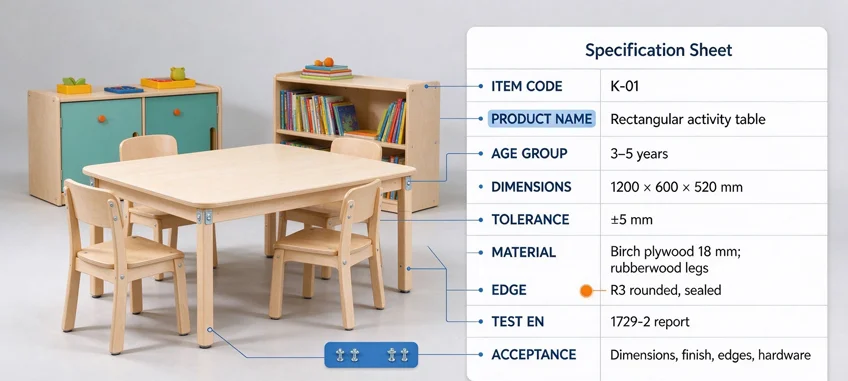
A practical sheet can be organised into the following fields. Not every project needs every field, but the structure helps avoid gaps.
| Field |
What to Record |
Example Format |
| Item reference |
Unique ID linked to the bill of quantities |
K-01 |
| Product name |
Functional name, not marketing name |
Rectangular activity table |
| Age group |
Intended user age range |
3–5 years |
| Quantity |
Number required |
12 |
| Overall dimensions |
Width × depth × height |
1200 × 600 × 520 mm |
| Dimensional tolerance |
Acceptable range |
±5 mm |
| Material by component |
Panel, frame, leg, back |
Birch plywood 18 mm; rubberwood legs |
| Surface finish |
Type and performance expectation |
Water-based lacquer, smooth, cleanable |
| Edge treatment |
Rounded or chamfered, radius |
R3 rounded edge, sealed |
| Hardware |
Hinges, runners, fixings, anti-tip |
Anti-tip bracket included |
| Test clause |
Standard and document to be provided |
EN 1729-2 report for quoted model |
| Packaging |
Protection and marking |
Carton with model and quantity label |
| Acceptance criteria |
What passes inspection |
Dimensions, finish, stability, hardware function |
The example formats are illustrative. The buyer should adapt them to the project and the market.
How to Specify Material So It Can Be Verified
Material is the field most often written in vague language. “Solid wood” and “eco-friendly board” are not specifications. They cannot be quoted consistently or inspected.
A verifiable material clause records four things: material type, grade or standard, thickness or section size, and where it is used.
For example: “Tabletop: 18 mm nominal birch plywood, both faces sanded, edges sealed. Legs: rubberwood, minimum 40 × 40 mm section, kiln-dried.” This clause tells the supplier what to quote and tells the inspector what to check. It also separates components, which matters because a table top and a leg have different requirements.
Where a material standard exists, reference it. Where it does not, describe the performance expectation, such as moisture resistance, surface hardness or cleanability.
Dimensions and Tolerances
A dimension without a tolerance is a wish. Production involves cutting, sanding, coating and assembly, and small variation is normal. The specification should state the acceptable range.
A practical format is: “Overall dimensions: 1200 × 600 × 520 mm. Tolerance: ±5 mm on overall dimensions; ±2 mm on panel thickness.”
Two additional points matter for children’s furniture. Seat height and table height should follow the age group and, where applicable, the relevant standard. For European projects, EN 1729-1 defines functional dimensions for educational chairs and tables. Clearance and access should be stated where relevant, such as the distance between shelves or the height of a cubby opening.
Tolerances should be realistic. A tolerance that is too tight raises cost without improving safety. A tolerance that is too loose creates fit and assembly problems.
Surface Finish and Edge Treatment
Surface finish affects cleaning, appearance, and durability. Edge treatment affects safety. Both should be specified by function, not by adjective.
For surface finish, record the finish type (for example, water-based lacquer or UV-cured coating), sheen level if relevant, cleanability expectation, and any restriction such as no sharp odour after curing.
For edge treatment, record whether the edge is rounded or chamfered, the radius or chamfer size where relevant, whether the edge is sealed, and whether any edge is exposed to direct contact by children.
A simple clause reads: “All exposed edges rounded to R3 and sealed. No sharp corners on any surface accessible to children.” This is verifiable. “Smooth and safe edges” is not.
Hardware and Structural Clauses
Hardware is where small differences create large maintenance problems. Specify by function and, where possible, by type.
Record hinge type and expected cycle life if stated by the supplier, drawer runner type, fixings and their corrosion resistance where relevant, anti-tip devices for tall cabinets, and the assembly method and whether tools are required.
A structural clause can also state the expected use condition: “Shelves to support the intended load of stored classroom materials without permanent deformation under normal use.” This gives the supplier a performance target without inventing a number.
Test and Compliance Clauses
A specification should not say “certified” without saying which standard and which document. The buyer needs to know what will be provided and what it covers.
A practical clause reads: “Supplier shall provide a valid test report for the quoted model, referencing the applicable standard and issued by a qualified laboratory. The report shall identify the product model and material construction.”
For U.S. projects, the applicable references may include CPSIA and ASTM F963. For European projects, they may include EN 71 and EN 1729. The specification should name the standard that applies to the project, not a generic list.
The clause should also state when the document is due: with the quotation, before production, or before shipment. This prevents a last-minute documentation gap.
Packaging, Marking and Acceptance Criteria
Packaging protects the product and helps the buyer receive it. Marking helps the site team identify items.
Record the carton or crate type, protection against moisture and impact, label content such as model, quantity, and room or zone if applicable, and the loading plan requirement for container shipments.
Acceptance criteria should state what the buyer will check on delivery: dimensions within tolerance, finish free from defects that affect use, edges as specified, hardware complete and functional, and test documents received as required. A short acceptance checklist turns the specification into an inspection tool.
Adjectives vs Verifiable Clauses
The table below shows how common vague phrases can be rewritten.
| Vague Phrase |
Problem |
Verifiable Rewrite |
| High-quality solid wood |
No material, grade or location |
Rubberwood legs, 40 × 40 mm section, kiln-dried |
| Safe rounded edges |
No radius or scope |
All exposed edges rounded to R3 and sealed |
| Eco-friendly paint |
No standard or performance |
Water-based lacquer, low odour after curing, cleanable |
| Durable construction |
No test or use condition |
Shelves to support intended classroom load without permanent deformation |
| Certified product |
No standard or document |
EN 1729-2 report for quoted model from a qualified laboratory |
| Easy to assemble |
No method or tool requirement |
Assembly with supplied fittings; tools listed in the manual |
Rewriting these phrases is the fastest way to improve a specification sheet.
Specification Sheet Checklist
Use this checklist before sending the sheet to suppliers.
| Check |
Question to Ask |
| Item reference |
Is every item linked to the bill of quantities? |
| Age group |
Is the intended user age stated? |
| Dimensions |
Are overall dimensions and tolerances stated? |
| Material |
Is material specified by type, grade, thickness, and component? |
| Finish |
Is the finish type and cleanability expectation stated? |
| Edges |
Is edge treatment described by radius or chamfer and scope? |
| Hardware |
Are hinges, runners, fixings, and anti-tip devices specified? |
| Test clause |
Are the standard and the document to be provided named? |
| Packaging |
Are protection and marking requirements stated? |
| Acceptance |
Are inspection criteria written down? |
A sheet that passes this checklist is usually ready for quotation comparison.
How Feiyou Supports Specification Review
Feiyou works with kindergarten, daycare, and preschool projects and can review specifications against available product configurations. If a specification includes custom sizes or finishes, the team can confirm what is feasible before the quotation stage.
You can review the project planning process and the material and design options. Product categories for a bill of quantities are available under kindergarten furniture categories and daycare furniture categories.
FAQ
What is the difference between an RFP and a specification sheet?
An RFP covers the whole procurement: scope, commercial terms, timeline, evaluation, and contract. A specification sheet describes the individual products in technical detail. The specification sheet is usually an annex to the RFP.
How detailed should a furniture specification sheet be?
Detailed enough that two suppliers would quote the same thing and an inspector could check the delivery. If a clause cannot be quoted or inspected, it is probably too vague.
Do I need tolerances for kindergarten furniture?
Yes. Production involves cutting, sanding, coating and assembly, and small variation is normal. Tolerances tell the supplier what is acceptable and give the buyer a basis for acceptance.
Should I specify a brand of paint or hardware?
Usually not. Specify the performance expectation and, where relevant, the standard. Brand specification can limit competition and may not be available in every market.
How do I handle custom sizes in a specification sheet?
State the required dimensions and tolerances, and ask the supplier to confirm feasibility before quotation. Custom sizes may affect lead time, price, and packaging.
Conclusion
A kindergarten furniture specification sheet is a working document. Its job is to make quotations comparable and deliveries inspectable. Specify material by type, grade, thickness and component. Give dimensions with tolerances. Describe finish and edges by function. Name the test standard and the document to be provided. Write acceptance criteria.
Before sending the sheet out, run the checklist and replace vague adjectives with verifiable clauses. If you are preparing a tender, pair the specification sheet with the RFP guide and the test report verification guide. You can review Feiyou’s project planning process, or contact the team to discuss a specification before quotation.
Related Reading






 English
 Español