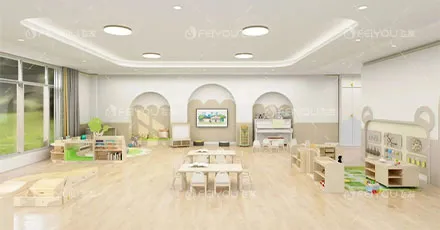
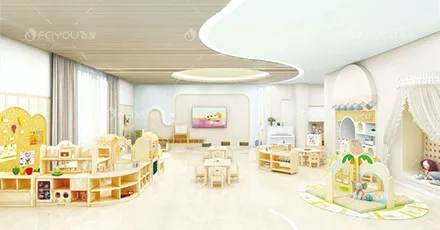
Walk into a kindergarten classroom designed 20 years ago, and you will see rows of identical tables and chairs, all the same height, all facing the same direction. Walk into a thoughtfully designed modern classroom, and you will find a very different scene: children sprawled on floor cushions in a reading nook, small groups collaborating at trapezoidal tables, and a quiet corner where a child retreats with a book.
This transformation is not accidental. The global kids furniture market is valued at USD 67.5 billion in 2025 and is projected to reach USD 338 billion by 2034, with a CAGR of 19.6%. Educators and facility managers increasingly seek furniture that supports motor skill development, encourages collaborative learning, and meets strict hygiene and safety protocols. The preschool seating market alone—encompassing bean bags, chairs, rockers, and more—is projected to grow from USD 29.68 billion in 2025 to USD 60.13 billion by 2032.
This guide explores the best kindergarten furniture ideas for modern classrooms—covering everything from flexible seating and modular storage to nature-inspired designs and classroom layout strategies. Whether you are furnishing a new classroom or refreshing an existing one, this guide will help you make informed decisions.
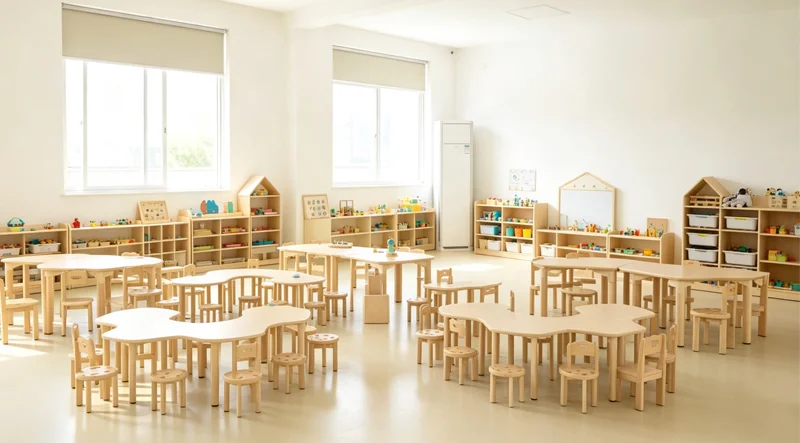
The Shift — From “Container” to “Third Teacher”
In contemporary kindergarten design, architects and educators are transforming interior spaces from simple containers into active, multi-sensory environments. This shift follows research in developmental psychology suggesting that a child‘s experience of space begins with sensorimotor engagement through touch and manipulation.
The concept of the environment as the “third teacher”—after parents and classroom educators—has become a guiding principle. The built environment itself becomes a tool for education, encouraging children to learn and explore through direct physical engagement. This new typology rejects rigid, compartmentalized spaces in favor of flexible, integrated interiors that double as dynamic playgrounds and interactive environments that promote movement, collaboration, and a sense of discovery.
What this means for your classroom: Every furniture decision communicates something to children. A room filled with identical, immovable furniture says, “This space is for adults to control.” A room with varied seating, accessible storage, and intentional zones says, “This space is for you to explore.”
Kindergarten operators designing classroom layouts need to account for how space planning and mixed-age student groups impact furniture selection criteria. Explore our range of early childhood furniture to match units to your classroom layout and age grouping setup.
Flexible Seating — Giving Children Choice and Comfort
One of the most significant trends in modern kindergarten classrooms is flexible seating—offering children a variety of seating options rather than a single chair type. Research shows that when children have a choice in where they sit, they are more engaged and better able to focus.
Popular flexible seating options for kindergarten classrooms:
| Seating Type |
Best For |
Key Benefits |
| Floor cushions and bean bags |
Reading corners, quiet zones |
Soft, inviting, easy to move and store |
| Wobble stools |
Active learners, circle time |
Allows subtle movement; supports posture |
| Modular foam seats |
Group activities, flexible arrangements |
Lightweight, stackable, colorful |
| Low benches |
Storytime, collaborative work |
Multiple children can sit together |
| Rockers and active chairs |
Children who need movement to focus |
Supports self-regulation |
Modular seating systems are gaining popularity because they offer exceptional flexibility. The Kidou seating system, for example, is built from cork with rounded edges and smooth surfaces, allowing pieces to be connected and stacked in countless configurations. One moment, it is a gathering spot for storytime; later, the same elements can scatter into a cozy nook for solo reading.
The preschool seating market reflects this growing demand for ergonomically designed, flexible solutions that enhance safety and engagement. Manufacturers are increasingly prioritizing modularity to accommodate diverse learning scenarios.
What this means for your classroom: Offering seating choice does not require purchasing every option. Start with 2–3 seating types—floor cushions, standard chairs, and one active seating option (like wobble stools)—and observe which children choose what. Expand based on observed preferences.
Tables That Adapt — From Fixed to Flexible
Modern kindergarten tables have evolved far beyond the standard rectangular classroom table. Today‘s options support different teaching styles, group sizes, and activities.
Table types for modern kindergarten classrooms:
| Table Type |
Best For |
Key Features |
| Trapezoidal tables |
Flexible grouping |
Can be arranged in multiple configurations |
| Adjustable-height tables |
Mixed-age classrooms |
Grows with children; accommodates different activities |
| Low kneeling tables |
Sensory play, floor activities |
No chairs needed; opens up floor space |
| Activity tables with storage |
Art, STEM, sensory |
Built-in bins or shelves for materials |
| Foldable tables |
Multi-purpose rooms |
Can be stored when not in use |
Open-plan layouts with flexibility and accessibility create a variety of spaces that support diverse, dynamic activity areas. Child-scaled furniture and accessible elements effectively support learning through play.
For classrooms with limited space, modular or stackable furniture is an ideal solution to optimize space without clutter. Lightweight chairs and tables that can be rearranged for different activities make the classroom adaptable to various learning needs.
What this means for your classroom: Consider how tables will be used throughout the day. A single table type may not serve all activities. Having 2–3 table configurations—some for group work, some for individual activities—provides greater flexibility.
Storage Solutions — Promoting Independence and Organization
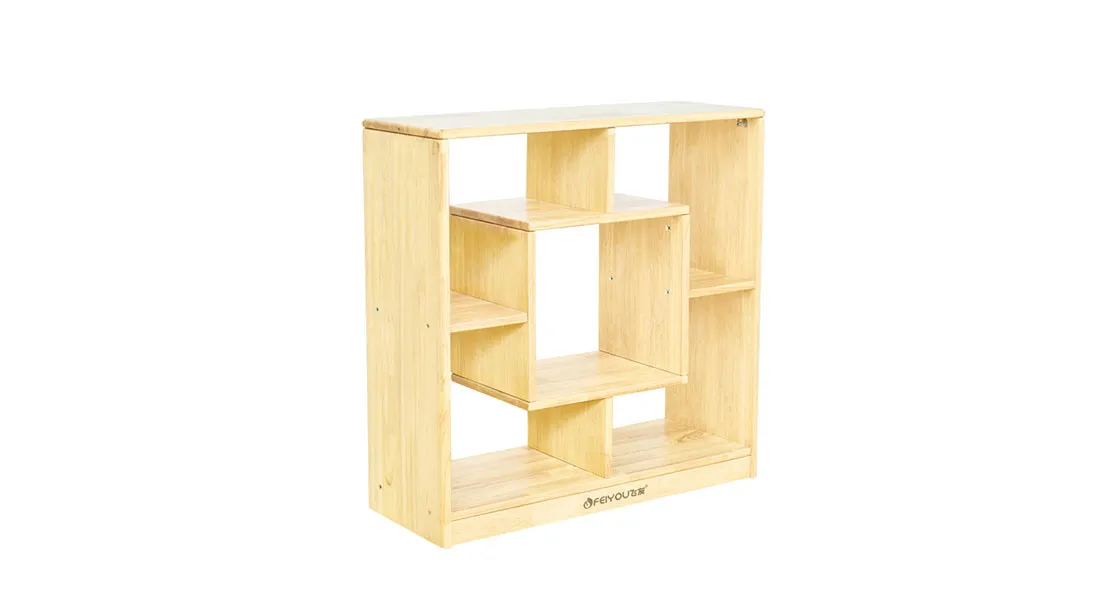
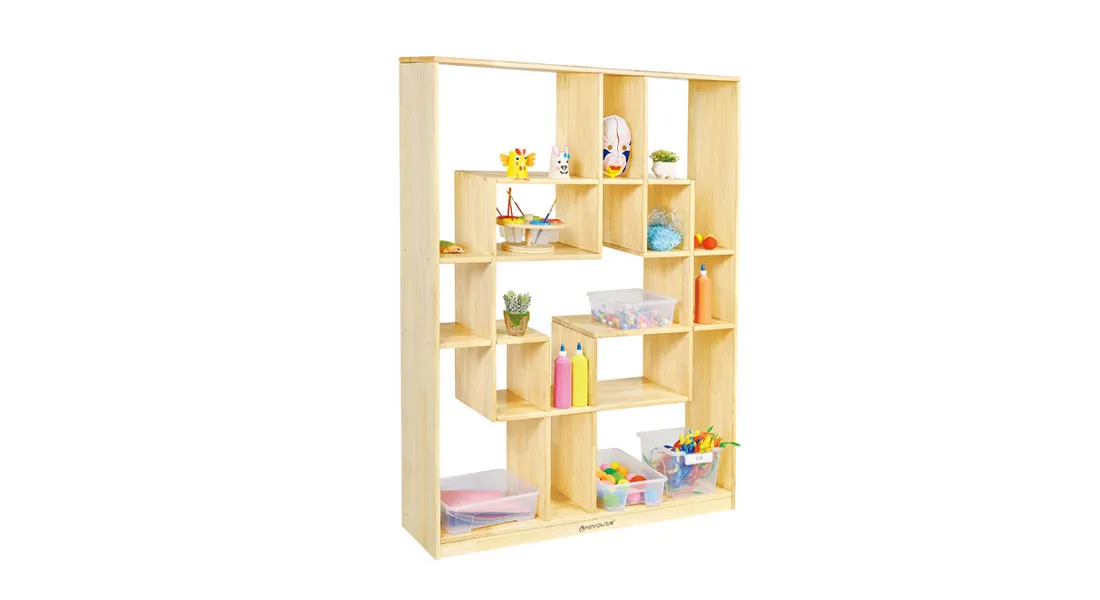
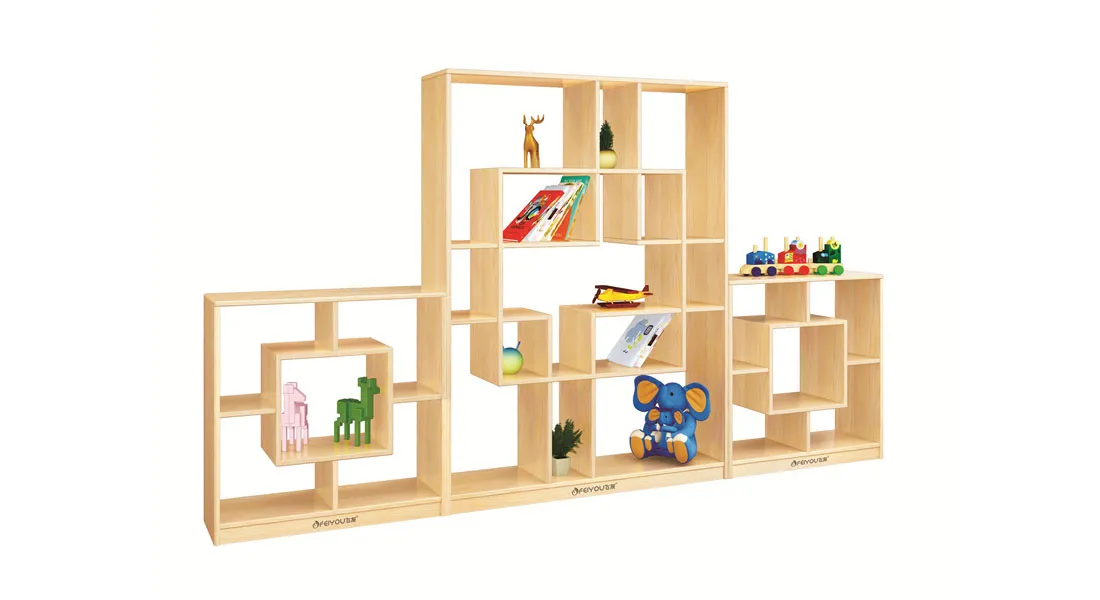
Storage in a modern kindergarten classroom serves two purposes: organizing materials and promoting children‘s independence. When storage is at child height and clearly labeled, children can access what they need and return items without adult assistance.
Effective storage strategies for kindergarten classrooms:
Open shelving at child height
Low, open shelves allow children to see and select materials independently. Montessori-style shelving—like the Nautilus Shelf, a modern reinterpretation of the classic open shelving unit—is designed not just as furniture but as a basic module of a system to define and organize educational spaces.
Labeled bins and baskets
Using picture labels (for pre-readers) and word labels helps children identify where items belong. This promotes self-directed learning and reduces clutter.
Multi-functional storage
Storage units that also serve as room dividers, seating, or display surfaces maximize utility in small spaces.
Wall-mounted storage
For classrooms with limited floor space, wall-mounted shelves and cubbies free up valuable floor area for play and learning.
What this means for your classroom: Every storage decision should ask: “Can a child independently access and return items here?” If the answer is no, reconsider the height, labeling, or accessibility of that storage unit.
Kindergarten administrators sourcing classroom storage can browse our full range of standard kindergarten furniture, all backed by verified load test reports to guarantee long-term durability and child-safe construction.
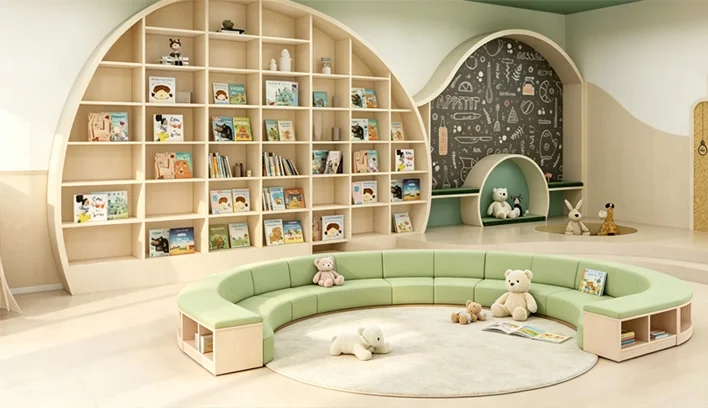
Nature-Inspired and Themed Designs — Bringing the Outdoors In
Nature-inspired design is one of the most compelling trends in modern kindergarten furniture. Biophilic elements—timber, stone, indoor planting, and natural textures—deepen children‘s connection to nature.
Nature-inspired furniture ideas:
-
Tree-shaped bookshelves: Display books on “branches” at child height, creating a whimsical reading environment
-
Stump-style seating: Floor cushions shaped like tree stumps bring natural elements indoors
-
Woodgrain finishes: Furniture that showcases natural wood grain creates warmth and texture
-
Nature-themed color palettes: Earthy tones, soft greens, and natural wood colors create calm, grounded spaces
Themed classroom furniture is another growing trend. Ocean-themed classrooms might feature chairs designed to resemble mermaids with flowing shapes and aquatic colors. Forest-themed spaces might include tree-branch shelving and leaf-shaped seating. These themed designs transform the classroom from a generic space into a tactile, explorable landscape that encourages children to use their imagination.
What this means for your classroom: Nature-inspired design does not require expensive custom furniture. Simple additions—a few plants, woodgrain finishes on existing furniture, nature-themed cushions—can bring biophilic elements into any classroom.
Sustainability — Choosing Materials That Are Safe and Responsible
Sustainability has become a central consideration in kindergarten furniture selection. Since the beginning of 2025, designers have pushed boundaries, pairing evidence-based practice with fresh ideas while responding to rising sustainability expectations.
Sustainable materials are gaining popularity:
| Material |
Benefits |
Applications |
| Solid timber (FSC-certified) |
Renewable, durable, warm aesthetic |
Tables, chairs, shelving |
| Poplar plywood |
Lightweight, strong, sustainable |
Educational furniture construction |
| Recycled plastics |
Durable, easy-clean, reduces waste |
Outdoor furniture, storage bins |
| Cork |
Renewable, soft, lightweight |
Seating, floor cushions |
| Low-VOC finishes |
Healthier indoor air quality |
All wood furniture |
Whitney Brothers‘ outdoorED collection, for example, uses 3/4-inch textured woodgrain maple and white High Density Polyethylene (HDPE) panels that are UV stabilized to resist fading, stains, mold, and mildew—and will not chip, rot, delaminate, or splinter. The materials are recyclable and contribute to sustainability efforts.
Safety certifications to look for:
-
UL GREENGUARD Gold Certified: Low chemical emissions
-
FSC certified: Responsibly sourced wood
-
CPSIA compliant: Lead and phthalate limits for children‘s products
-
ASTM F963 compliant: Safety standards for children‘s products
What this means for your classroom: Sustainable materials are not just an environmental choice—they are a health choice. Low-VOC finishes and responsibly sourced materials create healthier indoor environments for children and staff.
Classroom Layout — Putting It All Together
Even the best furniture choices fail without thoughtful layout. Modern kindergarten classrooms use intentional zoning to support different activities and learning styles.
Key layout principles:
Create distinct learning zones
Stop thinking of your room as having a “front” and a “back.” Instead, create zones that invite learning—whether it‘s a work table or a cozy rug. Position rugs, shelves, low dividers, and furnishings strategically to create defined learning centers.
Prioritize clear sightlines
Teachers must be able to see all children from multiple positions in the room. Avoid creating blind spots with tall furniture.
Maintain clear pathways
Ensure at least 36 inches of clear pathway to every exit and between activity zones. This supports both daily movement and emergency evacuation.
Include quiet and active zones
Place quiet activities (reading, puzzles) away from active zones (blocks, dramatic play) to minimize distractions.
Allow for reconfiguration
Choose furniture that can be rearranged throughout the day to support different activities—from whole-group instruction to small-group work to individual exploration.
What this means for your classroom: Before purchasing any furniture, sketch your classroom layout. Mark windows, doors, sinks, and electrical outlets. Then place furniture on paper—not in the room—to identify conflicts before physical work begins.
Two Classroom Scenarios — Applying the Ideas
Scenario A: A new preschool opening with a moderate budget
This program has a dedicated classroom of approximately 600 square feet for 16 children aged 3–5. The director wants a modern, flexible environment.
Recommended approach: Invest in 3–4 trapezoidal tables that can be arranged in multiple configurations, plus a variety of seating: 12 standard chairs, 6 floor cushions, and 4 wobble stools. Add low open shelving with labeled bins for materials. Include one themed element—perhaps a tree-shaped bookshelf in the reading corner—to create a signature feature. Total investment: moderate, with maximum flexibility.
Scenario B: A home daycare with limited space (under 300 square feet)
This provider operates in a converted living room and needs furniture that serves multiple purposes.
Recommended approach: Choose foldable tables and stackable chairs that can be stored when not in use. Use wall-mounted shelves to free up floor space. Add 2–3 floor cushions that can be stacked and stored. Choose multi-functional storage—cubbies that also serve as room dividers or seating. Every piece should earn its square footage.
From Ideas to Implementation
By now, you have a comprehensive understanding of the best kindergarten furniture ideas for modern classrooms. You understand the shift from rigid, teacher-controlled spaces to flexible, child-centered environments. You know the value of flexible seating, adaptable tables, accessible storage, nature-inspired design, and sustainable materials. And you have practical strategies for classroom layout.
Your next steps:
-
Assess your current classroom — What works? What does not? What would you change if you could?
-
Define your priorities — Is flexibility most important? Sustainability? A specific theme?
-
Set a realistic budget — Consider total cost of ownership, not just upfront price
-
Sketch your ideal layout — Place furniture on paper before purchasing
-
Start with one or two changes — You do not need to transform everything at once. Begin with flexible seating or a reading corner refresh
-
Observe and adjust — Watch how children use the space. What draws them? What do they ignore? Adjust accordingly.
With these decision factors clarified, evaluating specific furniture options from any manufacturer becomes straightforward. You can now assess products based on how well their design, safety certifications, material choices, and flexibility align with your program‘s needs and your classroom‘s unique character.
Related Reading
-
Flexible Seating in Early Childhood Classrooms: What Works for Different Age Groups
-
How to Incorporate Biophilic Design in Preschool Classrooms Without Breaking the Budget
-
Classroom Zoning 101: Defining Activity Areas That Support Self-Directed Learning
-
Sustainable Materials for Children's Furniture: A Buyer's Guide to Certifications and Trade-offs
-
From Blank Canvas to Learning Environment: A Step-by-Step Classroom Furnishing Plan






 English
 Español